







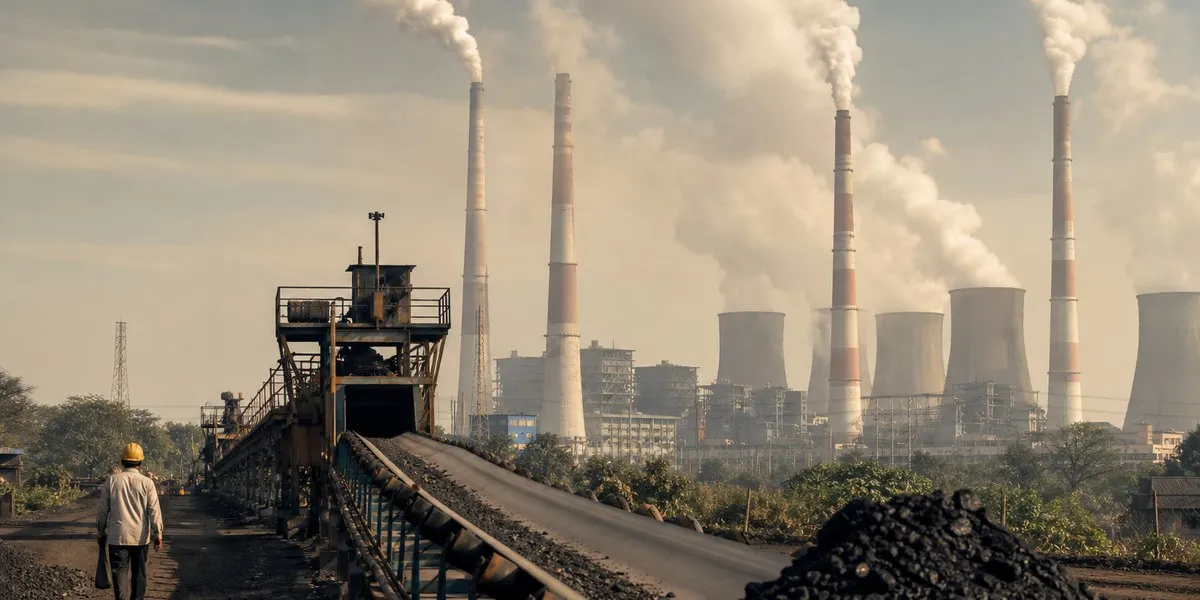
India’s Power Grid Under Strain: Coal Reserves Plummet as Demand Surges
India is grappling with a mounting energy challenge as a combination of unseasonably warm weather and a persistent spike in industrial activity leaves the country’s power grid increasingly vulnerable. According to recent data from the Central Electricity Authority, 96 coal-fired power plants across the nation are now operating with critically low fuel reserves, holding only enough coal to sustain generation for three days.
The situation marks a significant deterioration from mid-September, when roughly 60 plants reported similarly precarious inventory levels. With the number of affected facilities rising to 96, industry analysts are expressing growing concern over the stability of India’s energy infrastructure heading into the final quarter of the year.
A Growing Imbalance
The energy crunch is largely attributed to a supply-demand mismatch that has intensified over the last few weeks. While India’s domestic coal companies have consistently pushed to increase output and delivery, their efforts have failed to keep pace with the frantic consumption rates seen at power plants.
Total coal reserves at these facilities have declined by 5% since the start of October. This drop follows a record-breaking September, during which coal-fired electricity generation jumped by 13.3% to meet heightened cooling demands brought on by persistent heat. Despite the massive boost in production, it was insufficient to bridge the gap between supply and demand.
The scale of the deficit is historic. In September alone, the shortfall reached 560 million kilowatt-hours (kWh), representing the widest imbalance seen since August 2023. Furthermore, peak daily electricity demand in India has consistently trended 45 to 50 gigawatts (GW) higher than the figures recorded during the same period last year, placing immense pressure on the existing thermal power fleet.
Future Projections and Energy Security
The crisis highlights the complexities of India’s dependence on fossil fuels for base-load power. While the Ministry of Coal has maintained that it is working to stabilize stocks, market observers remain skeptical of a quick resolution. The International Energy Agency (IEA) has underscored this vulnerability in its recent “Coal Mid-Year Update 2026,” predicting that India’s total coal demand will climb by 4.2% this year, reaching approximately 1.353 billion tonnes.
The IEA report links this projected increase not only to domestic electricity requirements but also to broader geopolitical instabilities. Concerns regarding the disruption of oil and gas shipments through the Strait of Hormuz are expected to keep energy markets tight, further cementing coal’s role as the primary, albeit stressed, pillar of India’s power sector.
As power plants run on razor-thin margins, the government faces the dual challenge of managing immediate supply chain logistics to prevent widespread outages while navigating long-term transitions in energy policy. For now, the focus remains on replenishing reserves at the 96 critical plants, as any further disruption in coal logistics could lead to significant grid instability during what has already been an exceptionally demanding year for India’s energy sector.
Disclaimer: This content is auto-generated for informational purposes only.
Source: Read Original News