









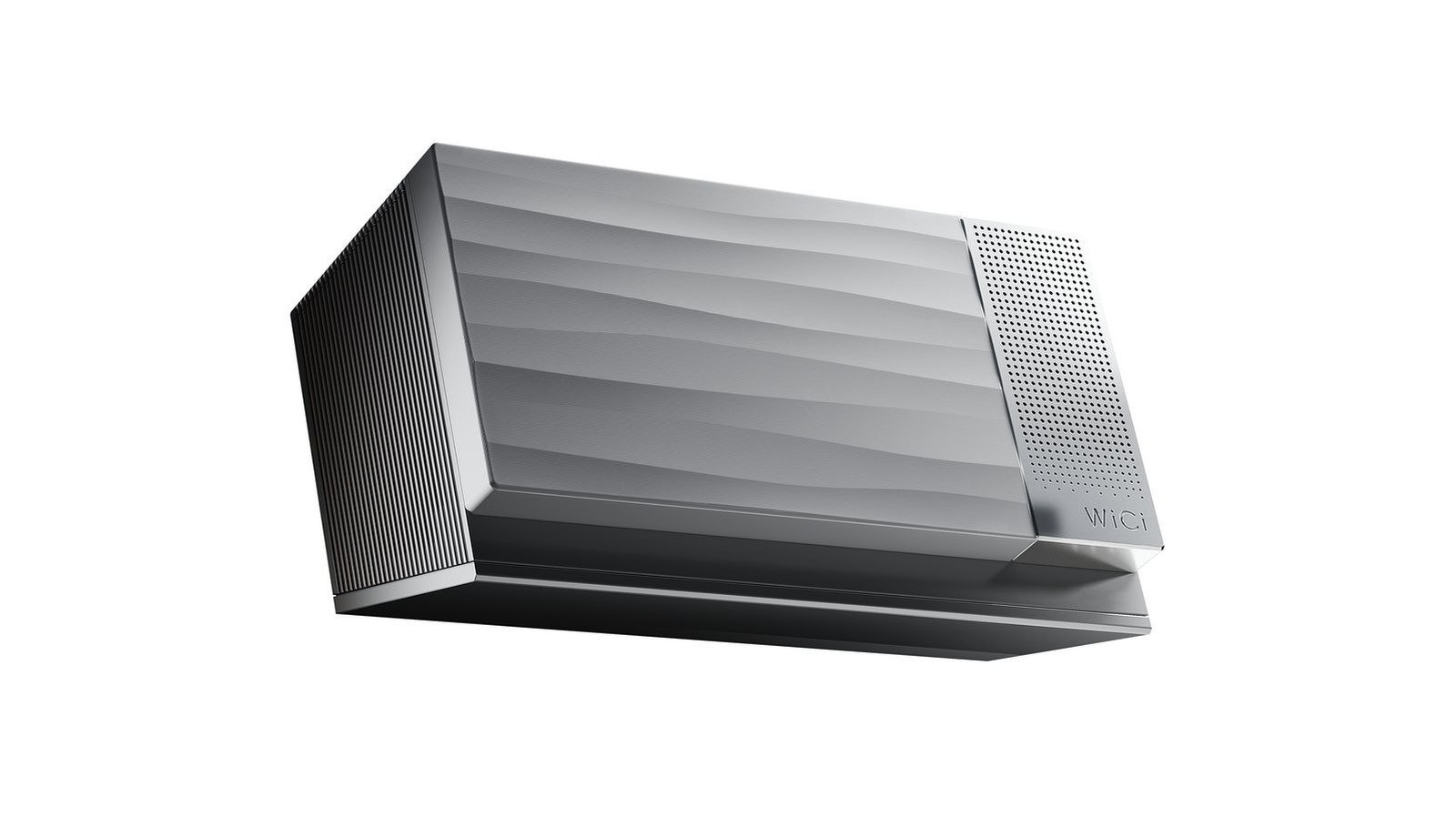
Redefining External Graphics Through Wireless Innovation
The traditional external GPU (eGPU) landscape has long been defined by physical limitations. For years, users seeking to bolster the graphical processing power of a thin-and-light laptop have been tethered by Thunderbolt cables or specialized OCuLink connections. These physical links, while providing high bandwidth, inherently restrict the placement of the hardware and necessitate a stationary setup. WiCi is now attempting to dissolve these constraints with the introduction of the WiCi One, a wireless external GPU system that leverages the throughput capabilities of Wi-Fi 7 to untether high-end computing from physical ports.
By shifting the data transmission from copper or optical cables to a high-speed wireless protocol, the WiCi One transforms any compatible device into a high-performance workstation. This shift is enabled by the low latency and massive bandwidth inherent in the Wi-Fi 7 standard, allowing for real-time synchronization between a host device and the remote processing unit. The result is a system that allows users to maintain the portability of a sleek laptop while utilizing a desktop-class graphics card located elsewhere in the room.
Hardware Architecture and Specifications
The WiCi One is not merely an enclosure; it is a self-contained computing environment. Inside its dedicated chassis, the device houses a full-fledged graphics card, a high-performance CPU, an integrated wireless module capable of Wi-Fi 7 connectivity, and a robust cooling system to manage the thermal output of the high-performance components.
The entry-level configuration of the WiCi One comes equipped with an Nvidia RTX 5060 Ti featuring 16GB of VRAM. This is paired with an Intel Core 3 100U processor and 1TB of NVMe storage, ensuring that the unit can handle not only graphical rendering but also local data processing. For power users and creative professionals requiring higher ceiling performance, the company has announced plans to launch a flagship version. This iteration will feature the top-tier Nvidia RTX 5090 with 32GB of VRAM, paired with an Intel Core Ultra 7 225H processor and a massive 4TB NVMe SSD. By including an onboard CPU and storage, the WiCi One functions as a distributed computing node rather than just a simple graphics passthrough, which helps mitigate potential latency issues that would occur if the host device were forced to perform all the heavy lifting of data management and OS-level communication.
Performance Benchmarks and Real-World Application
The performance capabilities of the WiCi One are positioned to satisfy the demands of modern, high-fidelity gaming and resource-heavy creative applications. WiCi claims that the RTX 5060 Ti variant is capable of rendering graphically intense titles at 4K resolution. For instance, the system reportedly achieves 80 frames per second (fps) in Cyberpunk 2077 while running at 4K Ultra settings with DLSS 4 enabled. Similarly, the system manages to deliver 60 fps in Black Myth: Wukong using 4K Cinematic settings and DLSS 4.
These metrics demonstrate that the bandwidth provided by Wi-Fi 7 is sufficient to handle modern rendering pipelines without significant frame drops or input lag. Beyond gaming, the system is designed to accelerate AI workflows. Running local AI assistants or complex machine learning models typically requires significant VRAM and parallel processing power that most portable devices lack. The WiCi One fills this gap, allowing researchers and developers to offload local AI model training and inference to a device that is physically detached from their primary interface, thus cooling the laptop and extending its battery life during intensive tasks.
The Impact of Wi-Fi 7 on Peripheral Connectivity
The transition to wireless GPU connectivity is heavily dependent on the generational leap provided by Wi-Fi 7. Unlike previous standards, Wi-Fi 7 introduces Multi-Link Operation (MLO) and increased channel widths, which are essential for minimizing the latency and packet loss that would otherwise render an external GPU unusable for real-time applications. By operating in this high-frequency space, the WiCi One minimizes the delay between the user’s input—such as a mouse movement in a game—and the screen output.
This technological move represents a broader trend in peripheral design: the removal of proprietary and physical connection standards in favor of universal wireless high-speed protocols. If the WiCi One succeeds, it could set a precedent for how peripherals communicate with host devices, potentially leading to a future where high-performance accessories, such as VR headsets or specialized compute modules, no longer require direct line-of-sight or heavy cable management to function at peak capacity.
Availability and Market Positioning
The WiCi One is currently entering the market at a premium price point, reflecting the complexity of its hardware integration. Preorders for the base model, which includes the RTX 5060 Ti, have opened at $1,999, with a scheduled increase to $2,599 for later retail availability. The company has indicated that shipping for these initial units is expected to commence in the fourth quarter of this year. While the pricing for the flagship RTX 5090 variant remains unannounced, it is expected to target the high-end workstation segment, competing with traditional desktop builds and premium laptop configurations.
This device sits at the intersection of portability and raw performance, a segment that has historically been underserved. By offering a modular way to upgrade a device’s graphical capabilities, WiCi is attempting to solve the dilemma faced by professionals who require a slim, travel-ready machine during the day but desire a high-performance experience at their desk. As the technology matures, the success of the WiCi One will likely hinge on its reliability in environments with dense Wi-Fi traffic, where interference could impact performance, but for early adopters, the promise of a wire-free, high-performance computing experience is a compelling proposition.
Disclaimer: This content is auto-generated for informational purposes only.
Source: Read Original News