








The Architectural Foundation of Lunar Exploration
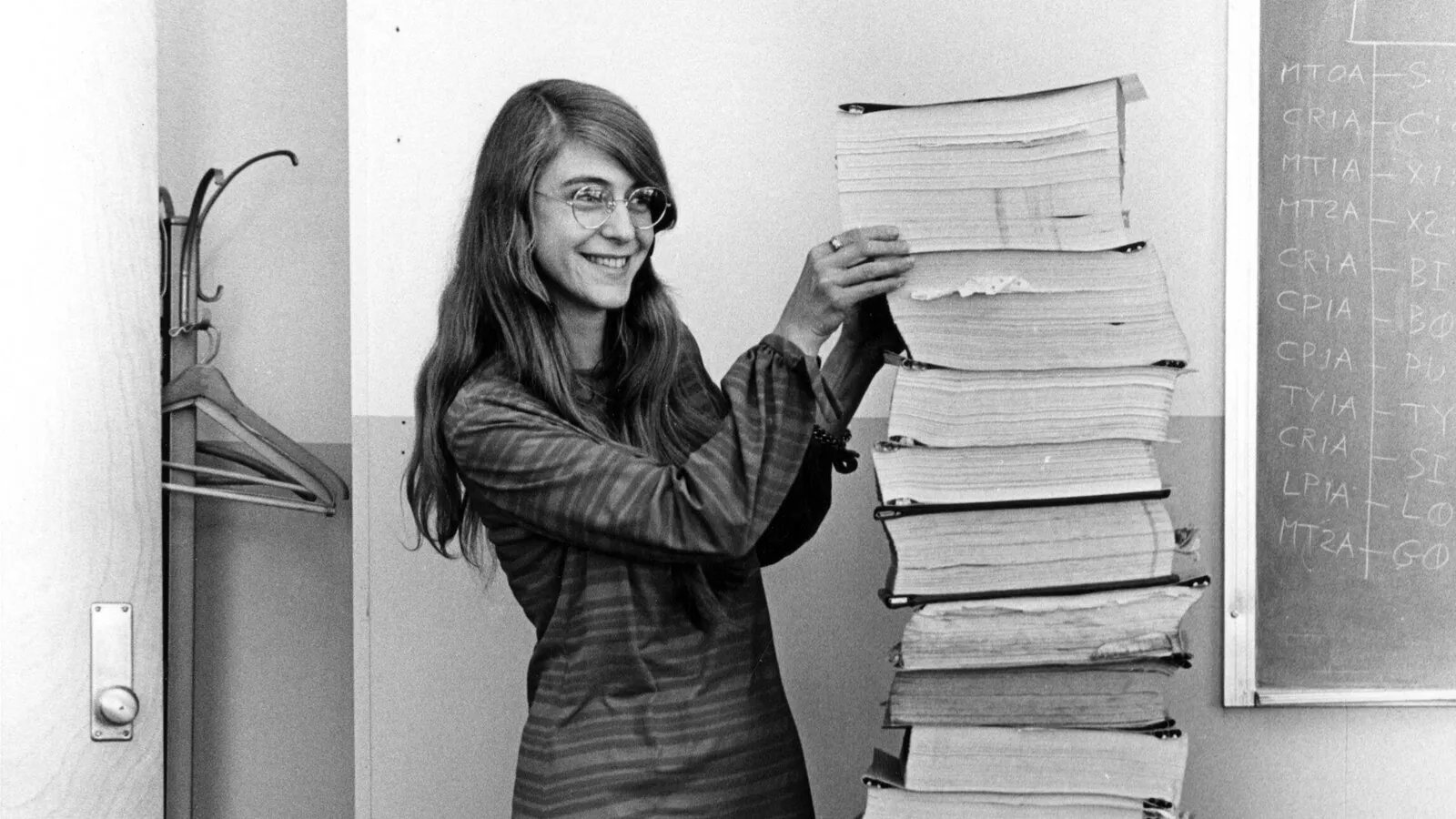
The history of computing is punctuated by moments where the theoretical became the practical, and few instances are as significant as the Apollo Guidance Computer (AGC) software. Margaret Hamilton, a towering figure in computer science who passed away recently at the age of 90, served as the principal architect of this critical technology. Working within the nascent field of software engineering at the Massachusetts Institute of Technology, Hamilton led the team responsible for developing the onboard flight software that guided the Apollo missions to the lunar surface and back.
At the time, the term “software engineering” was not yet in common usage. Hamilton was instrumental in formalizing the discipline, transforming programming from a niche academic exercise into a rigorous engineering standard. The Apollo software was built upon principles of reliability and fault tolerance, requirements born of the necessity to handle space flight’s unpredictable nature. Her work established a blueprint for systems where failure was not an acceptable outcome, setting a precedent for modern aerospace and safety-critical computing systems.
Innovation Through Asynchronous Priority Scheduling
The technical genius of the Apollo software lay in its ability to manage high-stakes, real-time multitasking under extreme constraints. The Apollo Guidance Computer possessed very limited memory—roughly 74 kilobytes of fixed storage and 4 kilobytes of erasable memory. To manage this, Hamilton and her team developed a preemptive multitasking system. This approach allowed the computer to interrupt low-priority background tasks whenever a more critical process required CPU resources.
This asynchronous priority scheduling was a departure from typical computing practices of the era, which often relied on rigid, sequential execution. By ensuring the computer could always focus on the most vital navigational data during the critical phases of descent, the team ensured that the mission remained on course despite the limited hardware capacity. This mechanism proved essential during the Apollo 11 lunar module’s final approach to the surface, demonstrating that software could intelligently allocate system resources to safeguard human lives.
Fault Detection and Robust Recovery Systems
The most famous demonstration of the effectiveness of the Apollo flight software occurred mere minutes before the Eagle lunar module touched down on the moon. An onboard computer alarm signaled an emergency, caused by an incorrect piece of hardware interface equipment that flooded the system with interrupts. In a less robust design, this overload would have resulted in a total system crash, forcing the astronauts to abort their landing.
Instead, the software acted as a safety net. It triggered an error detection and recovery sequence that discarded low-priority processes to ensure the computer maintained focus on the navigation and guidance functions necessary for landing. The software recognized that the hardware was overwhelmed and autonomously re-established the highest priority tasks, essentially rebooting the system to prioritize the safety of the crew. This incident remains a foundational case study in fault-tolerant computing. Hamilton noted that the system was specifically designed to handle unexpected external conditions, proving that sophisticated software could compensate for unforeseen hardware failures.
The Legacy of Rigorous Software Testing
Hamilton’s approach to development emphasized the importance of rigorous testing long before code was uploaded to any hardware. Her methodology involved building extensive simulations and testing environments that accounted for a vast array of potential failure points. In an era when debugging involved physical hardware interfaces and manual punch cards, this proactive stance on error prevention was revolutionary.
The impact of these methods is still felt in contemporary software development. The concepts of modularity, verification, and validation that Hamilton championed have become standard practices in industries where software dictates safety outcomes, such as aviation, automotive engineering, and critical medical infrastructure. By insisting on human-centric design, where the computer serves as an extension of the operator’s capabilities, she ensured that the technology remained a tool for success rather than a source of confusion.
Pioneering the Field of Software Engineering
Margaret Hamilton’s contribution extended far beyond the code for Apollo. She played a key role in defining the culture of software engineering, advocating for a field that recognized software as a product of intentional design and engineering rather than an afterthought to hardware development. When she joined the MIT Instrumentation Laboratory, she did so as the first woman hired in the software group, eventually rising to become the Director of the Software Engineering Division.
Her career serves as a historical marker for the birth of modern computing. She lived through an era where programming evolved from a set of mathematical instructions into a global industry that sustains modern civilization. When receiving the Presidential Medal of Freedom in 2016, the acknowledgment of her work served to highlight the indispensable role of the software architect. Hamilton’s career serves as a reminder that the most significant technological advancements are often the result of foresight, deep technical understanding, and the courage to engineer solutions for problems that have never been faced before. Her legacy is embedded not only in the lunar landscape but in every line of code that prioritizes reliability, safety, and human-machine collaboration today.
Disclaimer: This content is auto-generated for informational purposes only.
Source: Read Original News