









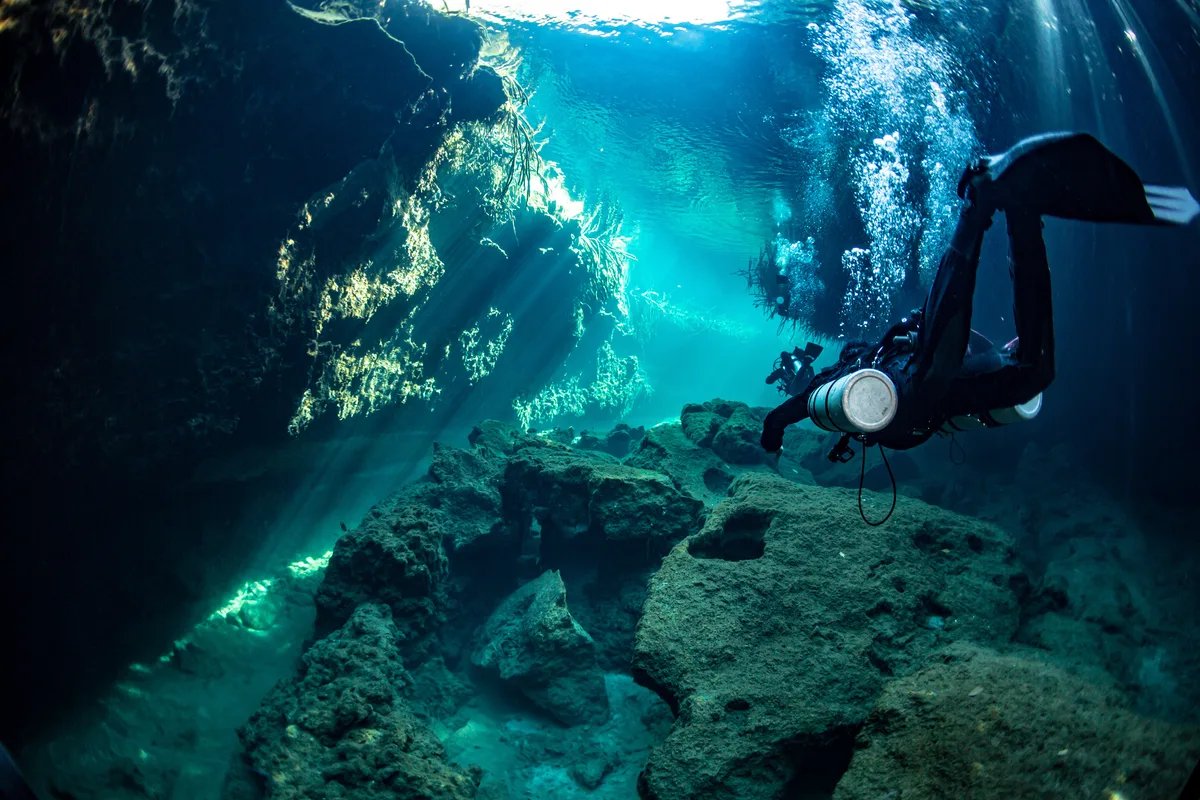
Cenote Angelita is one of the Yucatán Peninsula’s most mesmerising underwater landscapes, known for its otherworldly ‘lake within a lake’ or ‘cloud’ effect and ghostly submerged trees. It offers divers a rare glimpse into a surreal world shaped by geology and time.
What is a cenote?
Cenotes are natural limestone sinkholes, found in Mexico – predominantly in the Yucatán Peninsula, which includes in the states of Quintana Roo, Yucatán and Campeche.
There are around 7,000 cenotes in the Yucatán Peninsula. They were formed around 66 million years ago by the impact of the Chicxulub meteorite, which forced the collapse of the limestone bedrock. The cavities that were created then filled with water.
The limestone acts as a purifier, removing the impurities in the water. As a result, the water in cenotes is crystal clear.

Cenote Angelita’s unusual underwater cloud
Angelita – which translates to ‘Little Angel’ – is one of the Yucatán Peninsula’s most famous cenote. About 17km south of Tulum, this stunning cenote is around 60m deep.
Cenote Angelita is particularly popular with divers, due to its visibility and unusual ‘lake within a lake’ or ‘cloud’ phenomenon.

After travelling through the initial murky 10m, divers will enter an immensely clear section of water, at which point they are presented with a surprising sight: what looks like a giant cloud below.
Freshwater flows into the sinkhole, resting on the underground salt water. Where the two types of water meet, a layer of sulphate swirls between them. It can look like an underwater river, lake, mist or a cloud, divers report.
While this phenomenon is common among cenotes, the depth, clarity and structure of Cenote Angelita allows this 3m-thick layer of hydrogen sulphide gas to remain consistent and remarkably visible.
The submerged trees of Cenote Angelita
Within the giant underwater cloud of Cenote Angelita is a submerged forest, creating an even eerier experience for divers. These are decaying trees and foliage, which have fallen into the cenote over thousands of years.

Wildlife in Cenote Angelita
Due to the great depths of Cenote Angelita, its lower reaches – which, like many cenotes, are dark and nutrient-poor – are mostly devoid of life.
However, you’re likely to find freshwater fish and aquatic plants closer to the surface, where sunlight is still able to penetrate and the plants can photosynthesise.

Top image: A diver in the depths of Cenote Angelita. Credit: Khaichuin Sim/Getty Images
More amazing stories from around the world