





The Great Atlantic Sargassum Belt was first observed in 2011, and scientists are worried about how its annual bloom is impacting the marine environment.
You might have heard of the Sargasso Sea, which gets its name from a type of brown seaweed called sargassum that grows in huge rafts at the ocean’s surface. Sargassum is the only type of seaweed that spends its entire life growing freely in the open ocean, never attaching itself to rocks or the seafloor.
The wide Sargasso Sea, which is in the Atlantic Ocean, is the only sea on the planet that doesn’t have a land border – its boundaries are defined by the ocean currents that surround it. This unique ecosystem stretches for two-million square miles and provides a vital habitat for a plethora of creatures.
Various sharks, whales, dolphins and rays migrate through this area, and some eels come here to spawn. It also provides an important breeding ground and nursery for many animals. The seaweed beds give vulnerable young animals a safe place to stay, with plenty of food, while they’re growing.
Some scientists think baby sea turtles spend time in the Sargasso Sea before they’re ready to breed – a time often called their ‘lost years’ because experts aren’t entirely sure where they go.
There are 10 species endemic to the Sargasso Sea – including types of shrimp, crabs and pipefish. A frogfish called the Sargassum fish spends its whole life in these floating bundles of algae and is perfectly adapted to survive here. It clambers across tangled seaweed using specialised limb-like fins and its mottled brown body melts effortlessly into its background. It can even change colour to better camouflage into its habitat.
The renowned marine conservationist Sylvia Earle once described the Sargasso Sea as a “golden floating rainforest” because, like rainforests on land, it supports so many species.
But, despite seaweed being critically important in the right amount and the right places, the balance can easily tip – when something goes awry, it can spell serious trouble.
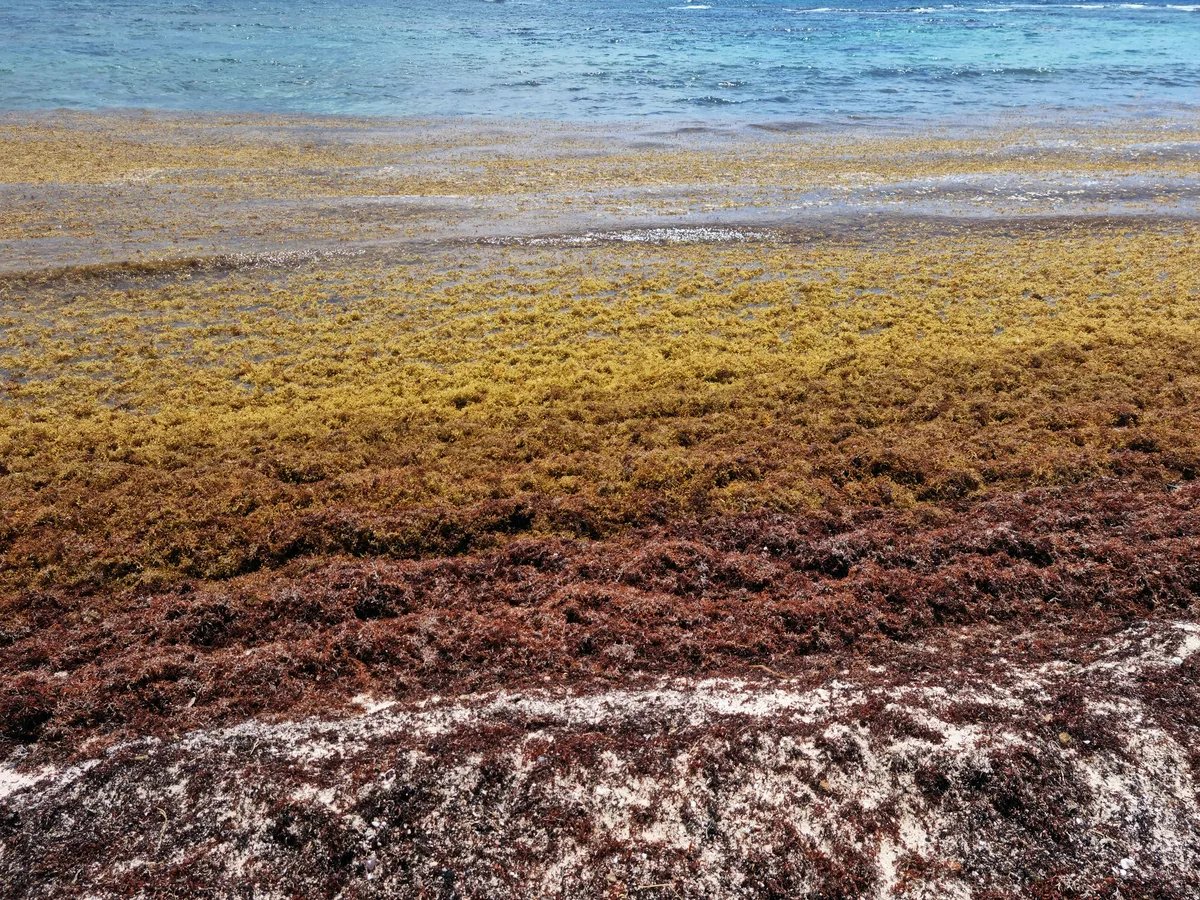
That’s what happened in 2011, when experts first noticed a problem. Huge expanses of seaweed bloomed in the Atlantic during spring and summer and have formed every year since, except 2013. They called it the Great Atlantic Sargassum Belt.
Stretching for around 5,000 miles from West Africa to Brazil and weighing more than 20 million tonnes, it’s the largest bloom of macroalgae in the world. Experts use satellites to monitor the problematic seaweed from space.

Here’s why it’s an issue. Warmer waters and excess nutrients in the ocean can cause seaweed to grow uncontrollably. When this happens, the blooms can become harmful to the ecosystem. The irrepressible seaweed can grow so much that it blocks out the sunlight from reaching the organisms below, many of which – like corals and seagrass – rely on sunlight for photosynthesis.
Then, it dies. As it rots, it uses up the oxygen in the water, creating dangerous hypoxic (low oxygen) zones. Smothered by the seaweed and without enough oxygen, the animals that used to rely on this habitat can’t survive.
And then it hits the beaches. Dead, rotting seaweed rolls in with the tides, accompanied by the gag-inducing smell of rotten eggs (the decaying matter releases hydrogen sulphide and ammonia). Tourists don’t want to visit beaches strangled by pungent seaweed, so businesses can suffer too. Not to mention the cost of cleanups, which can be millions of dollars.
Tragically, the clotted mats of seaweed have made sea turtle hatchlings’ arduous journey from the beach to the sea even more precarious, reducing their chances of safely making it to the ocean and surviving to adulthood.
Researchers are still grappling with how to predict and prevent this annual catastrophe (finding ways to reduce global emissions, prevent deforestation and minimise nutrient runoff from land to sea could help). Scientists around the world are also trying to find ingenious ways of turning this blight on beaches into a resource: using it for energy, fertiliser and even transforming it into fabrics.