





Australian Census 2026: Rapid Completion Amidst Lingering Privacy Concerns for Multicultural Communities
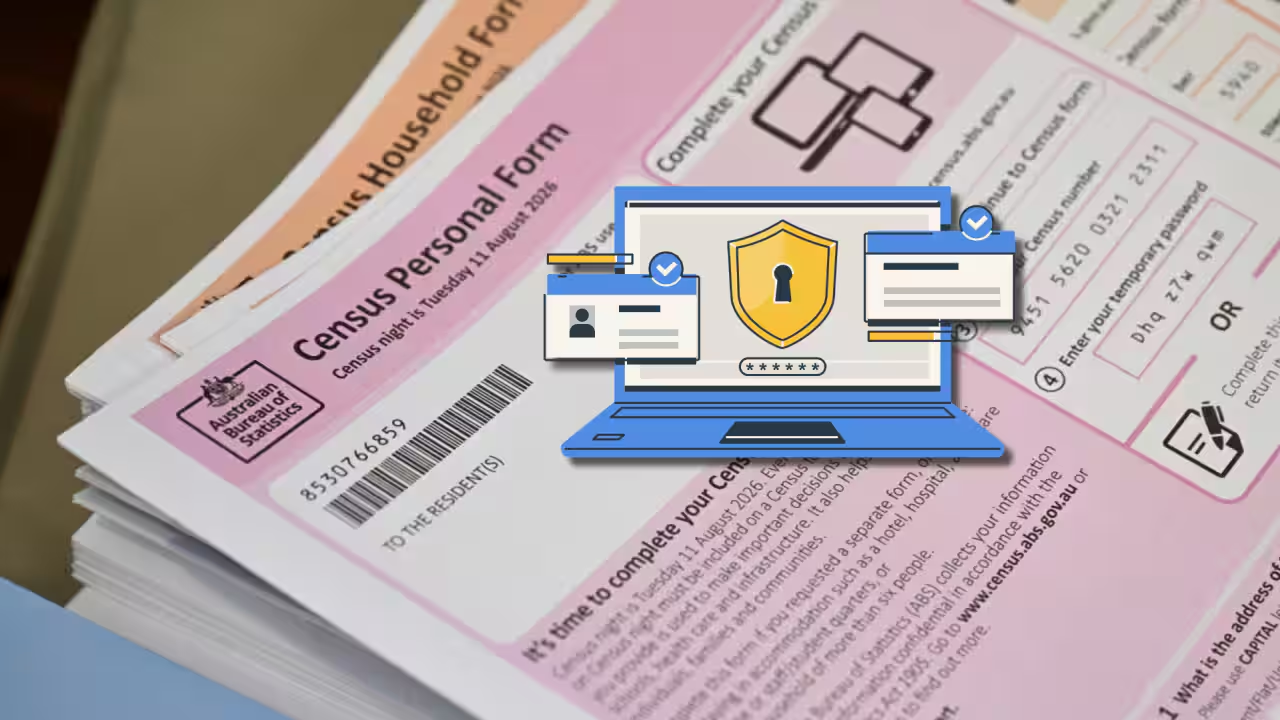
The 2026 Australian Census has seen a swift response, with over five million households completing the form within hours of its release. However, this rapid participation is juxtaposed with significant anxieties, particularly within migrant and multicultural communities. Many Australians express concerns over the personal nature of certain questions and, in the wake of a year marked by unprecedented data breaches, harbor deep worries about the security of their information and the potential repercussions of a future leak.
Australia’s 2026 Census has demonstrated remarkable efficiency, with the Australian Bureau of Statistics (ABS) reporting that more than five million households, representing over half of the 2021 total count, had completed the survey by 10 am on Tuesday. While this swift engagement underscores a high level of civic participation, it also brings to light underlying tensions and fears regarding data privacy and security, particularly within the nation’s diverse migrant and multicultural communities.
The prompt completion of such a significant number of surveys highlights the digital fluency of a large segment of the population and the accessibility of the online platform. The ABS has also assured the public that those who have yet to complete the mandatory survey will be contacted this week, emphasizing the importance of a comprehensive and accurate national snapshot.
Privacy Concerns Echo Across Communities
Despite the high completion rate, the Census has not been without its critics, especially concerning the granularity of some questions. Swati Sharma of SBS Hindi recently engaged with two Indian Australians, Vishesh Malhotra and Raj (surname withheld for privacy), who articulated their reservations. For them, certain inquiries felt excessively intrusive, raising questions about the necessity of such personal data collection.
“Some questions delve into aspects of our lives that feel very private,” Malhotra commented. “While I understand the need for data, there’s a line, and for some, the Census feels like it crosses it.” Raj echoed this sentiment, adding, “It’s not just the questions themselves, but the collective memory of recent data breaches that makes us hesitant. We want to trust the system, but that trust has been eroded.”
The Shadow of Data Breaches
The apprehensions expressed by individuals like Malhotra and Raj are not isolated. Australia has experienced a challenging year regarding cybersecurity, with several high-profile data breaches impacting millions of citizens. These incidents have undeniably heightened public sensitivity to data collection and storage practices, making any comprehensive data-gathering exercise, such as the Census, a subject of intense scrutiny.
The specter of personal information falling into the wrong hands is a powerful deterrent for many, particularly those from migrant backgrounds who may have prior experiences with state surveillance or a general distrust of governmental institutions in their countries of origin. This layer of apprehension adds a unique dimension to the Census process within multicultural communities, where cultural norms around privacy can also differ significantly.
ABS Reassurances on Data Security
In response to these pervasive concerns, the Australian Bureau of Statistics has consistently emphasized its robust security protocols. The ABS maintains that all collected data is de-identified and encrypted, with stringent measures in place to protect individual privacy. They highlight their historical record of never having suffered a significant data breach and adhere to strict legal frameworks, including the Census and Statistics Act 1905, which mandates the confidentiality of all personal information.
The Bureau asserts that the data collected is vital for informed policy-making across various sectors, from healthcare and education to infrastructure planning and social services. Without comprehensive data, the allocation of resources and the development of targeted programs for Australia’s diverse population would be significantly hampered.
As the ABS continues its follow-up with remaining households, the dialogue around data privacy and the balance between national data needs and individual rights remains a critical conversation. The success of the Census hinges not only on participation rates but also on maintaining public trust, especially in an era where digital security is a paramount concern for all Australians.
Disclaimer: The views/opinions expressed in this interview are the personal views of the individual. SBS neither agrees nor disagrees with them.
Find our podcasts here at SBS Hindi Podcast Collection. You can also tune in to SBS Hindi at 5 pm on SBS South Asian on digital radio, on channel 305 on your television, via the SBS Audio app or stream from our website.