









The massive decline in oil prices over the past few weeks has gifted the Trump administration with some unexpected leverage in its ongoing negotiations with Iran.
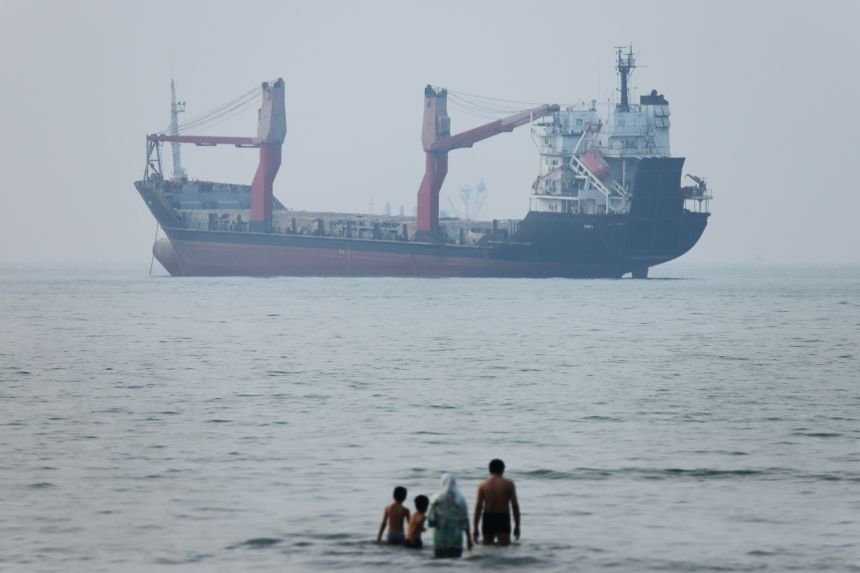
Despite an obliterated navy and air force, Iran wielded significant economic power in the spring. It effectively closed off the Strait of Hormuz to oil tanker traffic by threatening vessels with makeshift drones and explosive-packed speedboats. That persistent threat kept oil prices high through March, April and May, sending gas prices surging and global oil inventories to dangerously low levels.
But now, the Strait of Hormuz is gradually reopening. Oil traders expect the historic oil supply shortage to quickly turn into a major glut as the world is flooded with crude. That’s why Brent crude hovers right around $70 a barrel, trading below its price from two weeks before the war – despite an attack on a tanker Monday.
Low crude inventory levels remain a concern, and the oil market isn’t precisely where the Trump administration would like it just yet. But the shockingly low price of oil has eased pressure off US negotiators to sign a quick and potentially lopsided deal in favor of Iran – buying the Trump administration some much-needed time.

The Trump administration had been playing with a lousy hand: The world lost 1.4 billion barrels of oil supply during the war, according to JPMorgan, which left emergency and commercial crude stockpiles at their lowest levels in several decades. Low supply drove gas prices to four-year highs – and consumer confidence to record lows.
So it’s mindboggling to consider that the world may soon be awash in oil again. But that’s exactly what oil industry analysts expect. As the Strait of Hormuz reopens, tens of millions of barrels of oil are coming through the Persian Gulf again.
The only problem: It’s not clear anyone really wants all this oil. Demand tumbled during the war as prices surged and fuel was in short supply. The world spent months learning how to function with limited fuel, said Natasha Kaneva, head of global commodities strategy at JPMorgan.
“The surge in oil supply is about to collide with a market that, at least for now, simply does not need it,” she added.
Oil demand may never return to where it was before the war – particularly in China and Europe, which went on an electrification spree over the spring.

The International Energy Agency expects demand will recover very modestly next year (around just 2 million barrels a day) while supply surges by 8 million barrels a day. That would significantly oversupply the world with oil.
That’s why, next year, $60 oil is in play, according to JPMorgan. By 2028, oil could sink to $50 a barrel, said Kieran Tompkins, senior climate and commodities economist at Capital Economics.
OPEC, in a fight for its survival, is also ramping up oil production and could turn the spigots up to the max if critical (and disgruntled) members like Iraq get their wish. Raising OPEC’s production caps could force oil prices into the $40 range, according to Vikas Dwivedi, global oil and gas strategist at Macquarie Group.
A price drop and a supply glut of that magnitude could put the United States right back where it started before the war – with low prices and a massive oversupply. That’d give US negotiators a significantly more comfortable position as they work to resolve an end to the conflict with Iran.
But there’s one key difference between now and the lead-up to the war: The world drained its record emergency and commercial stockpiles by nearly 4 million barrels a day to contend with the closed strait. Now, those crude inventories are at dangerously low levels.
The US Strategic Petroleum Reserve sits below 326 million barrels of emergency oil, down 22% from the 415 million barrels just before the war, according to the US Energy Information Administration. That’s the lowest level since the Reagan administration was filling the SPR in 1983.
Such low levels of emergency oil risk putting the United States in a precarious position if it needs to respond to an emergency, including severe weather or more tensions with Iran.
Low commercial inventory levels may be even more concerning.

The stockpiles in Cushing, Oklahoma – which dubs itself the pipeline crossroads of America – fell below 20 million barrels and remained below that critical threshold last week. A physics problem emerges when those storage facilities sink below 20 million barrels: They hit the sludge at the bottom of the tanks and struggle to push the oil through the pipelines.
Trump referenced that problem in the days before he signed a memorandum of understanding with Iran. He acknowledged that America’s low stockpiles could create an “economic catastrophe” that would earn him comparisons to Depression-era President Herbert Hoover.
The global oil surplus should help commercial stockpiles bounce back, particularly if the rest of the world stops relying so much on the United States as the petroleum producer of last resort. But these reserves remain critically low, and the administration will be keeping an eye on their levels as the clock winds down on the 60-day Memorandum of Understanding (MOU).
Vice President JD Vance conceded as much during an interview with conservative media host Michael Knowles last week.
“I think what the president has told us to do is to use this MOU to refill the world’s oil economy, refill some stocks, and then to see where (Iran’s) hand is,” Vance said.
The hand America is playing may not be perfect. But as prices decline and production creeps higher, it’s getting stronger by the day.