



The Intersection of High-Stakes Governance and Personal Investment
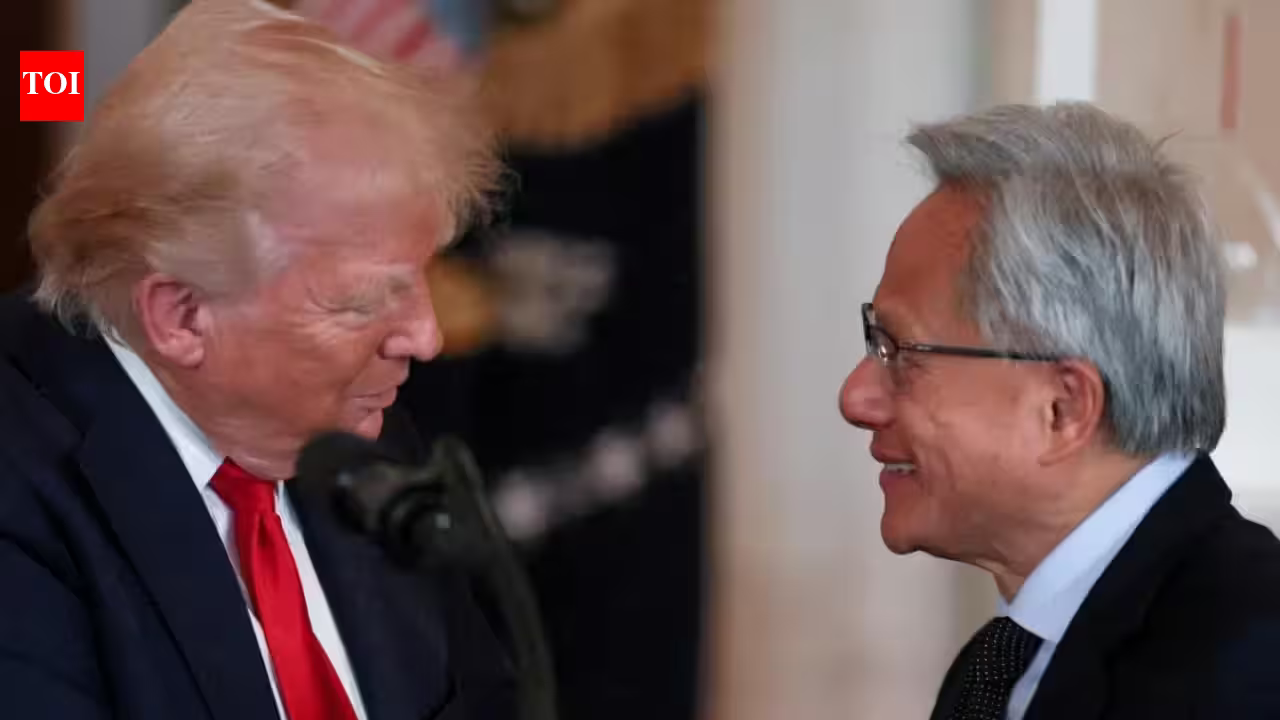
The modern landscape of American politics is increasingly defined by the complex relationship between executive power and personal wealth. Recent financial disclosures involving President Donald Trump and his significant exposure to Nvidia Corporation have thrust the mechanisms of presidential asset management into the center of public discourse. With a portfolio that suggests a stake potentially exceeding $60 million in the semiconductor giant, the lines between market-moving administrative policy and private wealth accumulation have become subjects of intense scrutiny.
For observers in the Indian corporate sector, this scenario offers a masterclass in the complexities of conflict of interest and the governance of blind trusts. In India, where high-profile entrepreneurs and political figures often face rigorous oversight regarding asset declarations and potential policy bias, the American system’s reliance on delegated portfolio management—while legally distinct—creates unique challenges for public perception. The sheer volume of transactions attributed to the President’s accounts, estimated at over 21,000 trades in 2025, highlights a level of financial activity that deviates significantly from the traditional “buy-and-hold” strategy usually associated with political figures, raising valid questions about the autonomy of modern investment trusts.
Navigating Trade Policy and Technological Sovereignty
The controversy is amplified by Nvidia’s central role in the global artificial intelligence race. As the primary provider of the hardware infrastructure required for advanced generative AI, Nvidia holds a position of immense geopolitical influence. The Biden-Trump policy evolution regarding export controls on high-end chips to China has been a primary driver of market volatility. When an administration’s trade policy directly impacts the market valuation of a corporation, any personal investment in that company by the head of state naturally triggers debates regarding the impartiality of those directives.
From an Indian business perspective, this situation underscores the criticality of “Tech Diplomacy.” India, currently scaling its own semiconductor mission through initiatives like the India Semiconductor Mission (ISM), watches such developments with interest. The global chip supply chain is precarious, and decisions made in the White House regarding Nvidia’s capability to serve the Chinese market impact global pricing, lead times, and the competitive positioning of tech ecosystems worldwide. For Indian firms reliant on global chip availability, the stability of Nvidia’s leadership and its regulatory environment is not merely a matter of stock market interest; it is a fundamental input for long-term domestic digital infrastructure planning.
Institutional Governance and the Trust Mechanism
A recurring theme in the defense of the President’s investment portfolio is the role of the trust structure. The White House maintains that the President does not personally direct individual stock trades, as his assets are managed by family members and independent financial professionals. This arrangement is designed to insulate the executive from the day-to-day fluctuations of the market. However, the sheer scale of the Nvidia exposure—and the fact that these assets remain highly concentrated—poses a challenge to the traditional concept of a “blind” trust.
In the context of corporate governance, transparency is the bedrock of investor confidence. While the U.S. framework for financial disclosures provides a roadmap of the President’s interests, the volatility associated with individual stock bets of this magnitude creates a perception gap. If the investment managers managing these trusts are aware of the administration’s broader economic policy trajectory, the “blind” aspect of the trust may be functionally compromised. For observers tracking market trends, the takeaway is clear: as political and technological spheres merge, institutional investors are increasingly forced to price in not only operational risks but also the potential for “policy-influenced market returns.”
The Human Element: Corporate Leadership and Moral Hazard
The recent resignation of Jensen Huang, following reports regarding his private life and alleged associations with a foreign entity, has added an layer of instability to Nvidia’s corporate governance. The juxtaposition of the President’s vocal support for Huang, alongside his personal financial stake, underscores the dangers of overlapping personal reputations with corporate entity valuations. In any market, the loss of a long-standing CEO is a significant event; when that event is compounded by security concerns, the resulting investor exodus is usually swift.
The Indian corporate sector, which has seen its fair share of leadership transitions under intense public pressure, understands that corporate stability is inextricably linked to ethical conduct. When a business leader becomes a subject of national security concerns, the resulting fallout often ripples through the entire supply chain. For Nvidia, the task ahead is to decouple its technological dominance from the controversies surrounding its former executive. For the markets, the lesson remains constant: even the most robust and innovative companies are vulnerable to the human element of their leadership and the external scrutiny of their major shareholders.
Future Implications for Market Regulation and Disclosure
The scrutiny surrounding the President’s Nvidia holdings suggests that the current U.S. standards for presidential financial disclosure may require re-evaluation to maintain public trust. As the digital economy grows, and tech giants become the primary drivers of stock market indices, the potential for perceived conflicts of interest will only rise. Legislators and market regulators may eventually move toward stricter limitations on the types of assets that high-ranking officials can hold, potentially mandating the divestment of shares in companies that are heavily dependent on federal policy, such as those in the AI and defense sectors.
For international stakeholders, the outcome of this situation will serve as a bellwether for how future administrations navigate the intersection of Silicon Valley interests and national security. The Indian market, which increasingly seeks to align itself with Western technological standards and partnerships, will closely monitor how these regulatory gaps are closed. Whether through more robust ethics legislation or a shift in how political figures handle their wealth, the goal remains the same: ensuring that the mechanisms of governance remain untainted by the pursuit of personal wealth. As Nvidia navigates its post-Huang era, the world will be watching to see if its institutional strengths are sufficient to withstand both the loss of its visionary leader and the spotlight on its most prominent investor.
Disclaimer: This content is auto-generated for informational purposes only.
Source: Read Original News