







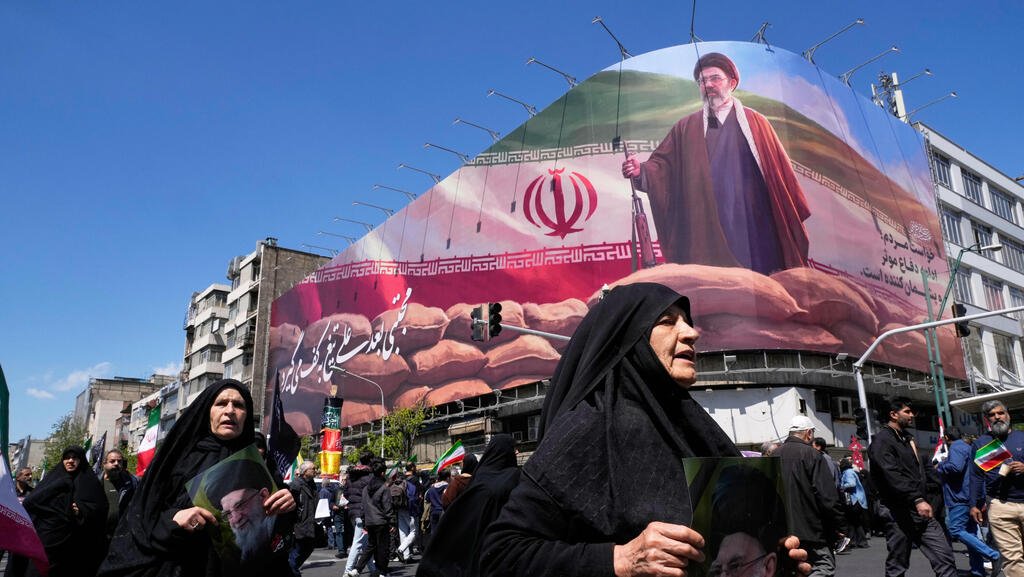
The memorandum of understanding signed between the United States and Iran is a short and general document, 14 articles in total, but one with enormous economic potential for Iran. The political headline is the end of the war and the opening of the Strait of Hormuz. The economic headline, and its regional significance, is no less important: Iran could regain access in the first phase to oil exports, financial services, frozen assets, and trade routes. In a final agreement, it could receive much more, a path toward lifting sanctions and a rehabilitation program worth at least $300 billion.
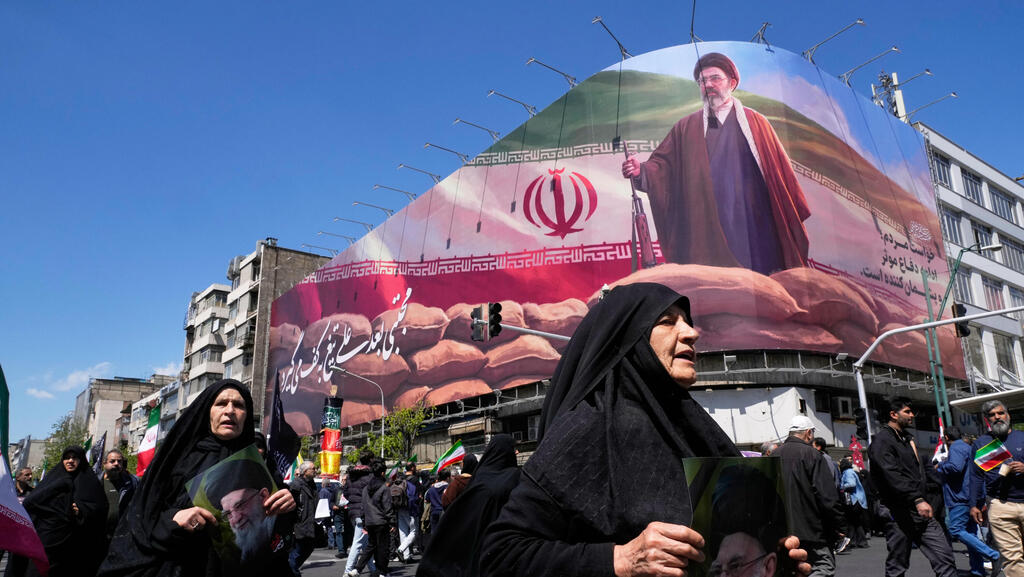
For the regime in Tehran, this marks the difference between survival under siege and gradual economic recovery. For Israel and the Gulf states, it is a reason to examine the memorandum through the massive cash flows it could generate for Iran.
The immediate danger: oxygen for military plans
The first benefit is, as mentioned, the opening of Hormuz. Article 5 states that Iran will work to ensure the safe passage of merchant ships from the Persian Gulf to the Sea of Oman and vice versa, free of charge, for 60 days. Traffic is expected to begin immediately and stabilize within 30 days, after the removal of technical and military obstacles and the clearance of mines. This may sound like a technical clause, but it concerns one of the most important energy corridors in the world. Opening the strait reduces pressure on energy prices, lowers the risk premium in marine insurance, frees stranded vessels, and allows Gulf states to gradually return to commercial routine.
For Iran, the benefit is even greater. Opening the Strait of Hormuz could free some 72 million barrels of Iranian oil that were stuck on tankers west of the port of Chabahar. At a price of about $78 per barrel, this represents a gross market value of roughly $5.6 billion. While not all of this would flow directly into state coffers, it constitutes commercial inventory that can be converted into revenue, payments, and foreign currency. At the same time, reopening the strait could also release about 93 million barrels of oil from other countries that had accumulated in the Gulf region.
The second immediate benefit is contained in Article 10: U.S. exemptions for Iranian crude oil exports, petroleum products and derivatives, as well as related services, primarily banking, insurance, and transportation. This is where the real fast money is. Iranian oil exports collapsed during the war and blockade. Exports in May fell by more than one million barrels per day compared to April, and by about 1.6 million barrels per day compared to March. A return to April levels alone would mean an additional $80 million per day, or about $2.4 billion per month in gross income. A return to March levels would bring Iran closer to an additional $4 billion per month.
Even after discounts, transport costs, deferred payments, and banking restrictions, the scale is clear: oil alone could generate tens of billions of dollars in additional annual revenue for Iran, provided U.S. exemptions remain in place and buyers return. This would represent a gradual restoration of an entire commercial infrastructure: banks willing to process payments, insurers willing to cover shipping, tanker operators willing to enter the region, and Asian traders able to buy Iranian oil without relying on shadow fleets, heavy discounts, and indirect payment channels.
The third benefit is Article 11: frozen funds and assets. The official wording states that the United States will work to make frozen or restricted Iranian funds and assets fully available for use upon implementation of the memorandum. The funds may be used to pay any ultimate beneficiary designated by the Central Bank of Iran, while the United States will issue the necessary licenses and permits.
This is a much broader clause than the humanitarian model seen in the past. In the Qatar model, Iranian funds were limited to food, medicine, agricultural products, and medical equipment under close supervision. Here, the wording refers to full use, according to the discretion of the Iranian Central Bank. The economic difference is substantial: humanitarian funds address specific shortages, while unrestricted funds strengthen reserves, improve the balance of payments, stabilize the currency market, and allow the government to pay salaries and allocate resources to military programs.
The internal impact in Iran could be rapid. The central bank could inject foreign currency into the market, stabilize the rial, extend credit for essential imports, reduce pressure on food and fuel prices, and allow the government to present a tangible achievement after months of war. A regime that enters implementation economically exhausted could reach the final agreement phase under significantly less pressure.
The second phase: an economic engine for years to come
The immediate phase provides oxygen. A final agreement, if signed, could open a new economic horizon for Iran. This is where Articles 6 and 7 come into play. Article 6 outlines an economic rehabilitation and development plan for Iran worth at least $300 billion, in cooperation with regional partners and in addition to U.S. licenses and exemptions for financial transactions. $300 billion is roughly equivalent to Iran’s annual GDP. Even if spread over several years rather than delivered immediately, it is a figure Tehran can use to build a domestic narrative of recovery and attract investment.
These funds, if realized, are critical. Iran requires extensive rehabilitation in power plants, electricity grids, oil and gas infrastructure, ports, railways, petrochemicals, refineries, water systems, and housing. Each of these sectors could attract contractors, banks, investment funds, energy companies, and equipment suppliers. It would function as an economic engine capable of sustaining the Iranian economy for years, bringing back foreign capital, and reintegrating parts of Iran into the regional system.
Article 7 expands the picture, committing the United States to ending all types of sanctions against Iran according to a timetable to be defined in the final agreement. These include UN Security Council resolutions, IAEA Board of Governors resolutions, and primary and secondary U.S. sanctions. If implemented, this would create a deeper structural shift than any one-time asset release, a transition from a sanctions-dependent economy to one operating through legal global channels.
The Gulf: economic gains come with concerns
The Gulf states benefit immediately from reduced risk in the Strait of Hormuz. Qatar can gradually return LNG shipments from Ras Laffan and restore gas exports disrupted during the war. Saudi Arabia, the United Arab Emirates, Kuwait, and Iraq regain more stable export routes, lower insurance costs, and relative calm in energy markets. Asian importers, primarily China, India, Japan, and South Korea, benefit from lower prices and improved supply stability.
But these gains come with concerns. Saudi Foreign Minister Faisal bin Farhan has already made clear that relations with Iran must be built on trust first, and that broad economic cooperation cannot precede diplomatic normalization. Saudi Arabia also opposes new arrangements that would effectively turn the Strait of Hormuz into an economic or political instrument for Tehran.
A $300 billion reconstruction fund is also far from guaranteed. The Gulf states are wealthy, but they are not a reconstruction mechanism for a regional rival. Any participation would require strict oversight, security guarantees, assurances that funds are not diverted to military activity, and tangible progress in Iran’s regional behavior. Qatar and Oman may see opportunity for influence, while Saudi Arabia and the UAE are likely to remain far more cautious.
The implications for Israel: immediate gain, strategic risk
Israel would see immediate economic benefits from the opening of Hormuz: lower global risk premiums, falling oil prices, and relief in transportation, fuel, aviation, and commodity costs.
But these gains are modest compared to the strategic and economic risk. An Iran receiving an additional $2-4 billion per month in oil revenue, $12-24 billion in accessible frozen assets, banking and insurance relief, and a potential pathway to sanctions relief is fundamentally different from an Iran under siege. Such inflows could stabilize the regime, reduce internal pressure, rebuild infrastructure, finance defense capabilities, and expand regional activities.
The Israeli debate often focuses on centrifuges, enrichment levels, and monitoring mechanisms. These are critical issues, but Iranian power is also measured in currency reserves, export volumes, financial access, defense budgets, and the ability to fund regional networks.
The equation is simple: if Iran returns to exporting around 1.5 million barrels per day at $78 per barrel, monthly gross revenue approaches $3.5 billion. If $12-24 billion in frozen assets are released simultaneously, Iran gains tens of billions of dollars in liquidity within months. Combined with a potential $300 billion reconstruction framework and gradual sanctions relief, this would not merely be economic relief, it would fundamentally reshape the regime’s operating environment.
The obstacles to implementing the agreement remain significant: distrust among Gulf states, U.S. political opposition, security risks in Hormuz, and uncertainty over Iran’s commitments. Nevertheless, the memorandum provides Tehran with a clear economic opening. If implemented without strict, phased, and reversible enforcement mechanisms, Iran could emerge not only with a ceasefire, but with a significantly strengthened economic foundation.
A document that begins as a framework for de-escalation could ultimately become a roadmap for the economic rehabilitation of the Iranian regime.