







Beyond Missiles: Why Ukraine’s Frontline Air Defenders Are Scrambling for Power and Detection Tech
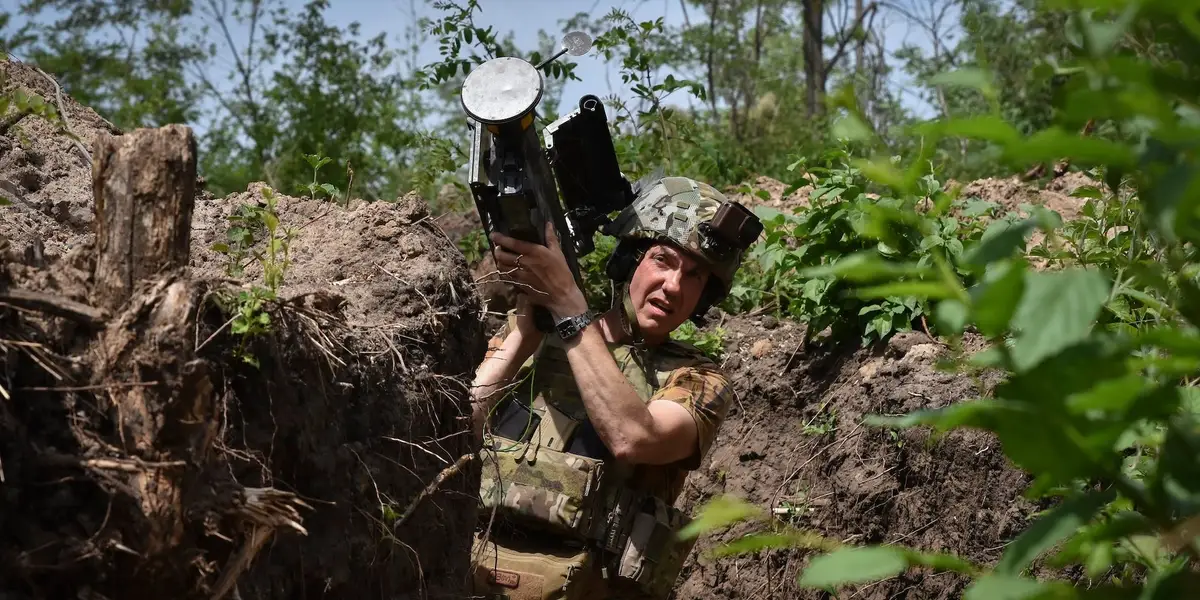
For a frontline Ukrainian unit tasked with protecting infantry from low-flying Russian jets, cruise missiles, and drones, the greatest obstacle isn’t a lack of ammunition. According to a battery sergeant known by the call sign “Yankee,” the most persistent challenge lies in acquiring the “secondary” electronic equipment essential for survival and target acquisition.
While the unit is equipped with sophisticated man-portable air-defense systems—or MANPADS, such as the American Stinger, Polish Piorun, and Soviet-era Igla—Yankee says his team is facing a severe, systemic shortage of the technology needed to keep those systems operational and the crew aware of their surroundings.
The “Silent” Shortage
“The hardest thing is finding resources,” Yankee told Business Insider. “Secondary resources, not the weaponry, but electronic warfare stuff.”
Specifically, units are struggling to secure high-capacity portable power stations, such as EcoFlows, which are vital for recharging communications equipment, drones, tablets, and electronic warfare sensors. In the hazardous, high-stakes environment of the “zero line”—the most forward edge of the conflict—soldiers cannot rely on the electrical grid, which is frequently crippled by Russian missile strikes. Simultaneously, traditional portable generators are often discarded as a liability because their noise and heat signatures can easily alert enemy forces to a unit’s position.
Beyond power, there is an urgent need for portable drone detectors. As Russian forces increasingly utilize unmanned aerial vehicles (UAVs) for surveillance and strike missions, Ukrainian soldiers have turned to handheld or vehicle-mounted scanners capable of identifying incoming drones by picking up their unique radio frequency signatures. These devices serve as a crucial early-warning system for troops who are constantly under the shadow of persistent aerial threats.
Procurement Struggles
The scarcity of this gear highlights a unique logistical friction within the Ukrainian military. Unlike many Western militaries with centralized procurement bureaucracies, Ukraine’s defense effort often relies on a decentralized model. Units frequently source equipment through individual initiative, private manufacturers, or crowdfunding.
While this agility has fostered rapid technological innovation, it has also resulted in an uneven distribution of essential gear. Newer electronics are often produced in limited quantities, and distribution bottlenecks mean that some units remain well-equipped while others struggle to find basic power solutions or sensors.
A High-Stakes Battlefield
The role of these MANPADS units is critical to the broader war effort. Western defense analysts have noted that by forcing Russian pilots to avoid low-altitude flight paths to escape shoulder-fired missiles, these units have effectively degraded the air support Russia can provide to its ground troops.
For soldiers like Yankee, however, the strategic impact of their work is inseparable from the daily peril of their position. Describing the extreme caution required to operate in the combat zone, he noted that moving just a few hundred meters can take a week of waiting for a window of relative safety.
“Moving even that short distance can be like a question of life and death,” he said.
Currently, Yankee is participating in “Operation Legio,” a multinational training program led by Norway that equips and trains Ukrainian forces in NATO-standard tactics. By blending these Western methodologies with their own battlefield-proven experience, soldiers hope to bridge the gaps in their capabilities. Yet, until more reliable channels for electronic hardware are established, the burden of sourcing the gear—from massive batteries to frequency scanners—remains a persistent battle for the air defenders on the front lines.