









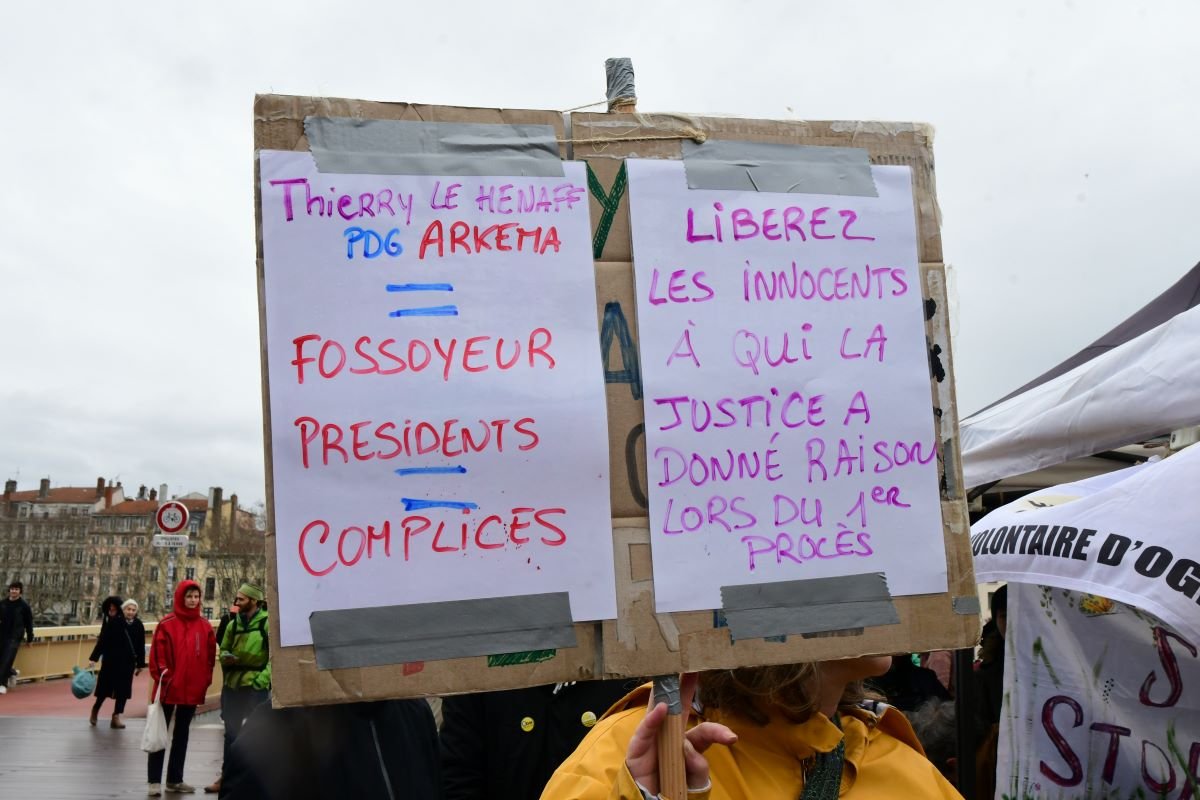
The United Nations is concerned that industrial giants Arkema and Daikin, which operate in an industrial zone south of Lyon, France, dubbed ‘Chemical Valley’, have caused PFAS pollution, spreading synthetic ‘forever chemicals’.
Five UN rapporteurs have expressed their “growing concern about the adverse human rights impacts of the activities of Arkema France and Daikin Chemicals France” to the French government and the companies concerned.
In letters dated 13 March and published on Tuesday, after sixty days in accordance with the established procedure, the UN rapporteurs demanded explanations for the well-documented pollution problem.
“This is the first time in France that United Nations representatives have criticised the management of PFAS,” said the NGO Notre Affaire à tous, which alerted the United Nations about the issue in June 2025. “And it is also the first time that the state’s role in this pollution has been officially called into question.”
The UN officials said it was ”particularly worrying that the high concentrations of PFAS detected near these companies’ industrial sites expose local residents and workers to an increased risk of developing certain serious illnesses, such as cardiovascular, endocrine, respiratory and digestive disorders.”
In 2023, the average concentration of perfluorononanoic acid, a type of PFAS, in the blood of residents of Pierre-Bénite – the town where the Arkema and Daikin sites are located – was seven times higher than that of the general population.
An analysis of the region’s water supply networks had also revealed, as early as 2022, PFAS contamination in around 110 municipalities in the Chemical Valley, thereby putting up to 200,000 people in the Rhône, Loire and Isère departments at risk.
Litigation
PFAS pollution is becoming a major topic of public concern as lawsuits multiply across Europe. The newspaper Le Monde has counted around 70 such cases – including one brought by 1,400 residents of towns near Antwerp against the American chemicals giant, 3M.
There are reportedly more than 2,300 PFAS hotspots in Europe, of which 108 are in France, according to Notre Affaire à tous, and ‘Chemical Valley” is the most heavily contaminated region.
Widespread contamination identified in water, soil, eggs and the breast milk and blood of local residents prompted a class action lawsuit launched in January, with 200 so far claiming more than €36 million in damages from Arkema and Daikin.
The UN rapporteurs deemed the 38-page dossier sent by Notre affaire à tous “sufficiently credible to warrant immediate attention”.
“This warning serves as a reminder to the EU of its obligations: not to bow to pressure from lobby groups, but to take decisive action against persistent pollutants,” Green MEP and co-founder of Notre Affaire à tous Marie Toussaint said.
France should have taken action
The UN has criticised the French government in particular for a lack of transparency, “by failing to alert the affected population to the extent of PFAS contamination and its potential harmful effects.”
Reports show that the government had been alerted as early as the late 2000s, but did not take action until 2022, when journalists collaborating in the ‘Forever Project’ revealed the extent of PFAS pollution.
The rapporteurs are calling on Daikin and Arkema to provide details of the measures taken to ensure compliance with environmental legislation, to establish mechanisms for redress, to investigate the damage they have caused and to apply the ‘polluter pays’ principle.
The rapporteurs pointed to ongoing negotiations over a blanket PFAS ban in the EU, proposed in January 2023 by Germany, Denmark, the Netherlands, Sweden and Norway, and asked Paris to clarify its position.
A public consultation launched at the end of March by the European Chemicals Agency (ECHA) on the socio-economic consequences of restricting PFAS is currently underway. The Commission is expected to propose a ban on PFAS in consumer goods by the end of 2026.
(rh, cm)