

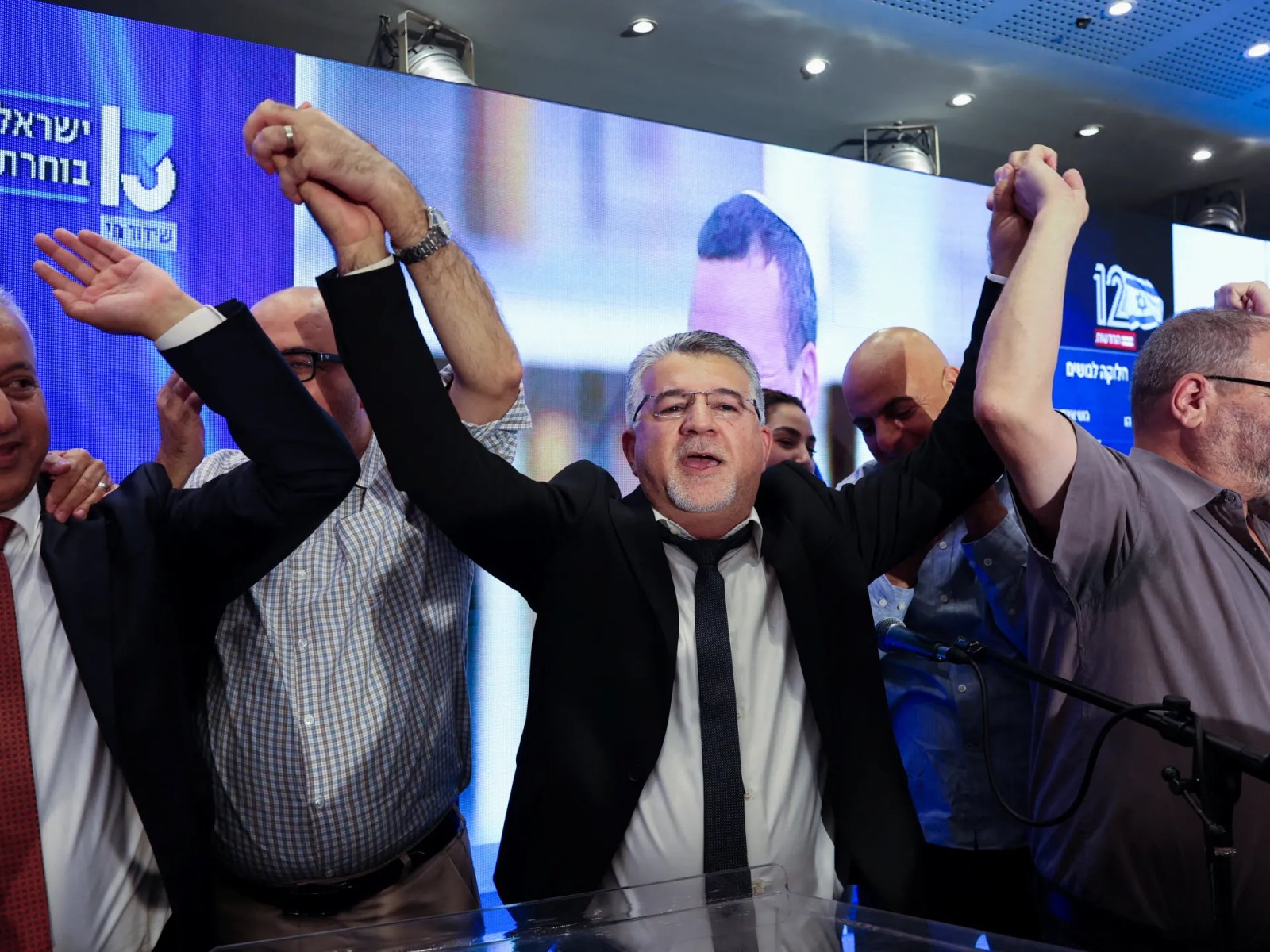
JERUSALEM — In a historic shift for Israeli politics, the Joint List alliance of Arab-led parties announced on Thursday that it will formally recommend opposition leader Gadi Eisenkot to form the next government. This development comes on the heels of a record-breaking performance in last week’s general election, where Arab-led factions secured an unprecedented 19 seats in the 120-member Knesset.
The Joint List’s decision, combined with the support of the Ra’am party, which holds eight seats, provides Eisenkot with a significant path toward a parliamentary majority. Should these 19 lawmakers formally submit their endorsements to President Isaac Herzog, Eisenkot is projected to command the support of 67 lawmakers, comfortably surpassing the 61-seat threshold required to govern.
The consolidation of support for Eisenkot leaves incumbent Prime Minister Benjamin Netanyahu in a precarious position. Netanyahu’s bloc, currently sitting at 53 seats, faces potential erosion; the ultra-Orthodox faction Degel HaTorah has signaled it will recommend neither candidate, citing frustration over the failure to secure military service exemptions for Haredi men.
The election aftermath has been marked by heightened political volatility. Netanyahu has repeatedly alleged, without providing substantive evidence, that Arab parties engaged in voter fraud, a narrative his Likud party has used to label any alliance with Arab factions as “dangerous” to the state. However, these claims have been firmly rebuffed by Israel’s Central Elections Committee, which certified the final results on Wednesday after finding no evidence of systemic irregularities.
President Herzog has moved to temper the rhetoric, explicitly condemning “coarseness and racist expressions” directed at the nation’s Palestinian minority, who comprise approximately 20 percent of the electorate. While Herzog has called for investigations into individual reports of misconduct—such as the recent arrest of three activists accused of bribery—he has urged politicians to avoid smearing entire communities.
“I have great respect for our citizens,” Herzog stated, emphasizing the need for unity as he proceeds with mandatory consultations. The President has been meeting with representatives from across the political spectrum to determine who is best positioned to break the current deadlock.
Once the consultation process concludes, Herzog is expected to task a candidate with the formation of a government. The designated nominee will have 28 days to build a coalition, with a potential 14-day extension should negotiations prove difficult. If the designated candidate fails to assemble a stable majority, Israel faces the prospect of yet another national election early next year.
For now, the unprecedented unity among Arab-led parties in supporting Eisenkot has fundamentally reshaped the landscape, signaling a potential end to the Netanyahu era and the arrival of a new, albeit complex, political reality for the Knesset.
Disclaimer: This content is auto-generated for informational purposes only.
Source: Read Original News