






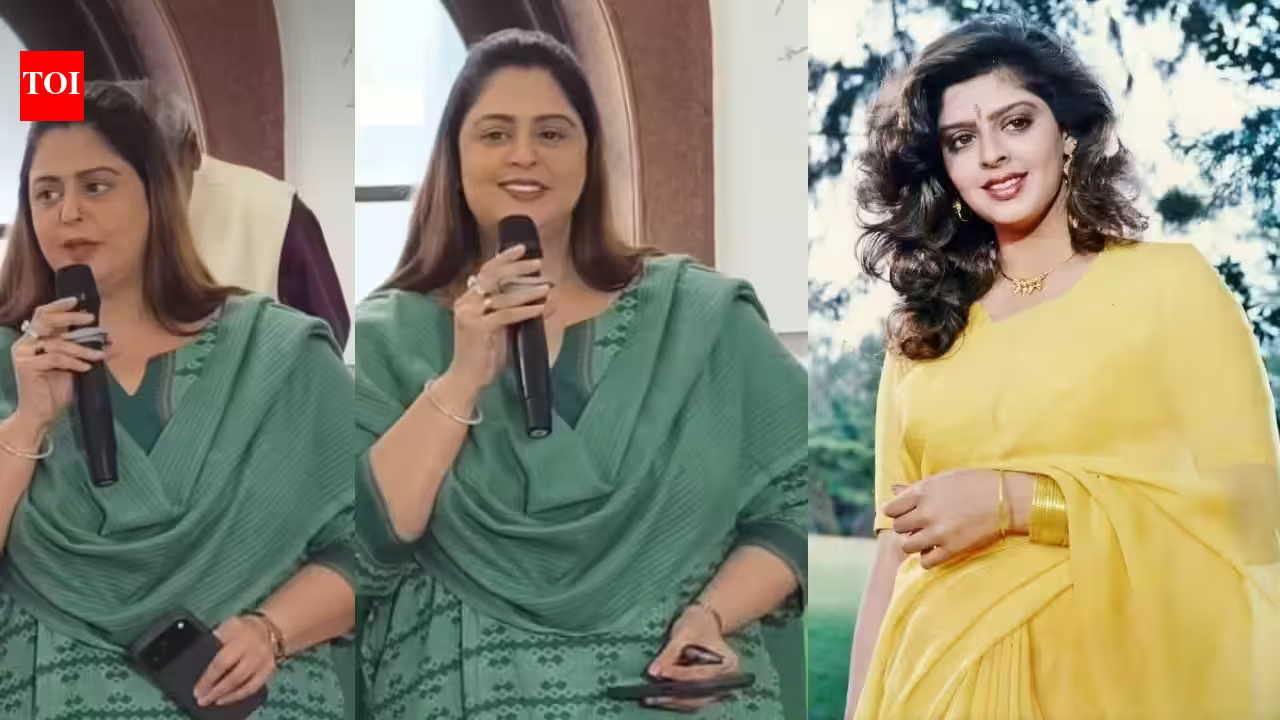
The flashbulbs popping at a recent Cine And TV Artistes Association (CINTAA) press conference were meant to highlight the industry’s advocacy efforts, but the lens of social media had a different agenda. When footage of 90s screen icon Nagma hit the internet, the collective memory of a generation was jolted. For those who grew up in the era of audio cassettes and VCRs, the sight of the actress—who once shared the marquee with the biggest titans of Bollywood—sparked a visceral, mixed reaction that ranged from shock to defensive nostalgia.
In an age where celebrities are meticulously curated by lighting, angles, and filters, the “raw” reality of a public appearance is often treated like a scandal. Nagma, who has spent the better part of the last decade living a life far removed from the glare of film sets, found herself the subject of an intense, and at times unkind, discourse.
The Viral Moment: When Nostalgia Meets Reality
The internet loves a “then-and-now” transformation, but the vitriol that often accompanies it says more about our digital culture than it does about the stars themselves. As clips of Nagma at the CINTAA event circulated, comments flooded in. “Is that really her?” and “I didn’t recognize her at all” were the recurring refrains.
For the casual scroller, the physical shift was jarring. We are conditioned by the permanence of celluloid; in our minds, Nagma is frozen in 1994, permanently starring in Suhaag or dancing through the lush production numbers of the early 90s. When reality fails to align with the mental snapshot of a star in their prime, the internet’s reaction is often one of bewildered critique. Yet, beneath the shock lay a deeper, more poignant realization: the 90s are truly, definitively in the rearview mirror.
A Career That Defined a Generation
To reduce Nagma to a viral clip is to ignore a multifaceted career that spanned half a dozen languages and multiple film industries. Her debut in the 1990 film Baaghi, opposite Salman Khan, was a box-office phenomenon that turned her into an overnight sensation. She wasn’t just a “heroine” of the decade; she was a pan-Indian force.
While her peers were often confined to the bubbles of Hindi cinema, Nagma navigated the Southern film industries with ease, becoming a household name in Telugu, Tamil, Kannada, and Malayalam cinema. She brought a specific brand of effortless grace to films like King Uncle alongside Shah Rukh Khan and Suhaag with Akshay Kumar. She was the bridge between the high-octane masala films of the 90s and the evolving demands of regional cinema. Her pivot to Bhojpuri cinema later in her career—specifically her chart-topping work with Ravi Kishan—cemented her legacy as a versatile performer who refused to be boxed in by the geography of Mumbai’s studios.
The Toxic Tug-of-War Over Aging
Predictably, the commentary on her appearance quickly polarized. On one side, the inevitable chorus of body-shaming; on the other, a fierce defense from fans who are tired of the unrealistic standards imposed on women in the public eye.
The backlash against the critics was swift and necessary. “She’s a human being, not a mannequin,” one user pointed out, echoing the sentiments of those who find the constant policing of women’s bodies to be an archaic habit. This incident highlights a growing fatigue among audiences regarding the “perpetual youth” myth. We demand that our stars remain timeless, yet we are the first to mock them for the natural, unavoidable process of living. As one netizen eloquently put it, “With age everything changes and it’s normal.” It is a simple truth that the internet constantly struggles to internalize: aging is not a failure of character, nor is it an act of professional betrayal.
Beyond the Limelight: A Life Well-Lived
Since her last major cinematic outing in 2008’s Thela No 501, Nagma has maintained a relatively quiet profile. Her absence from the screen was not an indicator of a “falling star,” but a conscious decision to pursue interests outside the industry.
When a public figure steps out after a long hiatus, they are often treated like a museum exhibit—a relic to be analyzed for wear and tear. But for those who grew up watching her, the appearance wasn’t a spectacle; it was a reunion. There is a profound sense of loss for many Millennials who see their own youth reflected in these stars. Seeing Nagma, or any icon from that era, reminds us that while they were the architects of our childhood fantasies, they have also had to navigate the passage of time just like the rest of us.
What’s Next for the 90s Icon?
The big question lingering after the CINTAA event is whether this sudden spike in interest will translate into a comeback. The film industry is currently experiencing a massive resurgence of 90s nostalgia. From remakes to re-releases, audiences are hungry for the stars they once worshipped.
While there are no confirmed reports of Nagma returning to a feature film, the digital buzz has reminded producers and casting directors that her fan base is not only intact but deeply loyal. Whether she chooses to step back in front of the camera or remains content in her life away from the headlines, the CINTAA appearance served its purpose: it reminded us that Nagma remains an indelible part of the Indian cinematic fabric.
Perhaps the most valuable takeaway from this week’s “scandal” isn’t what she looked like, but why we felt the need to comment on it at all. It’s time to move past the expectation that our favorite stars owe us their 1990s appearances. Instead, let’s celebrate the fact that she showed up at all, proving that the grace she projected on screen four decades ago is still very much a part of her presence today—regardless of what the “zoom-in” culture of the internet says.
Disclaimer: This content is auto-generated for informational purposes only.
Source: Read Original News