






Wassim al-Adawi | Muwafaq Al-Khouja
Since imports were opened after the fall of the regime, Syrian roads have become a completely different scene. Hundreds of thousands of cars and vehicles flowed into the country within a few months, in one of the largest import waves the Syrian market has seen in decades. The wave left strong effects across economic, financial, social, and environmental fronts, at a time when the car market appeared to emerge all at once from years of stagnation and monopoly.
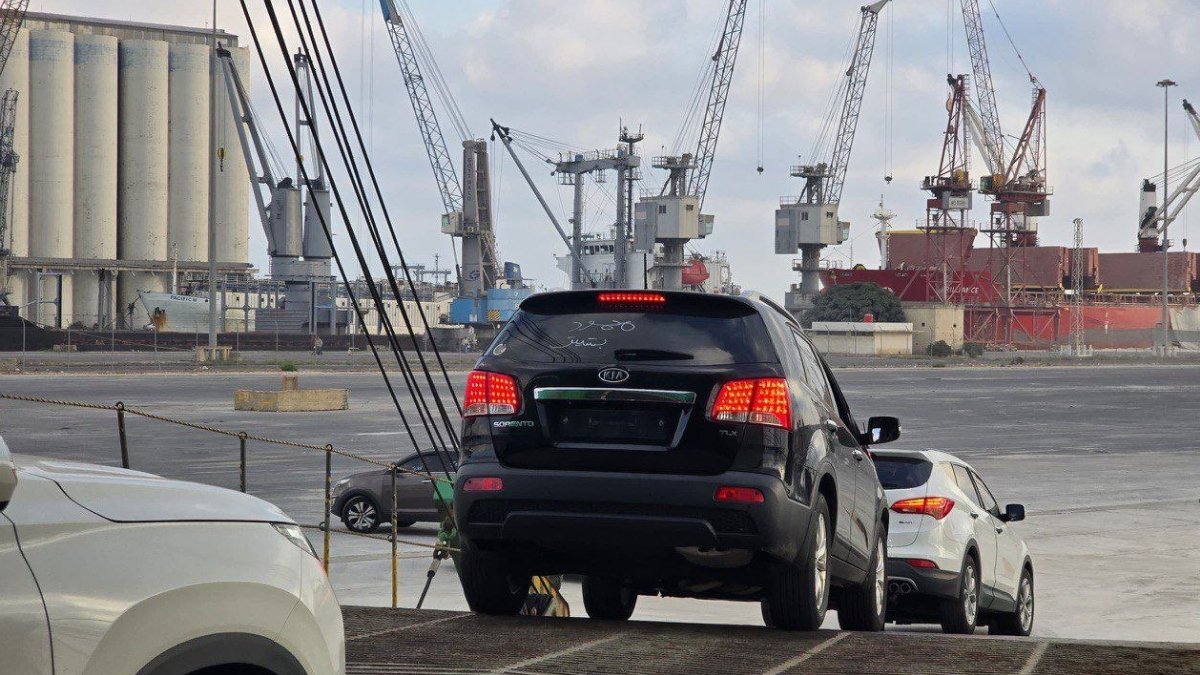
With customs duties previously reduced by up to 80% and imports allowed for cars from model year 2011 and newer, the price map changed in an unprecedented way. Prices of some cars fell to a quarter of their value compared with the period of the former regime’s rule, and cars once considered a distant dream became accessible to a wider segment of Syrians. Showrooms, ports, and border crossings are filled with vehicles entering from Jordan and Turkey through the Nassib crossing and Tartus port.
But behind this apparent revival, a heavy economic question emerges: how much did Syria pay for this wave?
Despite the absence of precise official data, economic estimates place the value of imported cars at about $10 billion.
These billions are massive sums that left an economy already suffering from weak production and a shortage of foreign currency, opening debate over the viability of directing this financial mass toward a consumer good instead of investing it in more urgent productive sectors.
On another level, car imports are putting pressure on services, especially roads that were already not prepared to receive such numbers, in addition to being worn down by neglect and potholes. There is also broad environmental damage caused by the exhaust of used or modified cars.
Foreign Currency Drain In A Fragile Economy
The phenomenon of car imports carries a clear economic contradiction. On one hand, it met a real social need after years of collapse in the transport market. On the other hand, it deepened pressure on the dollar and the Syrian pound exchange market.
Syrian economic and financial expert Dr. Mohammad Taysir al-Faqih told Enab Baladi that the problem does not lie only in the number of imported cars, but in the “opportunity cost,” meaning what the Syrian economy lost when billions of dollars went to cars instead of being pumped into agriculture, industry, or energy.
As vehicle numbers expanded, other effects began to appear in succession:
- Growing pressure on roads.
- Rising demand for fuel and spare parts.
- A boom in maintenance workshops, which began operating at an unprecedented pace to repair imported cars, especially those that entered in varying technical conditions.
In light of this reality, the Syrian government later moved to stop the import of used cars in an attempt to regulate the market and limit the chaos that accompanied the broad import wave. The most important question, however, remained unanswered: was this boom the beginning of economic recovery, or merely broad consumption with deferred costs?
No precise official figures have been published so far by the Syrian government or the Ministry of Economy and Industry on the total value of imported cars. The media office at the Ministry of Transport remained silent regarding questions Enab Baladi sent to the ministry about the number of vehicles imported since liberation to date, and the total value of the imported vehicles, approximately.
As for the parties that imported the cars, imports were carried out by traders, private companies, individual importers, and local car showrooms that relied mainly on border crossings with Jordan and Turkey, especially the Nassib border crossing and Tartus port.
The Ministry of Transport and the Syrian General Authority for Ports and Customs organized entry, customs clearance, and technical inspection procedures.
The wave of car imports in Syria after the opening of imports is an economic phenomenon worth analyzing from two angles:
- The first concerns the real social need for transportation after years of disruption and imbalance in the vehicle market.
- The second concerns the overall impact of this import activity on foreign currency reserves, the exchange rate, and the productive structure of the economy.

A car ship arrives at Tartus port, 24 July 2025. (Tartus Governorate)
More Than 500,000 Cars In A Year And A Half
Based on a reading of the vehicle import path from 8 December 2024 to 21 May 2026, and taking into account estimates that about 110,000 cars entered during the first months of 2025 alone amid rising commercial demand, al-Faqih said estimates closer to reality indicate that the total number of imported cars to date may exceed 500,000 vehicles.
The figure may be higher if cars that entered through commercial crossings, not fully recorded in official statistics, are counted.
The Syrian economist said this large increase reflects an exceptional shift in the structure of the Syrian market, as the car sector has become one of the largest drains on foreign currency in the recent period, with estimates that the import bill for other goods exceeded several billion dollars in less than a year and a half.
The Ministry of Transport, through the director of its media office, declined to answer Enab Baladi’s questions about the number of vehicles that flowed into the country through imports since liberation, saying the Syrian General Authority for Ports and Customs was the body responsible for knowing their numbers.
The Syrian General Authority for Ports and Customs, through its media director, said counting the number of imported cars and the volume of foreign currency paid to import them requires more time than was available at the moment this report was prepared.
These figures, regardless of the margin of variation, reflect a large volume of resources being directed toward a durable consumer good that does not directly contribute to generating domestic added value or strengthening the economy’s productive capacity.
Al-Faqih explained that the problem is not limited to the volume of imports itself, but extends to the opportunity cost, meaning what was economically abandoned when this mass of dollars was allocated to importing cars instead of being directed to agriculture, industry, energy, or productive transport.
Impact On Foreign Currency And The Exchange Rate
The impact of car imports in Syria after liberation, and within a short period, is reflected in a prominent model of directing a large financial mass toward a final consumer good that does not contribute to strengthening local added value or expanding productive capacity, but is instead absorbed entirely within its own consumption cycle.
Based on the estimated average value of an imported car, Dr. Mohammad Taysir al-Faqih said the total value of cars that entered the Syrian market from 8 December 2024 to May 2026 ranges between $9 billion and $10 billion. This is an unprecedented figure in the history of the modern Syrian market, especially amid the absence of local production and the market’s near-total reliance on external imports.
This financial mass is large, given the size of the Syrian economy and its limited capacity to generate foreign currency revenues.
Al-Faqih stressed that the effect of these imports is not limited to trade, but extends to deepening demand for dollars, increasing pressure on the exchange market, and weakening market confidence in the local currency.
The impact is more severe if imports are financed through informal channels, such as the parallel market or the conversion of Syrian pounds into dollars within the domestic monetary system, as this directly affects the supply of foreign currency and causes greater exchange rate fluctuations.
If imports are financed through private savings or external transfers, the direct impact on the local market may be smaller in the short term, but it remains present at the level of the total import cost and resource drain.
Deep Structural Effects On The Economy
From a macroeconomic perspective, al-Faqih explained that imports cannot be evaluated only by whether they meet an immediate need, but must be viewed within the framework of opportunity cost.
A dollar directed to importing cars cannot at the same time be directed to buying productive equipment, raw materials, agricultural supplies, or industrial inputs.
In an economy suffering from weak productivity and declining real investment, priority should go to spending that strengthens capital accumulation and reduces dependence on imports in the future. Directing foreign currency to private cars provides a direct consumer benefit, but it achieves a limited productive effect compared with possible alternatives.
From a purely economic perspective, it would have been more useful to direct a large part of this financial mass to agriculture, industry, productive transport, and energy, because these sectors generate income, jobs, added value, and reduce future imports.
Cars, despite meeting a real social need, are at this stage mostly final consumption and do not generate a local value chain equivalent to the volume of foreign currency spent on them.
Dr. al-Faqih considers the difference between the two paths significant:
- Importing a car creates a direct individual benefit.
- Financing a factory, irrigation network, production line, or cold storage facility creates a multiplier effect on output, employment, and prices.
Therefore, spending on cars during a fragile recovery phase appears closer to satisfying a delayed consumer need than to development investment.
Financing Channels And Institutional Effects
Car imports are financed through multiple channels, including:
- Licensed banks.
- Exchange companies and offices.
- Private transfers, meaning official channels.
- Indirect routes through regional intermediaries, Syrian expatriates abroad, or private accounts belonging to some individuals or companies abroad.
In the Syrian economy, which has witnessed rapid market liberalization after a long period of restrictions, Dr. al-Faqih said the likelihood of activating irregular financing channels increases, because high demand for dollars creates wide profit margins and encourages informal intermediaries to enter the market.
As a result, the car import wave may not have affected foreign trade alone, but may also have contributed to expanding unregulated exchange activity, increasing ambiguity in tracking the movement of foreign currency, and raising mediation and financing costs.

The first commercial transport ship carrying cars arrives at Latakia port, 26 January 2025. (Latakia Governorate)
Pressure On Fuel, Services, And The Environment
Economic researcher Abdulazim al-Mgarbel believes the Syrian market can absorb part of the cars, but cannot absorb a large and unregulated influx.
He said citizens’ purchasing power is limited, fuel is not always available at an affordable cost, and roads and technical services are not all ready for a major boom.
Real absorption, therefore, should be achieved by prioritizing public transport vehicles, trucks, productive machinery, and low-consumption economy cars, rather than opening the door widely to consumer cars that increase pressure on fuel and congestion.
The decision related to free zones confirms that the state is trying to regulate the entry of used cars and prevent their automatic transfer into the local market.
The Syrian General Authority for Ports and Customs issued a decision allowing investors in free zones to bring in their used cars from neighboring countries and display them in their private showrooms, while activating the activity of “cutting up and dismantling” cars under regulations.
The decision, published by the Syrian General Authority for Ports and Customs on 12 May, was based on minutes of a meeting between the authority’s presidency and the management of the General Establishment for Free Zones on 16 April.
The decision required investors wishing to bring in their cars to submit an “official written pledge” containing three commitments: not placing the cars into local consumption, not demanding their registration or sale inside Syrian territory, and committing not to violate applicable laws and regulations.
It also allowed the activation of “cutting up and dismantling” cars inside free zones, provided the activity is subject to joint supervision by the General Customs Directorate and the General Establishment for Free Zones.
The Syrian General Authority for Ports and Customs set controls for this activity, most notably restricting it to free zones only and preventing complete cars or reassemblable chassis from entering the local market, in an attempt to combat the phenomenon of cut-up cars that were reassembled and sold to citizens.
The Institutional Dimension And The “Hedging Asset”
Absorbing large numbers of cars requires effective institutions in registration, licensing, insurance, technical inspection, traffic control, and fee collection.
If vehicles enter faster than the state’s ability to regulate and monitor them, a gap emerges between actual reality and recorded reality, weakening the effectiveness of public policies and reinforcing manifestations of regulatory chaos.
Syrian economic and financial expert Dr. Mohammad Taysir al-Faqih said the major expansion in car imports imposes challenges on customs and financial agencies, whether in valuation, collection, or combating evasion.
In the absence of a precise administrative system, expected financial revenues from this activity may not materialize at the assumed level, reducing the positive fiscal impact.
In environments marked by inflation and monetary instability, durable goods can turn into stores of value alongside gold and real estate.
From this perspective, part of the demand for cars in Syria can be interpreted as “hedging demand” or as an “asset for speculation and profit,” not purely consumer demand.
However, this hedging function, although understandable behaviorally, raises demand above its natural functional level and pushes prices toward further increases.
The problem here is that the asset used to preserve value ultimately remains a consumed good that requires fuel, maintenance, and infrastructure. Possessing it therefore does not merely freeze value, but adds continuous operating obligations, worsening the economic burden at both the individual and macro levels.
Insurance And Banking Services
The Syrian insurance sector and banking services face a challenge in absorbing this new mass of vehicles, because the institutional structure required to manage a large number of cars needs accurate registration, risk assessment, insurance against accidents and theft, and organized financing and maintenance services.
If the market brings in large numbers faster than institutions can regulate them, Dr. al-Faqih said the results are chaos in ownership, price disparities, and weak actual insurance coverage.
This leaves part of the market outside formal frameworks, or at least less subject to them.
The Syrian expert believes this large number of cars is likely to delay or complicate the process of regularizing cars, because administrative bodies need time to reset registration, fees, technical inspections, plates, and traffic systems. Dense imports may also create operational pressure on the relevant directorates, making licensing slower than the entry of cars itself.
In this case, regulation retreats before the market, and the gap widens between what exists on the ground and what is officially registered.
Treasury Revenues And Protective Policies
Regarding customs and tax returns, Dr. al-Faqih asks whether exemptions, smuggling, and informal settlements may have reduced the actual proceeds to less than expected.
In theory, imports of this scale should have generated significant revenues, but the effectiveness of these revenues depends on the structure of fees, combating evasion, and the soundness of customs valuation.
The absence of a quota system or protective restrictions can be interpreted, according to al-Faqih, by a transitional phase marked by a desire to liberalize the market quickly to compensate for the shortage in supply. But liberalization without controls in a fragile economy often turns into an import shock, not an organized market reform.
It would have been better to implement a gradual policy that began with quantitative ceilings, set standards for vehicle age, favored economy, electric, or lower fuel consumption cars, and linked imports to financing resources that do not place major pressure on the domestic dollar market.
Dr. Mohammad Taysir al-Faqih
Economic and financial expert
From the angle of economic and financial policy in Syria, the optimal treatment appears to be based on gradualism and control, not sudden and unrestricted liberalization. According to al-Faqih, it would have been more useful to:
- Adopt a phased import policy that includes standards for vehicle age, fuel efficiency, and functional priority.
- Link imports to financing resources that do not pressure the internal foreign currency market.
- Direct incentives toward economy cars or lower energy consumption vehicles, reducing the impact on fuel, congestion, and the state’s trade balance.
Rapid liberalization in a fragile economy, according to the economist, carries the risk of turning into a broad import shock that redistributes resources toward consumer goods instead of supporting productive accumulation.
Therefore, the issue is not rejecting imports in themselves, but subjecting them to the logic of development priorities and monetary stability.
Demand For Fuel And The Trade Imbalance
The economic impact of car imports is not limited to the moment of purchase. It extends to the vehicle’s operating cycle, as every additional car generates recurring demand for fuel, spare parts, oils, tires, technical services, and maintenance, in an environment suffering from limited oil supplies and chronic difficulties securing fuel derivatives.
Economic expert Dr. Mohammad Taysir al-Faqih stressed that expanding the number of vehicles increases pressure on the fuel market and on the government budget, whether through direct support for fuel derivatives or through private imports.
This growing demand also widens the trade deficit, because part of foreign resources does not go only to buying the vehicle, but also to financing its future use and its spare parts, which are imported later and almost continuously.
Therefore, the real cost of a car is not measured by its import price alone, but by a long series of accompanying operating expenses.
This reality makes the phenomenon’s impact on the macroeconomy much deeper than its apparent effect at the moment it enters the market.
Two Opposite Effects
Economic researcher Abdulazim al-Mgarbel believes that bringing in cars in large numbers carries two opposite effects. On one hand, it may stimulate customs, showrooms, transport, insurance, repairs, and spare parts, and it may lower car prices if supply increases.
On the other hand, it pressures foreign currency, because cars are an imported good that does not add direct production like machinery or industrial equipment.
Therefore, its benefit to the economy remains limited if imports are directed only toward personal consumption, according to al-Mgarbel.
If it includes trucks, buses, and productive machinery, its economic impact is better, according to al-Mgarbel, who said this aligns with a previous official approach that allowed new vehicles and restricted used ones, with exemptions for trucks, work machinery, and public transport.
Al-Mgarbel believes the greatest impact of bringing in cars will be on fuel derivatives, because increasing their number means higher demand for gasoline and diesel in a country already sensitive to energy availability.
There will also be a greater need for spare parts, oils, tires, and equipment, which may open a new market for traders and workshops, but will also increase the import bill.
Congestion And Infrastructure Efficiency
The structural dimension becomes more important in the absence of parallel infrastructure expansion. A rise in the number of cars without the appropriate development of roads, bridges, parking lots, traffic lights, and traffic management leads to worsening congestion, wasted time, higher transport costs, and erosion in the efficiency of infrastructure logistics services.
These effects are not marginal, but represent real economic losses that reflect negatively on the Syrian economy.
In addition, traffic congestion represents a type of social loss resulting from the uncoordinated use of shared infrastructure by members of society.
According to Syrian economic and financial expert Mohammad Taysir al-Faqih, this problem is multiplied in the Syrian case because of weak public investment, declining road maintenance capacity, and the rising cost of rehabilitation.
Accordingly, increasing private vehicles in a limited traffic and infrastructure environment may lead to opposite results.
As for infrastructure, roads, parking lots, and repair shops may face major pressure, according to economic researcher Abdulazim al-Mgarbel, especially in cities that were not designed to absorb a sudden boom in vehicle numbers.
Therefore, bringing in cars without a plan for public transport, traffic, and workshop regulation will turn the commercial benefit into a service burden.
Environmental Impact, Reality, and Solutions
The impact of bringing in cars in large numbers is not limited to economic and service realities, but extends to the environment through the entry of poor-quality cars whose exhaust harms an environment already suffering from neglect in Syria.
According to Syrian journalist Zahir Hashem, who specializes in environmental issues, bringing cars into Syria in large numbers, especially used and old cars, poses environmental risks directly linked to public health, air quality, energy, and the environmental economy.
Among the most prominent effects are higher levels of air pollution due to increased emissions of toxic gases, fine particles, nitrogen oxides, and carbon, according to Hashem, who explained that these pollutants are linked to chronic respiratory and heart diseases.
The problem becomes more complicated when imported cars are old or low-efficiency, especially with the use of low-quality fuel and the absence of technical environmental oversight.
The issue is not limited to the age of the vehicle. It is also linked to weak maintenance and the spread of disabling environmental systems inside cars to reduce their cost, such as removing the catalytic converter, or “catalyzer,” a basic part of the car exhaust system whose function is to convert toxic exhaust gases into less harmful emissions before releasing them into the air. Removing it directly multiplies toxic emissions inside crowded cities.
The environmental expert also pointed to other important environmental effects, including increased noise pollution, higher fuel consumption and the rising carbon footprint of the transport sector, and more hazardous waste from oils, batteries, tires, and damaged spare parts.
This comes amid the absence of an effective system for recycling and environmental treatment, according to Hashem.
What Measures Are Required?
Regarding the required measures, journalist and environmental expert Hashem believes the government is required to develop an integrated transport and environment policy, not merely import decisions or temporary bans.
At the forefront of these measures is imposing “strict” standards on car imports, so that very old vehicles or vehicles with high emissions are banned, while mandatory environmental and technical inspection is adopted before licensing and periodically afterward.
Permission to import should also be linked to modern international standards for fuel consumption and emissions.
Hashem also believes it is necessary to improve the quality of local fuel, because poor-quality fuel disables pollution reduction systems even in modern cars.
In addition, oversight of workshops that remove environmental treatment systems from cars must be tightened, and real fines must be imposed on vehicles causing thick smoke and air pollution.
In the longer term, the problem cannot be addressed without developing mass public transport, encouraging less polluting means of transportation such as modern buses and hybrid and electric cars, and adopting urban planning that reduces excessive reliance on private cars, according to Hashem.

Transit car exports resume through Latakia port, 29 April 2026. (Latakia Governorate)
The Syrian economy, along with other issues, is still being formed following the fall of the former Syrian regime and the country’s entry into a new political phase.
In this context, questions arise over the mechanism for regulating the car sector, based on the opinions of experts and experiences from neighboring countries.
Economic analyst Radwan al-Debs believes Syria’s economic situation, in terms of legislation and laws, is still in the organization phase, including the car sector, which remains not fully regulated.
While al-Debs notes that the government is focusing on other files, he believes the car sector must be placed among the priorities because it is a large service sector, has massive capital, and affects a wide segment of society.
Facing Problems
The car sector in Syria faces several problems, according to economic analyst Radwan al-Debs, as cars lose value over time. Many were imported from abroad before the fall of the regime, and others were imported after liberation.
Among the problems is the presence of what became locally known as cut-up cars, which entered on the basis that they were spare parts and were later used. Some cars were plated in areas controlled by the Syrian Democratic Forces, the SDF, others in areas controlled by the Syrian Interim Government or the Salvation Government, in addition to cars that were present in areas of the former regime.
Economic analyst al-Debs pointed to what he described as major overlaps, but he believes they can be solved through a group of experts.
Is The Ban On Used Car Imports Enough?
Economic analyst al-Debs does not fully agree with the ban, as he believes mechanisms applied in some neighboring Arab countries, such as Iraq, Gulf countries, Jordan, and Lebanon, should be adopted.
These countries allow the entry of used cars, but under certain year restrictions.
The ban leads to keeping cars inside Syria and therefore raising their prices, which is what happened at the start of the decision, when Syrians felt that no new cars would enter.
Economy Ministry Confronts Cars Coming From The North
The large and demand-imbalanced flow of cars prompted the Ministry of Economy and Industry to issue a decision banning the import of used cars starting 29 June 2025, given that many cars had entered since liberation that did not meet the required quality standards and had become a burden on infrastructure and the local economy.
The ministry’s government communications director at the time, Qasim Kamel, said that during the period after Syria’s liberation, the northern market was open to car imports, which led to large quantities of cars entering through those areas because there were no complex customs restrictions like those imposed in areas of the former regime, where high taxes and fees weighed heavily on citizens.
He confirmed that a decision was made to regulate imports across all Syrian geography, without going into the details of the decision or publishing it through official accounts.
Regarding the permission to import tractor heads, public works machinery, and agricultural tractors up to ten years old, Kamel justified this by the productive nature of these machines, their long operational efficiency, and the high cost of new machinery. The exemption aims to support the agricultural, service, and transport sectors while reducing pressure on the import bill and foreign currency.
However, the Economy Ministry’s decision exempted importers who had purchased cars before the date of the decision, provided they prove chassis numbers to the General Authority for Ports and Customs by 6 July 2025 inclusive.
The decision allowed the import of new and unused cars, provided the year of manufacture is not more than two years old, excluding the year of manufacture itself.
As the deadline approached, the Ministry of Economy and Industry granted an additional grace period to used car importers registered on the used car registration platform at the General Authority for Ports and Customs to regularize their status.
The ministry said in its decision at the time that the grace period ends on 31 December 2025, and registrants must bring in the imported cars before the specified date. Violators of the decision will be subject to applicable laws and regulations.
What Plans Should The Government Follow To Address The Issue?
Al-Debs believes laws should be established similar to those in neighboring countries, allowing the entry of cars whose manufacturing date is five to seven years old, or sometimes up to ten years, on the condition that they do not enter commercially and that only individuals are allowed to bring in their cars.
Some countries prohibit the sale of used cars until two or three years have passed and require certain specifications, such as that the car is not damaged or in need of many repairs, according to al-Debs.
What Is The Mechanism For Importing Cars In Countries Neighboring Syria?
Jordan: Imported cars must not be more than five years old, in addition to the year of manufacture, for diesel or gasoline cars, while the limit is three years for electric cars.
Every Jordanian or resident in Jordan has the right to import one car annually.
By contrast, the import of flooded or damaged cars, or cars whose chassis has been damaged, is banned. Cars with right-hand drive and diesel-powered passenger cars are also banned.
Lebanon: Cars more than eight years old may not be imported, while the age limit for motorcycles is three years.
To import used cars, the chassis must be in good and sound condition, and the car must not be classified as destroyed or for scrap.
Iraq: Conditions for importing passenger cars require that their manufacturing date not exceed five years, while the period is longer for heavy transport vehicles.
The Kurdistan Region reduced the period to three years.
The Iraqi government does not allow the entry of used cars that have been involved in accidents or suffered serious damage, such as burned or flooded cars, or cars exposed to floods, water, or any type of severe damage.
Turkey: Used cars may not be imported. For imports, the car must be new and its year of manufacture must be the same year in which it is brought in.
Plan For Dealing With Old Cars
Economic analyst Radwan al-Debs noted that some countries set a service life for cars, for example, 30 or 35 years, while other countries allow the owner to use the car as long as it passes periodic technical inspection.
Al-Debs believes old cars can be allowed to remain in use as long as they can pass a technical inspection and have no defects, because in that case, the owner will be the one to dispose of them.
Setting a service life for cars would restrict old cars known as “antiques,” which are luxury cars and are usually rare.
No government plan has been issued after the fall of the regime to deal with old cars up to the time this file was published.

A car ship arrives at Tartus port from Korea, 30 September 2025. (Tartus Governorate)