

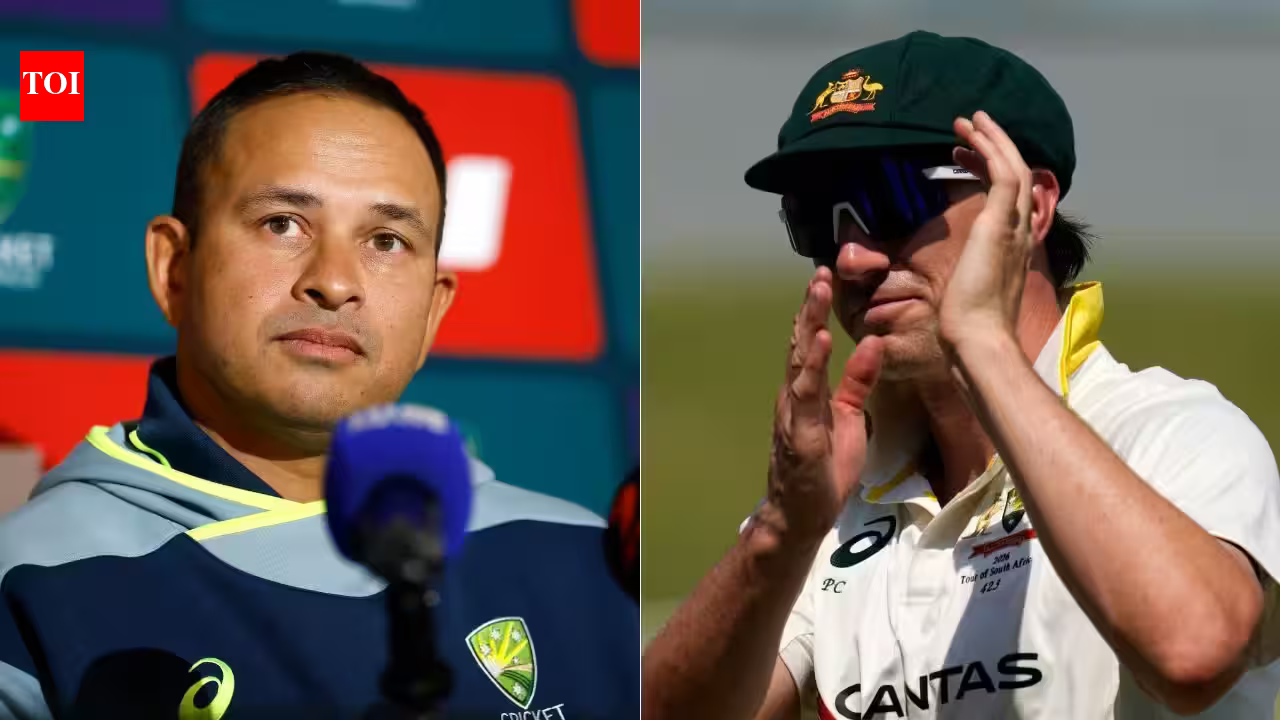
REKINDLING the embers of the most contentious chapter in modern Australian cricket history, Usman Khawaja has sought to clarify his position following the firestorm ignited by his autobiography. In a candid appearance on The Grade Cricketer podcast, the veteran opener addressed the swirling controversy surrounding the 2018 Cape Town ball-tampering scandal, emphasizing that his intention was never to see current Test captain Pat Cummins unseated or punished for a past he maintains was a collective team experience.
The discourse, which has dominated Australian sports headlines for weeks, stems from Khawaja’s claims that the entire Australian squad was aware of the plot to alter the ball during the 2018 Test against South Africa. With Cameron Bancroft—the man caught on camera with the sandpaper—subsequently aligning with Khawaja’s narrative, the pressure on Cummins to defend the integrity of the current leadership group became immense.
A Call for Transparency, Not Sanction
Addressing the narrative that he had embarked on a crusade to dismantle Cummins’ leadership, Khawaja was emphatic. “That was never my intention to ever put… we’ve had enough things in terms of punishments that have already happened,” he stated.
For many, the fear was that the renewed discussion would lead to fresh disciplinary actions from Cricket Australia (CA). However, CA has maintained a firm stance, with CEO Todd Greenberg indicating that all involved retain “immunity” regarding the historic incident. Khawaja welcomed this, noting, “The really good thing is that everyone pretty much has immunity. No one is going to get sanctioned or punished; Pat remains captain. This was never about me versus Pat.”
Khawaja’s comments represent a desire to move beyond the culture of secrecy that has shrouded the “Sandpapergate” saga for years. He argued that the ability to openly discuss the events of 2018 is a sign of a healthier team environment, rather than a sign of internal fracture. “I reckon we’re in a really good spot now where it’s a bit freer and I can actually talk about this, and I’m not worried about ‘oh, I’m going to cook him.’ We can actually just talk about what happened.”
The Personal Sting of a Public Standoff
While Khawaja maintained his support for Cummins’ captaincy, he did not shy away from expressing personal disappointment regarding the nature of the skipper’s response. Cummins, in a high-profile press conference at Cricket Central on November 13, vehemently denied that the entire team was aware of the ball-tampering, a stance that drew sharp scrutiny given the contrary accounts of Khawaja and Bancroft.
Khawaja revealed that he had reached out to the captain prior to that media address, hoping to find “middle ground” before the situation escalated. “I’ve always loved him as a person and a leader—I was never expecting him to attack me personally like he did,” Khawaja remarked. “Attack what I said, yeah. Personally, the way he did it and kept going and kept going, I’ve never seen that side of Pat before. That disappointed me.”
Systemic Failure at Cricket Australia
Beyond the interpersonal tension, Khawaja leveled a critique at the administrative handling of the situation, shifting the focus from individual players to the governing body itself. He highlighted that at the time of the 2018 scandal, Cummins was just 24 years old and was being thrust into the center of a crisis management situation that exceeded his professional experience.
“This is my issue—Pat was 24 at the time. This wasn’t a Patrick Cummins issue,” Khawaja said. “This wasn’t about Pat. I think someone at CA should have taken the lead, not Pat.”
This assertion strikes at the heart of the current debate: whether the responsibility for managing the fallout of 2018 should have rested on the players, or whether the organizational structure of Cricket Australia failed to protect its athletes from becoming the face of an institutional failure.
The Path Forward
Cricket Australia has officially expressed “unanimous support” for Cummins, confirming that no further investigations into the 2018 incident will be opened. However, in an effort to facilitate closure, they have established a forum for players to share their experiences and feelings regarding that dark period.
The initial investigation in 2018 famously targeted only Steve Smith, David Warner, and Cameron Bancroft. The subsequent years have seen that narrow narrative challenged repeatedly by teammates and observers alike. With David Warner also lending support to Khawaja’s claims, the historical record appears to be shifting toward a consensus that the “Sandpapergate” operation was more widely known within the dressing room than the original inquiry suggested.
As the Australian team looks ahead, the tension between the necessity of moving forward and the human desire for total historical transparency remains palpable. For Usman Khawaja, the objective is simple: to exist in a team culture where the truth can be spoken without the threat of professional ruin. Whether this signals the final chapter of the Sandpapergate saga or merely another twist in a story that refuses to die, one thing is certain—Australian cricket is still grappling with the ghosts of Cape Town.
Disclaimer: This content is auto-generated for informational purposes only.
Source: Read Original News