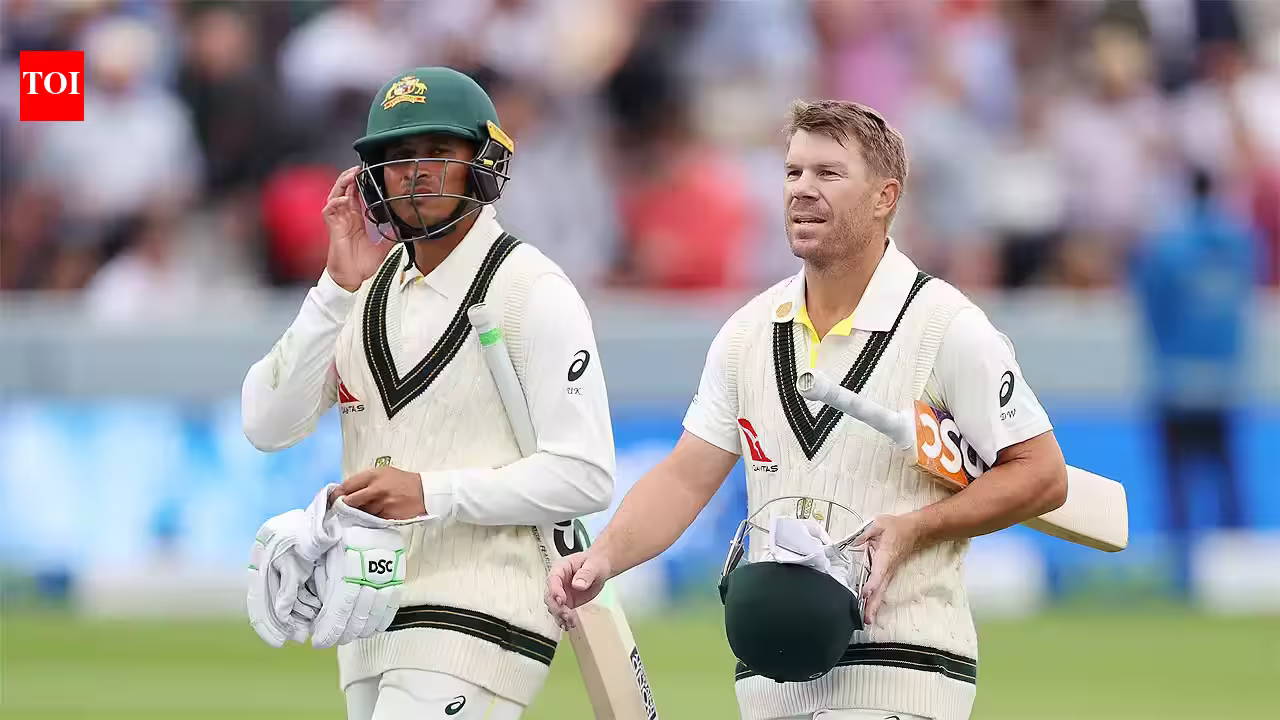









SYDNEY – The scars of the 2018 Cape Town Test, long considered a closed chapter in Australian cricket lore, have been violently ripped open. In a candid and explosive recollection from his upcoming autobiography, Sabr, veteran Australian batter Usman Khawaja has shattered the long-standing narrative surrounding the “Sandpapergate” scandal, asserting that the culture of ball-tampering was far more pervasive—and collective—than the public has ever been led to believe.
Khawaja’s revelations, excerpts of which were first published by the Sydney Morning Herald, suggest that the illicit manipulation of the ball was not a rogue mission executed by three individuals, but rather an open secret within the team hierarchy that stretched back to matches preceding the disastrous third Test against South Africa.
The Myth of the “Lone Actors”
For years, the official narrative focused exclusively on the trio of captain Steve Smith, vice-captain David Warner, and opening batter Cameron Bancroft. They were the faces of the fallout, handed lengthy bans and relegated to the status of pariahs in the immediate aftermath of the scandal. Khawaja’s account, however, paints a picture of a dressing room that stood in silent, complicit awareness.
“Am I going to deny that everyone knew? Nah. I won’t deny that either,” Khawaja stated in a clarifying video posted to social media on Sunday.
While Khawaja clarified that his use of the phrase “all of us” in his book was intended to highlight the collective responsibility of the squad, the implication remains damning. He posits that the team’s failure to own the mistake as a singular unit—rather than isolating the three players—was a moral failure that deepened the shame of the incident. In his view, Smith, Warner, and Bancroft were the ones left to bear the full brunt of the crisis, ultimately making them “victims” of a system that lacked the courage to take collective accountability.
Internal Strife and Disappointing Realities
The revelations go beyond mere knowledge of the act; they expose deep-seated fissures in the Australian dressing room following the Cape Town disaster. According to reporting from Code Sports, Khawaja pushed for the team to present a unified front after the scandal broke, proposing that the entire squad accept responsibility.
The response, he writes, revealed the “true colours” of his peers. Khawaja claims that two specific members of the team vehemently opposed his proposal, prioritizing their own reputations and individual standing over the integrity of the group.
“It was ludicrous; out of everyone, it was them,” Khawaja wrote. “When the going got tough, all they cared about was themselves. But I was not going to stop fighting this cause.”
This tension bubbled over again years later when Cameron Bancroft suggested in a 2021 interview that the Australian bowling attack—Pat Cummins, Josh Hazlewood, Mitchell Starc, and Nathan Lyon—must have known about the condition of the ball. That remark triggered a defensive, joint statement from the four bowlers, an act of distancing that Khawaja reportedly found deeply unsatisfactory.
Khawaja reveals that he contacted then-head coach Justin Langer and Cricket Australia CEO Todd Greenberg at that time, urging them to issue a statement that took the burden off the bowlers and onto the whole team. While he claims both men initially agreed, the resulting public statement remained limited to the bowling group, leaving Khawaja—and perhaps the truth—out in the cold.
A Defensive Backlash
The sports world has reacted with predictable volatility. Former Australia coach Darren Lehmann has publicly rejected the claims, and ex-England skipper Michael Vaughan expressed strong displeasure regarding the airing of such inflammatory details years after the fact.
Critics have accused Khawaja of using the controversy as a calculated marketing ploy to drive sales for Sabr. Khawaja, however, has vehemently denied these allegations, pointing to his decision to delay the release of the information until the Australian team had safely returned from their tour of South Africa.
“Why would someone who really wants to increase the sale of his book refuse the greatest marketing opportunity he has?” Khawaja argued. “I haven’t thrown anyone under the bus.”
A Legacy Under Revision
The re-emergence of Sandpapergate serves as a sobering reminder that the “cricketing culture” overhaul promised by Cricket Australia in 2018 may have been less about root-and-branch change and more about image management. By refusing to retract his assertion that the knowledge of tampering was widespread, Khawaja has forced the Australian cricketing establishment to confront a version of history they would have preferred to leave buried.
As the cricket world grapples with these fresh revelations, one thing is certain: the myth of the three isolated culprits has been definitively dismantled. Whether this leads to further fallout or simply remains a dark footnote in the sport’s history, Usman Khawaja has ensured that the uncomfortable truth—or at least his version of it—is now firmly part of the record.
For the players involved, the past may be a foreign country, but as Khawaja’s memoir makes clear, some ghosts refuse to stay in the shadows.
Disclaimer: This content is auto-generated for informational purposes only.
Source: Read Original News