








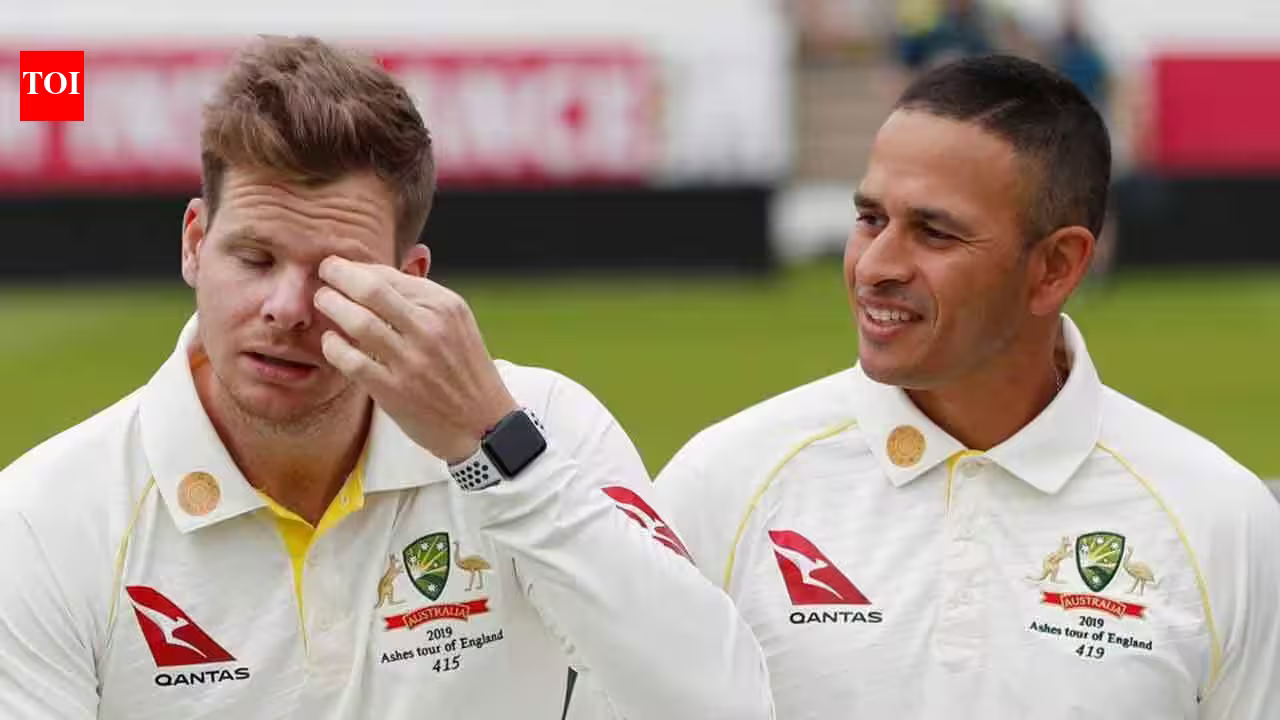
UNEARTHING the shadows of Cape Town, Usman Khawaja has pulled back the curtain on one of the most tumultuous chapters in Australian cricketing history. In his candid new autobiography, Sabr, the veteran opener provides a provocative re-examination of the 2018 ball-tampering scandal, revealing that the path to publication was paved with “awkward” confrontations and a long-held frustration regarding how the truth was managed behind closed doors.
The “Sandpapergate” incident remains a defining scar on the sport, having resulted in year-long bans for Steve Smith and David Warner, and a nine-month suspension for Cameron Bancroft. For years, the narrative maintained by Cricket Australia was that the conspiracy was isolated to those three individuals. Khawaja, however, is challenging that orthodoxy, suggesting that the culture of the touring party at the time was far more complicit than the official investigation ever admitted.
The “Awkward” Conversation with Smith
The release of Sabr was not a decision Khawaja took lightly, and he went to great lengths to handle the fallout with his teammates—both past and present—before the ink hit the page. During a revealing appearance on the They Used To Be… podcast, Khawaja detailed the delicate diplomacy he employed, particularly when it came to his former captain, Steve Smith.
“Steven Smith was a bit more awkward, he was playing in that Test,” Khawaja explained, noting that he deliberately waited until Smith had concluded a Test match in South Africa to initiate the uncomfortable conversation.
The process was exhaustive. Khawaja sought to bridge the gap with those most intimately involved, confirming he spoke with Pat Cummins and David Warner, and engaged in multiple discussions with Cameron Bancroft. It was a conscious effort to prepare the group for the fresh scrutiny his revelations would inevitably bring, balancing his own need to tell his side of the story with the reality that his words would ripple through the current dressing room.
A History of Silenced Truths
Perhaps the most damaging revelation in Khawaja’s account is not the act of tampering itself, but the institutional pressure to remain silent. Khawaja claims that he had long desired to address the systemic issues surrounding the scandal but was actively dissuaded from doing so by Smith.
“It’s not what I wanted, but I felt that right from the very start I gave an account of me wanting to take it as a team… wanting to come out, but being talked out of coming out by myself from Steven Smith and then wanting to come out in 2021,” Khawaja stated.
This assertion suggests a deep-seated friction between Khawaja’s desire for transparency and the team’s preference for containment. By questioning the findings of the original Cricket Australia investigation, which effectively served as a “three-man scapegoat” narrative, Khawaja is forcing a re-evaluation of how the governing body handled the crisis. While current stars like Pat Cummins and Mitchell Starc, along with former batting coach Graeme Hick, have maintained they had no prior knowledge of the sandpaper, Khawaja’s account posits that the knowledge of the plan was, in fact, “more widespread” within the touring party.
The Personal Toll of Transparency
Publishing Sabr was not an act of malice, according to Khawaja, but an attempt at reconciliation with history. Yet, he admits the process has been far more grueling than he anticipated. While he expected a storm of professional criticism regarding the content of his claims, he expressed surprise at the venomous, personal nature of the backlash.
“I’m not playing the victim here, because I knew what I was getting into and knew what was coming, I just didn’t realize it would be so personal,” he admitted.
Khawaja emphasized that the decision to include the chapter on the sandpaper scandal remained entirely his own. He possessed total editorial control, meaning he could have excised the controversial claims at any point in the process. That he chose to keep them in highlights a conviction that the “official” version of events is incomplete.
As he navigates the aftermath of his book launch, Khawaja faces the difficult task of balancing his legacy as a team player with his commitment to uncovering what he views as the truth. He maintains that his intent was to defend Smith, Warner, and Bancroft, whom he feels were “treated unfairly” by the subsequent administrative fallout, while simultaneously protecting current players who might suffer collateral damage from his testimony.
Ultimately, Khawaja is inviting the public to sit in judgment, not just of the scandal itself, but of the way the cricket establishment attempted to bury it. “I’ve given the facts and think whatever you want now,” he said. As the cricketing world digests his claims, one thing is clear: the ghosts of Cape Town are far from being put to rest. The debate over who knew what—and why they were encouraged to keep quiet—is officially back on the table.
Disclaimer: This content is auto-generated for informational purposes only.
Source: Read Original News