





U.S. intervention in Venezuela, with illegitimate President Nicolas Maduro snatched in a daring January 2026 night raid, opened the country’s oil industry to foreign investment. While President Donald Trump is aggressively pushing for Big Oil to invest in Venezuela, energy majors are taking a more sober approach. Venezuela’s heavily corroded oil infrastructure, responsible for a nationwide environmental catastrophe, will require tens of billions of dollars to remediate before production will rise significantly. This, along with an ecological crisis precipitated by chronic spills and leaks, is heavily impacting investor sentiment.
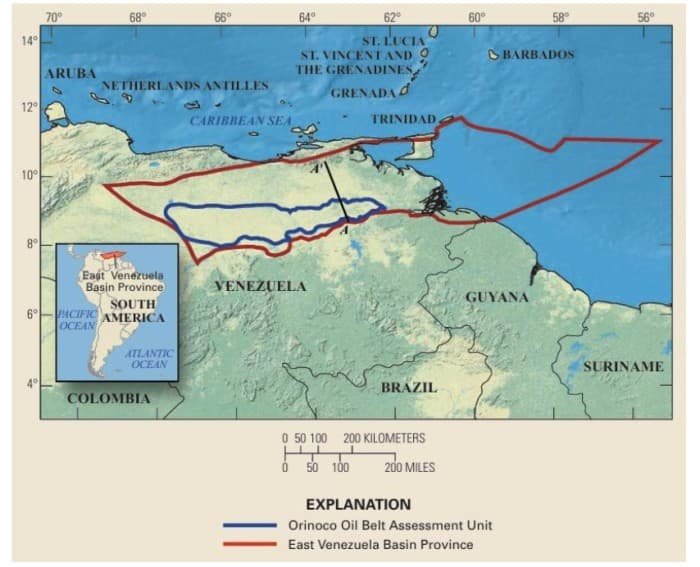
While Lake Maracaibo, South America’s largest water body, is enduring the worst of the environmental devastation unleashed by Venezuela’s oil industry, the Orinoco Belt is facing a similar catastrophe. The oil-rich area spans a vast 21,000 square mile (34,000 square kilometer) arc that stretches across central and eastern Venezuela.

Source: United States Geological Survey (USGS).
The Orinoco Belt has an estimated 1.3 trillion barrels of oil in place, which is predominantly situated in the Miocene Oficina Formation. The USGS estimates there are between 380 and 652 billion barrels of technically recoverable oil in the petroleum-rich region, making the Orinoco Belt the world’s largest heavy oil resource. Indeed, the hydrocarbon-rich area for decades was responsible for 50 to 70% of Venezuela’s oil production.
As a result, the Orinoco Belt will be the key driver of Venezuela’s petroleum-led recovery. In fact, production in the region has grown at an impressive rate since Washington’s early January 2026 intervention. Sources from Venezuela’s national oil company PDVSA, quoted in a Reuters article, claim February 2026 production from the Orinoco Belt reached just over 500,000 barrels per day, a 100,000-barrel increase over early January 2026. It is impressive production growth that is driving Venezuela’s growing oil output.
By March 2026, two months after the White House took control of Venezuela’s interim government, OPEC data shows production had climbed to 988,000 barrels per day. This is a notable 8.7% increase over February 2026 and is an impressive 8.5% higher compared to the same period a year earlier. Caracas’ recent regulatory reforms, which make it easier and more secure for foreign oil companies to invest in Venezuela, will drive higher production. Chevron, which holds interests in the Petroindependencia and Petropiar facilities in the Orinoco Belt, recently announced it signed agreements to expand heavy oil operations in the region.
Importantly, U.S. oil imports from Venezuela are expanding with shipments accelerating after Maduro was ousted. U.S. Energy Information Administration (EIA) data shows January 2026 shipments surged by a whopping 45% month over month to nearly 6.2 million barrels. Unsurprisingly, that number is five times greater than the 1.2 million barrels imported for January 2023, when shipments recommenced after earlier strict sanctions were eased by then U.S. President Joe Biden. There is every expectation that Venezuela’s oil shipments to the U.S. will grow as production expands.
You see, the heavy sour crude oil produced in the Orinoco Belt was once highly sort after by U.S. Gulf Coast refineries. Low-cost, efficient shipping, because of Venezuela’s proximity to the Gulf Coast, and the deep discounts applied to the highly viscous sour crude produced, created a financial incentive for refiners to process that type of petroleum. Consequently, by the early 1980s, operators were refitting refineries with the technology needed to process Venezuela’s heavy oil to maximize profits. Washington’s easing of sanctions, along with growing willingness, will significantly boost imports of Venezuela’s heavy sour crude to Gulf Coast refineries.
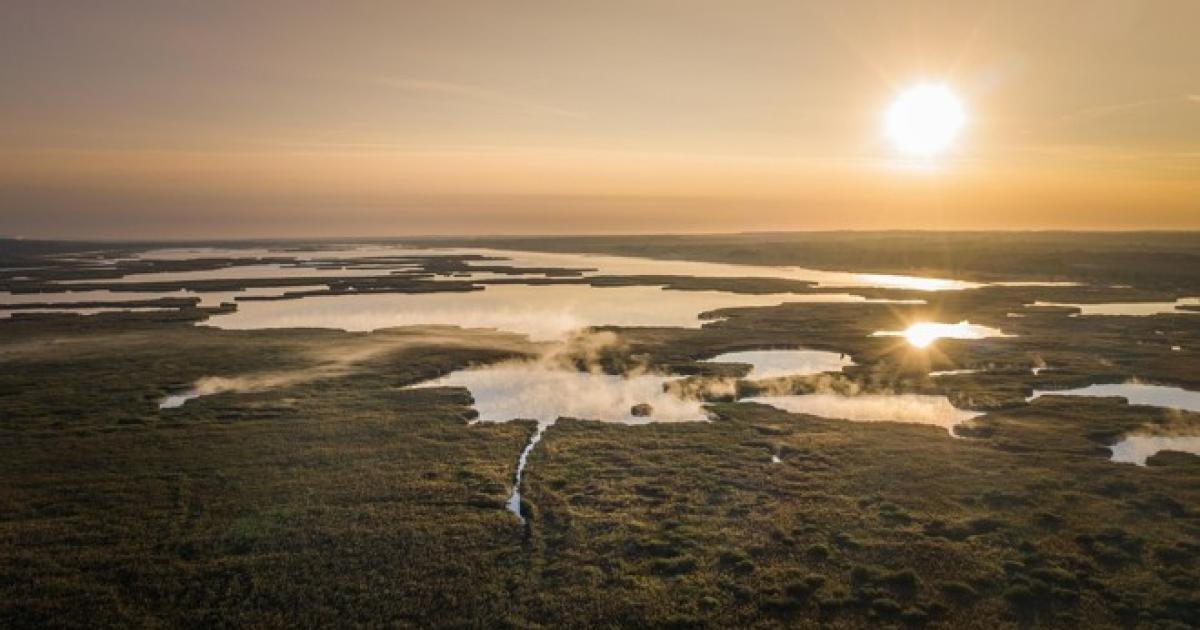
The mineral-rich Orinoco Belt is situated in one of the world’s most environmentally sensitive regions. The 31,000 square mile (50,000 square kilometer) territory lies along the eastern edge of the Orinoco River Basin, a globally important ecologically biodiverse area. The vast river basin is South America’s third-largest catchment region, covering most of Venezuela along with large parts of neighboring Colombia and northern Brazil. The Orinoco River, which drains roughly 70% of Venezuela, is becoming a giant repository of toxic chemicals, fertilizer run-off, and spilled petroleum.
Decades of oil industry operations with little to no regulatory oversight saw oil spills, leaks, and other industry-related emissions become commonplace in the Orinoco Belt. These are impacting the surrounding terrain, including the 1,329-mile (2,140 kilometer) Orinoco River, which is South America’s third-longest waterway. The Orinoco River flows into the South Caribbean Sea southeast of Trinidad and Tobago through the 275-mile (443-kilometer) Orinoco Delta, which is one of the world’s most biodiverse wetlands.
Frequent oil spills and industry discharge are contaminating the Orinoco River, its tributaries, nearby wetlands, and the environmentally crucial 26,700 square mile (46,000 square kilometer) delta. Chronic oil spills and leaks from the Orinoco Belt not only threaten the more than 1,000 fish species, crocodiles, dolphins, and giant otters living in the waterway but also contaminate potable water supplies for local communities as well as the jungle and nearby crops.
A 2022 oil leak left a lengthy stain along the Orinoco River’s shore and waters around the vast wetland, impacting communities in the vicinity. The spill was traced back to a well in the shallow water offshore Perdenales oilfield, which is part of national oil company PDVSA’s 60% controlled Petrowarao joint venture with Anglo-French independent driller Perenco holding 40%. The field is largely idle because PDVSA lacks the capital to operate and maintain the facility. The risk of further spills and leaks is growing exponentially because of a lack of critical maintenance and the presence of petroleum in the idle wells.
While that incident did not occur in the Orinoco Belt, it demonstrates that oil spills from aging, poorly maintained infrastructure are a chronic hazard in Venezuela, which poses a threat to the Orinoco River and its vast, highly biodiverse wetland. Decades of mismanagement by state-controlled PDVSA, along with a lack of critical maintenance and workovers, have left petroleum industry infrastructure in the Orinoco Belt in a parlous state. As a result, heavily corroded wellheads, pipelines, and storage facilities are chronically leaking petroleum into the environment.
Sources estimate there are over 12,000 wells in the Orinoco Belt, of which less than 2,000 are currently active. Serious Concerns are growing over the hazards presented by idle wells, with oil trapped within these facilities. The risk of serious leaks or spills is exacerbated by the heavily corroded condition of the wells, which is deteriorating further because of the harsh environment of the Orinoco Belt. This is a widespread problem across Venezuela with derricks, pipelines, pumping stations, storage facilities, and refineries in a ramshackle state.
The extremely high sulfur content of the extra-heavy crude lifted in the Orinoco Belt makes it highly corrosive, which sees it accelerate the deterioration of extraction and transportation infrastructure. When this is combined with decades of poor maintenance, the risk of spills and leaks increases exponentially. As part of a broader cover-up of the oil industry’s deep environmental cost, state-controlled PDVSA ceased reporting oil spills and other crucial operational data during 2016. Thus, making it impossible to track the volume and severity of oil spills in the Orinoco Belt.
As a result, there are fears that the environmental degradation and ecological damage in the petroleum-rich region is more severe than presumed. This, along with the increasingly huge ecological debt created by Venezuela’s oil industry, is deterring foreign hydrocarbon investment. You see, drillers, especially Big Oil, are reticent to inherit the tremendous financial and other risks created by Venezuela’s huge environmental catastrophe, particularly with most committed to making operations environmentally sound.
By Matthew Smith for Oilprice.com