





Italian Farm Pioneers "Quantum Farming" to Combat Climate Change and Revitalize Agriculture
Città della Pieve, Umbria, Italy – As global climates become increasingly volatile, an innovative Italian farm nestled in the Umbrian hills is demonstrating a revolutionary approach to agriculture, blending ancient wisdom with cutting-edge technology. Quintosapore farm, spearheaded by twin brothers Alessandro and Nicola Giuggioli and their sister, sustainable fashion icon Livia Firth, is defying conventional farming practices to cultivate resilient, flavorful produce and foster a thriving community.
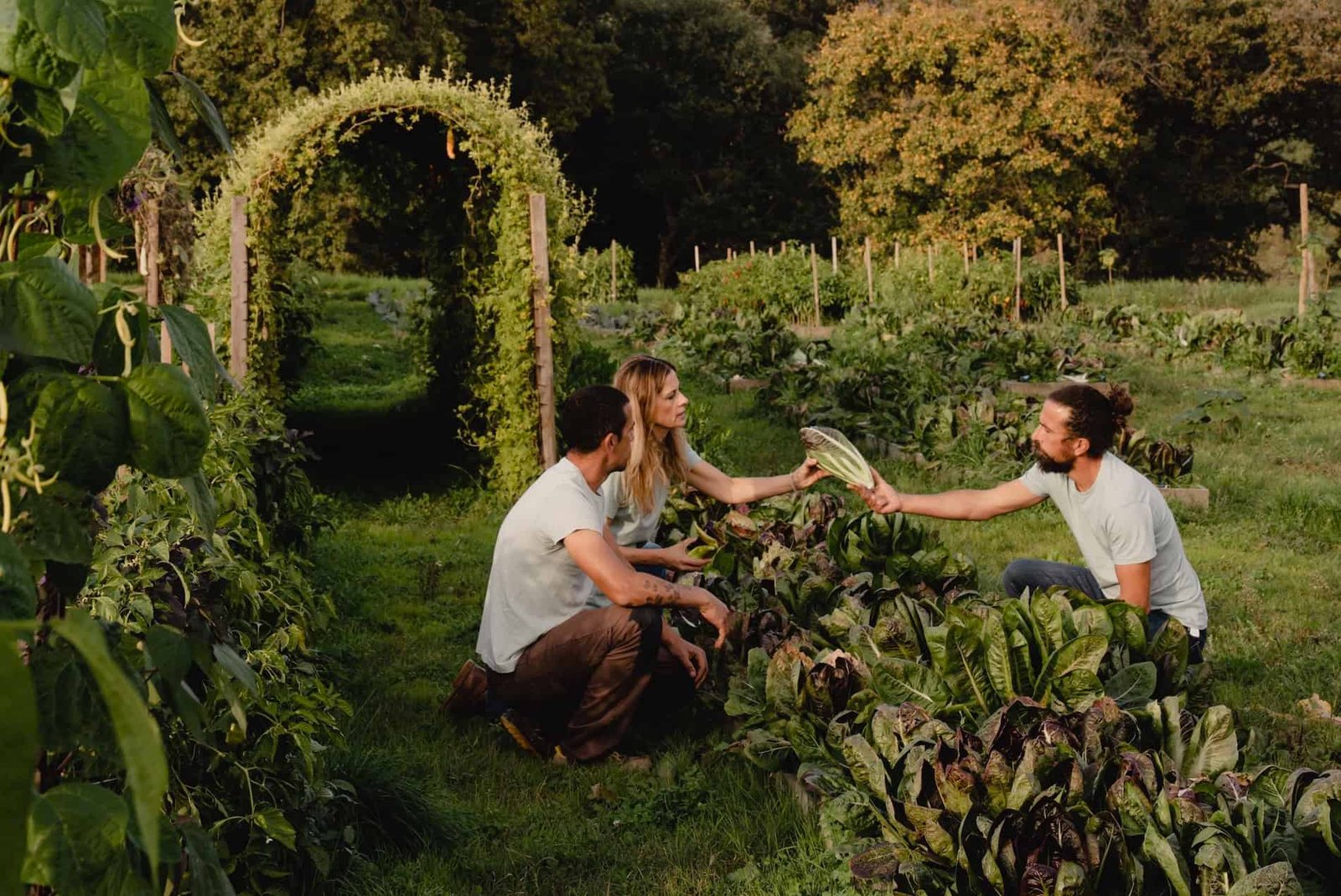
Against the picturesque backdrop of Città della Pieve, Quintosapore, a 62-acre estate, boasts an astonishing diversity of 1,500 varieties of fruits and vegetables, including 140 types of chilli pepper and rare heirloom varieties like black tomatoes and white aubergines. What sets this farm apart, however, is its pioneering use of biomimicry and what the brothers term "quantum farming" to adapt to increasingly challenging environmental conditions.
The farm’s transformative journey began during the devastating Umbrian drought of 2022, which saw temperatures soar to 45°C. While neighboring crops withered, a remarkable 30% of Quintosapore’s plants thrived. This observation sparked a process of natural selection, where the Giuggiolis meticulously saved seeds from these drought-surviving individuals, cultivating crops with a "biological memory" – a stark contrast to lab-driven GMOs. This approach, rooted in biomimicry, draws inspiration from nature’s inherent efficiencies rather than overriding them with chemical interventions.
"We like breaking the rules," Nicola Giuggioli quips with a mischievous grin. The former actor and CEO, alongside his brother, transitioned into "farmpreneurs" just before the pandemic, transforming depleted Italian countryside into a living laboratory. Their family-run estate actively challenges the tenets of industrial agriculture, prioritizing sustainable, flavorful produce that benefits the entire community.
Central to their regenerative philosophy is a "dynamic toolbox" of practices: eschewing pesticides and tilling, and replacing synthetic fertilizers with biological intelligence. "We’ve been farming conventionally for 100 years, chained to a death spiral," Nicola states, highlighting the industry’s reliance on monopolies that control 95% of the market. "When you farm more creatively, things change. You start listening. The old farmers knew that crop diversity is vital. All the ingredients we eat today are the result of an infinite amount of adaptations and crossing. We are developing that biomimic approach."
The Giuggiolis utilize natural microorganisms, developed in Japan, which act as "probiotics for the earth," building a self-sustaining ecosystem that is 30% more cost-effective than synthetic alternatives. Alessandro explains, "Synthetic fertilisers are like protein shakes. They give a direct hit but do nothing for the long-term health of the ground. Microorganisms build the foundation. Balance is the best pesticide – we don’t need to ‘kill’ anything because when the system is healthy, pests find their place in the cycle."
Further integrating land management techniques, Quintosapore employs agroforestry, planting fast-growing paulownia trees alongside crops, and utilizes fully degradable recycled paper mulching sheets to suppress weeds – a regenerative switch that is 50% cheaper than plastic and significantly improves their bottom line.
Perhaps the most arresting aspect of Quintosapore’s innovation is their "quantum" edge. Embracing Einstein’s observation that all matter possesses a vibrational frequency, Alessandro and Nicola treat their irrigation water with the vibrational frequency of essential minerals, such as calcium, rather than directly applying synthetic substances to the soil. They also deploy solar-powered speakers to broadcast specific frequencies designed to deter pests. "It’s a coral reef for the soil, offering a safe harbour for fungi and bacteria to stay hydrated when the Umbrian sun bakes the ground," they explain, describing how high-grade biochar, though initially expensive, transforms the soil at a microscopic level.
This audacious approach comes at a time when Europe’s agroeconomic model faces increasing fragility. "We are not affected by the Strait of Hormuz closing. We are self-sufficient," Alessandro proudly states, highlighting their rapidly growing revenue and early achievement of annual sales targets. While acknowledging the initial costs of some regenerative methods, the Giuggiolis emphasize the long-term economic benefits and reduced dependence on external inputs.
The success of Quintosapore also addresses a critical gap in agricultural education, a point echoed by Emile Frison, founder of the International Panel of Experts on Sustainable Food Systems (IPES-Food). Frison laments that farmers are often solely advised by chemical input suppliers, with limited independent guidance. "So much money is going into actively discrediting the alternatives," he adds.
The Giuggioli brothers aim to demonstrate the replicability and scalability of their methods. "A farmer does not need to apply the whole toolkit to see the benefits. Even starting with paper mulch or microbial soil health can change the economics of a farm," says Nicola. Their findings are supported by a landmark European study revealing that agroecological farms now economically outperform industrial models by 20% to 120% across several countries. "We want to show what we are doing can be imitated anywhere in Europe in every climate zone," Alessandro affirms.
Beyond ecological and economic impact, Quintosapore fosters a "radical wellbeing" economy. They provide stable employment for a new generation of Italian farmers, inspiring young people like Luca Del Secco, who, after discovering Quintosapore, was moved to cultivate his inherited land using biomimicry. Even Città della Pieve’s Mayor, Fausto Ristini, acknowledges the farm’s positive impact on job creation and reigniting a passion for farming.
The farm also hosts spiritual retreats for agro-professionals, fostering a deeper connection with the land. The question of whether such an agroecological system can feed the world typically arises, but for the Giuggiolis and experts like Emile Frison, it is the industrial monoculture model that is on borrowed time. Frison points to successful large-scale agroecological farms in France, like La Ferme Ursule, which, despite its 200 hectares, employs eight people, offers generous holidays, and is more profitable due to the elimination of pesticide and fertilizer costs.
The vibrant black tomatoes and ivory aubergines filling Quintosapore’s crates are more than just produce; they are tangible symbols of a system that works in harmony with the Earth. On this Umbrian hillside, the Giuggioli brothers are proving that when humanity allows the land to speak, it truly sings a new song for the future of farming.