








The state’s new chief minister is expected to be sworn in on Saturday. The BJP has not confirmed the name yet, but Adhikari, a former TMC leader who moved to the BJP, is the front runner.
The BJP had on Monday secured a landslide victory in the state polls, winning 207 seats of 294. Adhikari also defeated Banerjee from the Bhabanipur constituency, which was her stronghold.
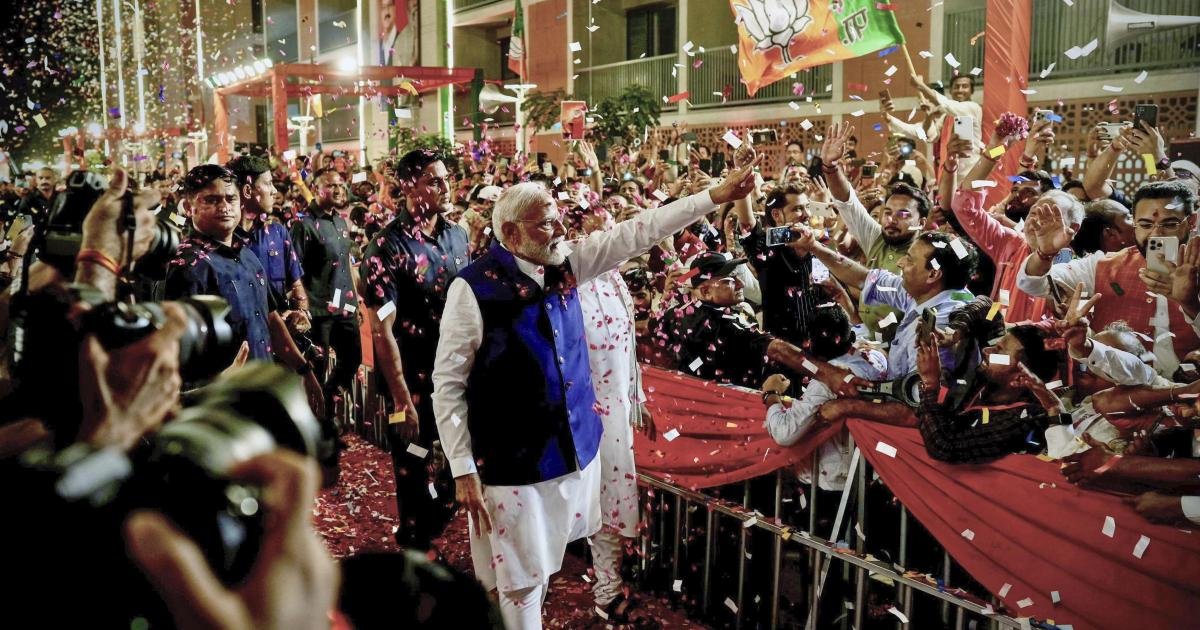
Since then, the party has conducted victory rallies across the state, with supporters chanting slogans of ‘Jai Shree Ram’ (Victory to Lord Ram).
However, visuals of arson and vandalism have emerged from many districts, including Murshidabad, Birbhum, Kolkata and Howrah.
TMC has accused BJP workers of vandalising and even setting fire to some of its party offices. The BJP has denied this.
The party also accused BJP workers of bringing in a bulldozer to demolish meat shops in a famous market in state capital Kolkata, a sensitive issue in a state where choice of food was a major campaign talking point.
TMC said that the incident reflected a “pattern of intimidation” and signalled a “dangerous precedent” for law and order.
The BJP did not directly respond to these comments but state party chief Samik Bhattacharya said it did not support any act of violence.
A senior police officer told PTI news agency that there was a meeting in the market to celebrate the BJP’s victory but that “no untoward incident” had taken place.
A senior police officer told the BBC on Wednesday that the police and district administration had received directives from Chief Election Commissioner Gyanesh Kumar to monitor law and order in the state and take immediate action in case of violence or vandalism.
West Bengal’s recurring election violence stems from its entrenched “party society”, says Zaad Mahmood, who teaches political science at Kolkata’s Presidency University, told the BBC.
Coined by political scientist Dwaipayan Bhattacharyya to describe decades of Communist rule, the term captures how party affiliation became embedded in daily rural life and livelihoods.
“In the last decade or so, we’ve seen more atrocities around political identity than caste or religion,” Mahmood told the BBC, arguing that in many rural areas survival itself is tied to party loyalty, making any change in power feel existential.
While deaths this election cycle are lower than in previous years, he said violence goes beyond casualties, creating a pervasive atmosphere of intimidation before, during and after polls.