








Once a dominant force in the nascent home computing market, the Commodore brand, synonymous with groundbreaking innovations like the Commodore 64 and the Amiga, now occupies a more niche position, helmed by a YouTube personality. Tracing the trajectory of this iconic brand, from its widespread popularity in the 1980s to its current reincarnation, involves a complex and often convoluted narrative.
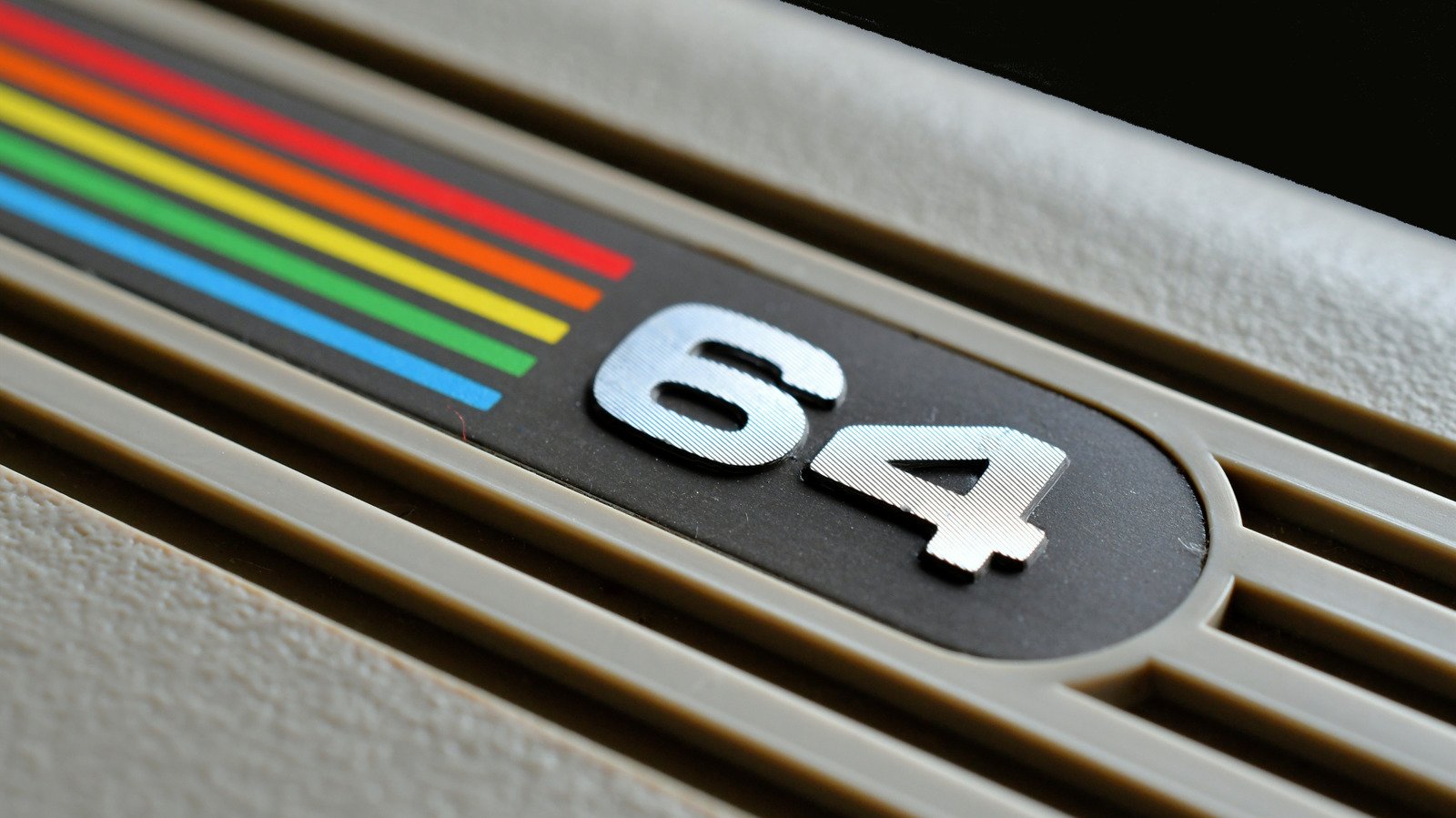
The company’s origins date back to 1976, when it was established by Jack Tramiel and Irving Gould. Just a year later, the company introduced the PET, quickly followed by the VIC-20, a groundbreaking machine that became one of the first home computers to achieve sales exceeding one million units. The true revolution, however, arrived in 1982 with the launch of the Commodore 64. This powerful machine quickly ascended to become the preferred home computer in the United States throughout much of the 1980s. A subsequent technological leap occurred in 1985 with the release of the Amiga 1000, which garnered immense popularity, particularly across Europe. However, by 1996, the computing landscape had dramatically shifted. The burgeoning PC market had largely eclipsed the Amiga’s dominance, and the emergence of more affordable and user-friendly home consoles further marginalized its position.
The eventual bankruptcy of Commodore marked the beginning of a significantly more intricate period in the brand’s history. In 1995, a German company named ESCOM, with financial backing from various Asian firms, acquired the bulk of Commodore’s assets. ESCOM reportedly harbored ambitions of revitalizing the Commodore Amiga line, even entering into a partnership with one of its Asian backers, Tianjin Family. Unfortunately, ESCOM itself faced insolvency in 1996. Its assets were subsequently sold to Gateway, a prominent American computer manufacturer known for its distinctive cow-themed branding. However, Gateway’s acquisition did not include the crucial “C= Commodore” trademarks and name, which eventually found their way into the hands of Tulip Computers, a company based in the Netherlands.
During this tumultuous period, the Amiga operating system remained under license to Village Tronic Marketing GmbH. Gateway attempted to halt these sales through legal action, but it was ultimately determined that there was insufficient documentation to support Gateway’s claims. The cessation of sales eventually came about due to a payment dispute, rather than a successful court case. Between 1997 and 2005, a series of three distinct companies, all operating under the Amiga brand, emerged under Gateway’s stewardship.
Gateway’s primary Amiga operations were initially based in South Dakota, but this division was later reabsorbed into the parent company. Its objective was to develop the next iterations of AmigaOS, versions 4 and 5, though no products were ever released. In 1999, Gateway shuttered this operation and sold all its Amiga-related assets to Amiga Inc., a Washington-based company. This entity primarily functioned as a license holder. Delaware, another Amiga-branded entity, was essentially a rebranded KMOS, Inc. Despite the frequent changes in brand ownership and rights, Gateway retained ownership of the crucial patents. In 2007, when Gateway was acquired by Acer, the Taiwanese technology giant inherited these patents.
Prior to the most recent chapter, the Commodore brand’s sporadic appearances in the news often revolved around legal disputes concerning the AmigaOS or attempts at resurrection. In 2001, Hyperion, a company, was contracted to develop AmigaOS 4. Six years later, in 2007, Hyperion faced a lawsuit from the Cloanto-owned Amiga Corporation over unpaid royalties. The various legal issues surrounding Hyperion have only recently been resolved, as of August 4, 2026. In 2010, Commodore USA emerged, releasing hardware such as the 64x. These products were met with poor reviews and failed to achieve significant sales, leading to the company’s brief existence, which concluded in 2013.
In recent years, the spirit of Commodore has seen a renewed surge of interest. Retro Games, for instance, produced the C64 Mini and C64 Maxi, along with the A500 Mini and A1200 Mini, which are based on Amiga systems. These were licensed from Amiga Corporation (Cloanto), which also offers Amiga Forever and C64 Forever, popular emulation packages. Another notable development was AmigaOne, a line of computers built on more modern PowerPC processors, designed to be compatible with Hyperion’s AmigaOS 4.
Today, the Commodore brand is once again making headlines. In 2025, YouTuber Christian Simpson launched Commodore International. Simpson’s initiative has gained considerable momentum by bringing back original company personnel and focusing on a dual strategy of leveraging both nostalgia and future innovation. The company’s inaugural product, the C64 Ultimate, utilizes an FPGA processor to effectively emulate the original hardware, offering a more authentic experience than software-based emulation. This product was well-received, and the new Commodore International has already engaged in legal action, suing an Italian company over its name, alleging that the rights were “improperly granted.” The company’s future plans include the launch of a phone called the Callback, which notably blocks social media usage. Initial online reactions to this concept have been mixed, and a price reduction was announced shortly after its initial unveiling. The convoluted history of Commodore and its associated Amiga branding presents a truly intricate and at times bewildering tale, a narrative so complex that it might be deemed implausible if presented as fiction.