







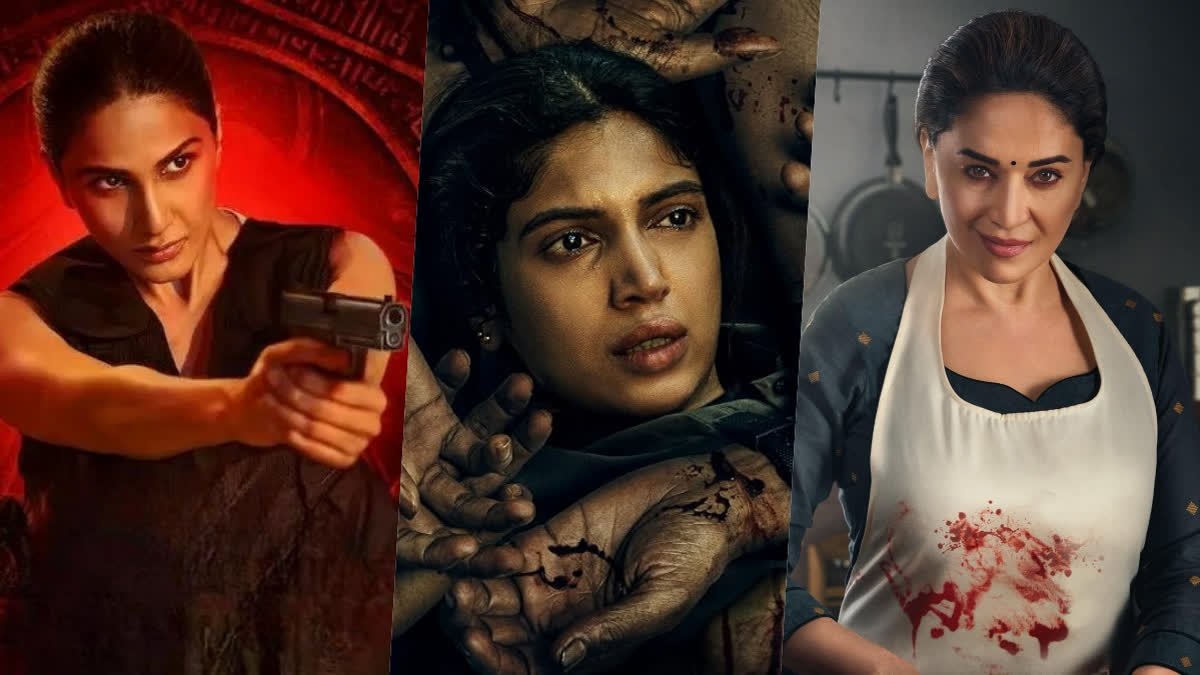
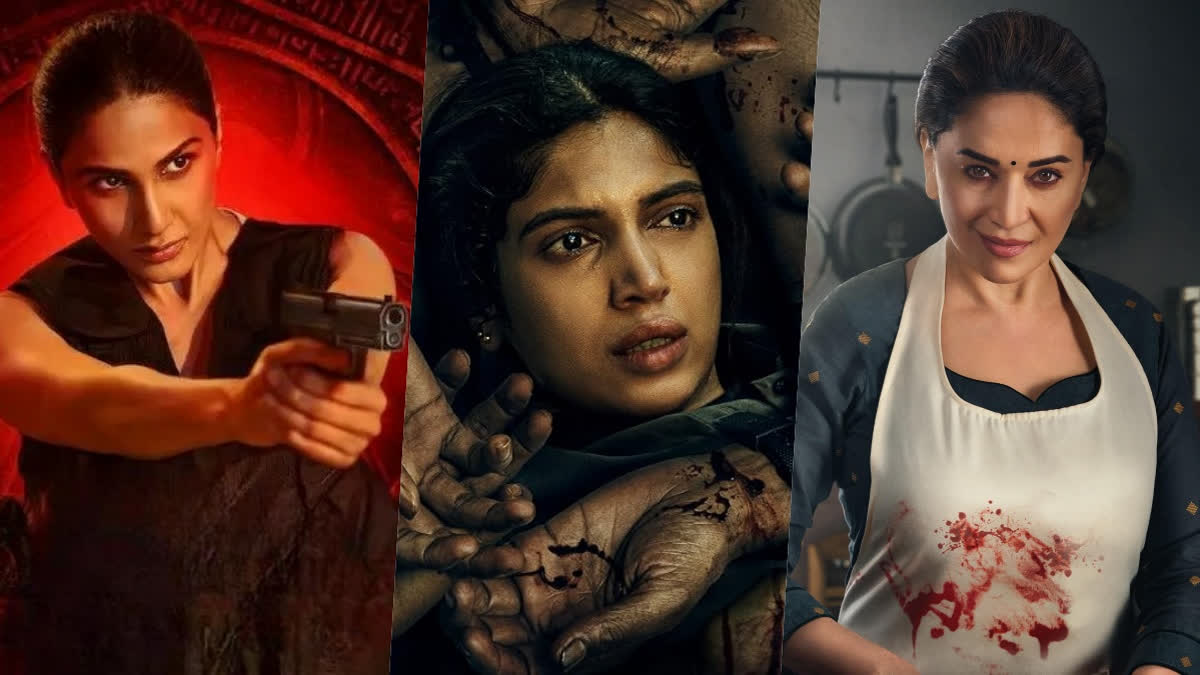
Why Female-Led Hindi Web Series Are Outperforming Male-Led Shows (Photo: Series Posters)
Hyderabad: For years, the OTT playbook seemed fairly straightforward. Put a man at the centre of the story, surround him with crime, action, politics or family drama, and chances are audiences would show up.
Some of the biggest Hindi web-series successes have followed exactly that formula. From Mirzapur and The Family Man to Paatal Lok, Special Ops, Criminal Justice and Panchayat, male protagonists have largely dominated the streaming landscape.
But new data from Ormax Media suggests audiences may be craving something different.
What the study looked at
In a finding that challenges one of OTT’s most accepted assumptions, female-led Hindi web series are generating significantly more buzz than male-led shows. The trend emerges from an analysis of the 50 most-watched non-franchise Hindi fiction series released between January 2025 and May 2026.
What’s particularly striking is that female-led shows remain a minority. Out of the 50 series analysed, only 10 were centred on female protagonists, compared to 28 male-led titles and 12 featuring shared leads.
Yet despite being heavily outnumbered, female-led shows emerged as the strongest performers when it came to audience buzz.
Female-led shows performed much better
According to the report, male-led series recorded an average “Peak Buzz” score of 9.6. Female-led titles, meanwhile, averaged 14.1, nearly 47 per cent higher.
Peak Buzz, tracked through Ormax Stream Track, looks at whether people can spontaneously name a show when asked about upcoming or recently released streaming titles. The higher the score, the more likely a series is to occupy space in viewers’ minds.
Several female-led titles helped drive these numbers, including Mrs Deshpande, Dabba Cartel, Mandala Murders, Khauf, Daldal, Chiraiya and Search: The Naina Murder Case.
The findings suggest that female-led stories are no longer just filling a representation gap. Increasingly, they are becoming some of the most effective attention-grabbers in the streaming world.
Why are female-led shows creating more buzz?
One explanation offered by the report is surprisingly simple.
– There just aren’t that many female-led shows
For more than a decade, viewers have been conditioned to see men leading stories across virtually every major genre. Whether it’s crime, action, thrillers, comedy or family drama, the male protagonist has become the default setting of Hindi OTT storytelling.
That familiarity may now be working against those shows.
In a content environment flooded with new releases every week, audiences are constantly looking for something that feels fresh. A female protagonist instantly creates that difference, especially in genres traditionally dominated by men.
That’s particularly evident in crime and thriller series, where many of the high-performing female-led shows have emerged.
– They’re often about more than the plot
Another reason may lie in the kinds of stories these shows are telling.
The report notes that female-led series often arrive with multiple layers. The viewer might tune in for the mystery, suspense, or drama, but more often than not stays to watch something much broader than the plot line.
Identity, freedom, safety, ambition, relationships, and societal expectations often find their way into the experience of watching TV.
Khauf, for instance, wasn’t discussed only as a horror series. Much of the conversation around the show revolved around its exploration of fear and vulnerability from a woman’s perspective.
Similarly, Chiraiya showcased domestic violence, consent, marital abuse and personal dignity. It gave audiences more to engage with than the story alone.
– OTT is no longer a solo experience
The report also points to a broader shift in viewing habits. Streaming was once a personal activity. People watched shows alone on phones, tablets or laptops.
Today, with the rise of Connected TV, OTT viewing is increasingly happening on television screens in living rooms. More shows are being watched with partners, parents, siblings and friends. That change may be working in favour of female-led stories.
According to Ormax, these series often appeal to a wider mix of viewers, making them easier to watch and discuss as a group. The more people watching together, the greater the chances of recommendations and word-of-mouth.
And contrary to popular perception, the report argues that female-led stories aren’t attracting only women. Many are finding audiences across gender and age groups.
– A female lead has become a marketing hook
Every month, streaming platforms release dozens of new titles. Most disappear almost as quickly as they arrive. For a non-franchise series with no existing fan base, getting noticed is often the hardest part.
A female protagonist can immediately make a show feel distinct. It gives marketers a clear talking point and audiences a reason to remember the title.
That advantage becomes even stronger when paired with recognisable stars. The report points to projects led by actors such as Madhuri Dixit, Shabana Azmi and Konkona Sen Sharma as examples where the combination of star power and a female-led narrative helped attract attention.
What this means for streaming platforms
Ormax is careful not to suggest that every female-led show is automatically destined for success. What the report does suggest, however, is that audiences reward novelty. And right now, female-led stories still offer freshness that many viewers aren’t finding elsewhere.
The real lesson for streaming platforms may not be about choosing female protagonists over male ones. It may simply be about recognising that audiences are increasingly drawn to stories that feel different.