









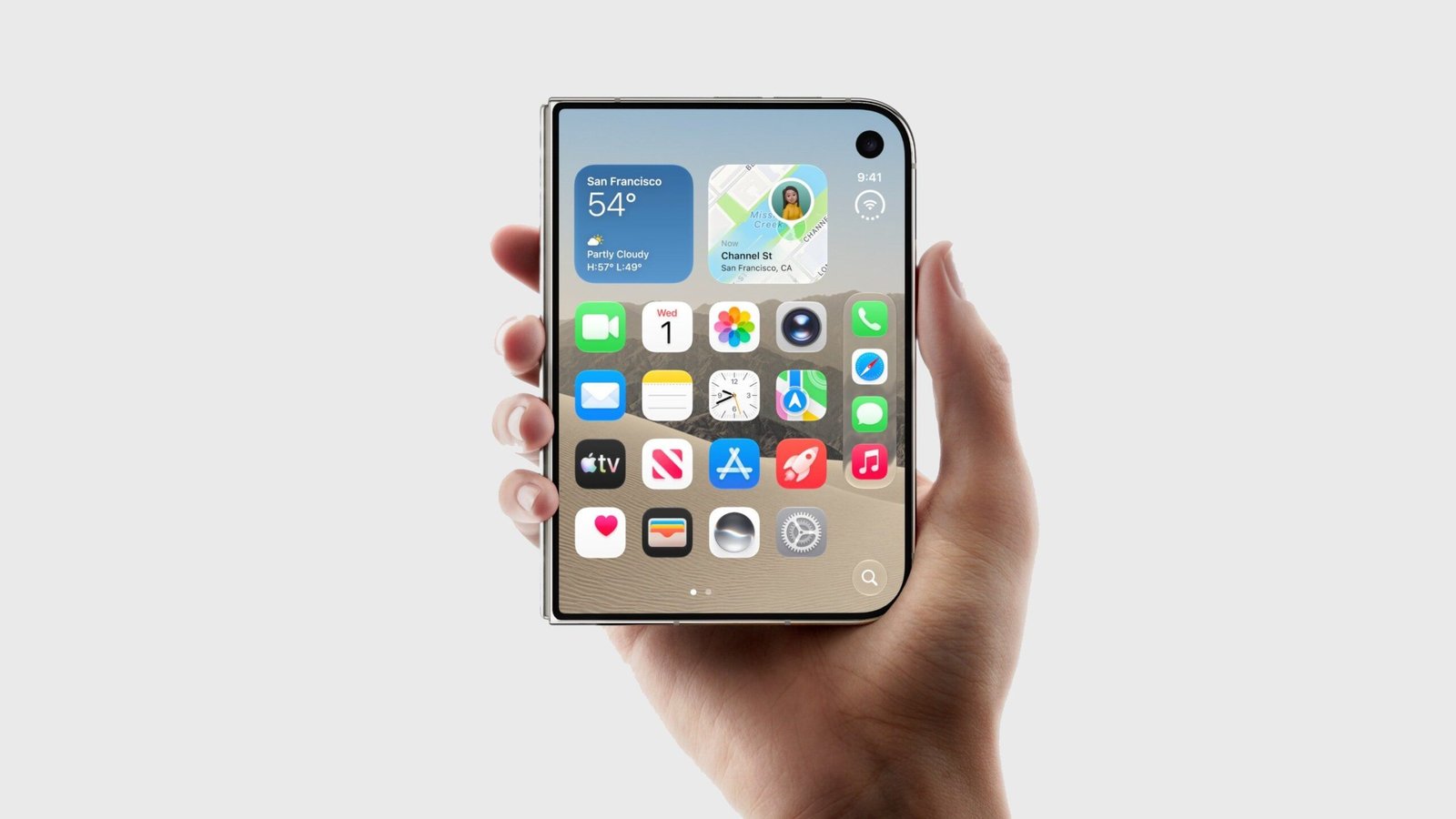
The Logistics Behind the iPhone Duo Pre-Order Controversy
The recent launch of the iPhone Duo has become a focal point of criticism within the technology industry, not due to the device’s technical specifications, but rather due to the strategic management of its initial retail rollout. According to industry analyst Mark Gurman, Apple elected to open pre-orders for the flagship device last Friday despite possessing internal data regarding severe supply constraints. These manufacturing challenges, which reportedly hindered the assembly of the device’s intricate dual-display hardware, created a bottleneck that left many consumers facing shipping windows extending into late November or December.
This decision to initiate sales prematurely represents a departure from Apple’s historical approach to product launches, which typically prioritizes inventory stability to manage consumer expectations. By allowing pre-orders to go live when the available units were clearly insufficient to meet projected demand, the company invited widespread frustration. The resulting supply-demand gap has highlighted the inherent difficulties in scaling production for new hardware architectures, especially when those designs incorporate novel display components that necessitate complex manufacturing workflows.
Technological Hurdles in Display Integration
The primary source of the supply constraints lies in the iPhone Duo’s display hardware. Unlike traditional single-screen smartphones, the Duo architecture requires a high degree of precision in display synchronization and hinge durability. Integrating two distinct panels while maintaining a seamless user experience—a hallmark of Apple’s design philosophy—presents significant yield challenges at the factory level. If the lamination process or the alignment of the panels deviates even slightly from specifications, the resulting components must be discarded.
These manufacturing tolerances are notoriously tight. When a new device requires custom, high-precision components that do not share a supply chain with existing models, the defect rate during the initial ramp-up period is often high. In this instance, it appears that the production yield did not reach the threshold required to support a global pre-order launch. The consequence is a fragmented launch schedule where early adopters are left without devices, potentially damaging the premium perception associated with a device release.
Impact on Consumer Trust and Retail Strategy
The decision to open pre-orders despite the known lack of inventory has sparked a debate about retail strategy. When a technology firm markets a product as highly desirable and subsequently limits its availability for months, it risks shifting consumer sentiment from anticipation to resentment. Furthermore, such a move disrupts the predictability of financial reporting and channel inventory management. Investors and analysts monitor these launches to gauge the health of the hardware ecosystem; when supply is artificially constrained by a premature launch, it becomes difficult to distinguish between actual demand and a logistics failure.
Furthermore, this strategy creates a vacuum that competitors can exploit. For consumers who are not deeply embedded in the proprietary ecosystem, a multi-month wait for a flagship device serves as a catalyst to investigate alternative products. While the hardware of the iPhone Duo may lead the industry in terms of utility and integration, accessibility remains a vital metric for maintaining a dominant market position. The decision to ignore manufacturing warnings suggests a conflict between sales targets and operational reality, a friction point that rarely benefits the consumer.
Features and The Necessity of the Duo Platform
Despite the logistical turbulence, the iPhone Duo offers features that attempt to justify its complex manufacturing requirements. The device is designed for professionals who rely on high-fidelity multitasking and peripheral content management. By utilizing two displays, the system allows for split-screen workflows that are physically separated, reducing the visual clutter that often plagues tablet-sized single screens. This is particularly relevant for applications involving media editing, data visualization, and complex document navigation.
The software integration underpinning this hardware—a specialized build of the operating system designed to handle multi-display state management—is a sophisticated piece of engineering. The system must account for power distribution between the two panels and maintain low-latency response times across the hinge boundary. When functional, the platform enables a level of productivity that mobile users have requested for years, effectively bridging the gap between a portable smartphone and a desktop workstation.
Refining Future Product Rollouts
Moving forward, the iPhone Duo incident serves as a case study in the necessity of synchronizing supply chain data with marketing cycles. Apple’s reputation is largely built on the reliability of its hardware and the smoothness of its transition into consumer hands. When the front-end sales machine moves faster than the back-end assembly line, the integrity of that reputation is compromised. For future iterations or entirely new product categories, the integration of real-time manufacturing telemetry into the launch decision-making process will be essential.
The lesson for the broader technology sector is clear: transparency is an asset. Had the company opted to delay the pre-order window by a few weeks to align with improved yields, it would have likely mitigated the current wave of negative sentiment. Instead, by prioritizing the schedule over the supply, the company has created a significant hurdle for its flagship release. As the industry moves toward more complex hardware, such as foldables and dual-screen mobile devices, the ability to balance aggressive release schedules with manufacturing stability will determine which companies successfully navigate the transition to these high-value hardware categories.
Disclaimer: This content is auto-generated for informational purposes only.
Source: Read Original News