








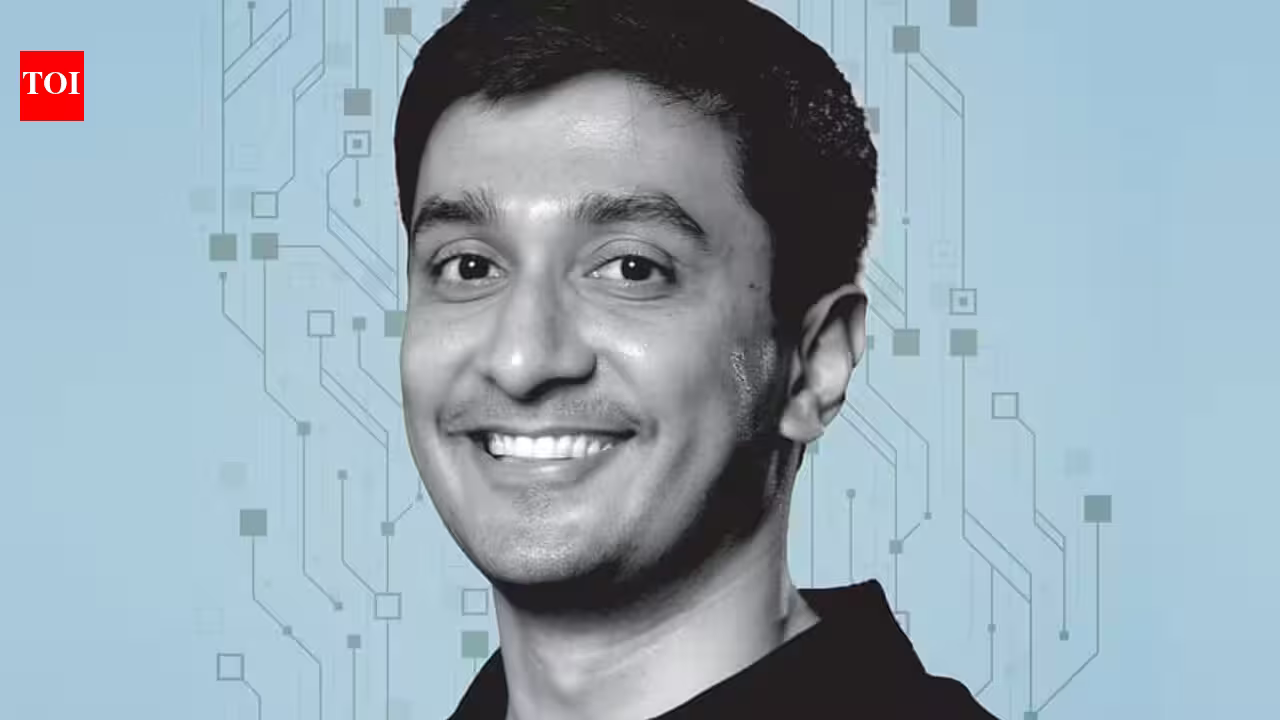
From Supreme Court Clerk to Tech Pioneer: How Utkarsh Saxena is Transforming India’s Justice System with AI
While the global conversation surrounding artificial intelligence often fixates on Silicon Valley chatbots and high-performance computing, a quieter, more profound revolution is taking place within the machinery of the Indian judiciary. At the helm of this transformation is Utkarsh Saxena, whose efforts to modernize court proceedings have earned him a prestigious spot on the TIME100 AI 2026 list.
Bridging the Gap Between Law and Technology
Saxena, co-founder and CEO of Adalat AI, brings a unique perspective to the technology sector. Before turning his attention to software development, he walked the hallowed halls of the Supreme Court of India as a law clerk. It was here that he identified a critical, age-old bottleneck: the crushing burden of administrative documentation and manual transcription that slows down the wheels of justice.
Unlike generic speech-recognition tools that often struggle with the nuances of regional accents and complex legal terminology, Adalat AI was built specifically for the Indian legal ecosystem. By engineering software that understands the intricacies of courtroom vocabulary and the diverse linguistic landscape of the country, Saxena’s team has successfully deployed their systems to more than 6,000 judges across 11 states.
Empowering the Judiciary, Not Replacing It
A central tenet of Saxena’s philosophy is that AI should act as a force multiplier for human expertise rather than a replacement for judicial judgment. Adalat AI focuses on automating the “unglamorous” yet essential tasks—such as live transcription and case-flow management—thereby freeing judges to focus on the core duty of delivering justice.
The impact of this technology was recently validated at scale. In July 2026, the Andhra Pradesh High Court made a landmark announcement: effective October 1, the state would adopt Adalat AI across its entire district judiciary. The rollout covers 733 courtrooms, marking one of the most significant implementations of AI within a public institution in India to date.
A Multidisciplinary Blueprint for the Future
Saxena’s career path serves as a compelling case study for the next generation of professionals. His academic credentials—a BA/LLB from the University of Delhi, an LLM from Harvard Law School, and a master’s in international development economics from the Harvard Kennedy School, alongside current doctoral work at Oxford—highlight a growing reality: the future of AI belongs not just to computer scientists, but to experts in law, policy, healthcare, and education.
Why It Matters
Saxena’s recognition by TIME magazine underscores a shift in how we perceive AI’s impact. The true potential of the technology may not lie solely in generative models, but in specialized, domain-specific systems that solve entrenched institutional inefficiencies.
By merging the rigorous, analytical mindset of a legal clerk with the innovative capacity of a software entrepreneur, Utkarsh Saxena is demonstrating that the most consequential applications of artificial intelligence are those designed to solve real-world problems from the inside out.
Disclaimer: This article is based on publicly available information and statements from the individuals and organisations cited. TOI Education has not independently verified all claims, figures or technical performance mentioned in the article.