









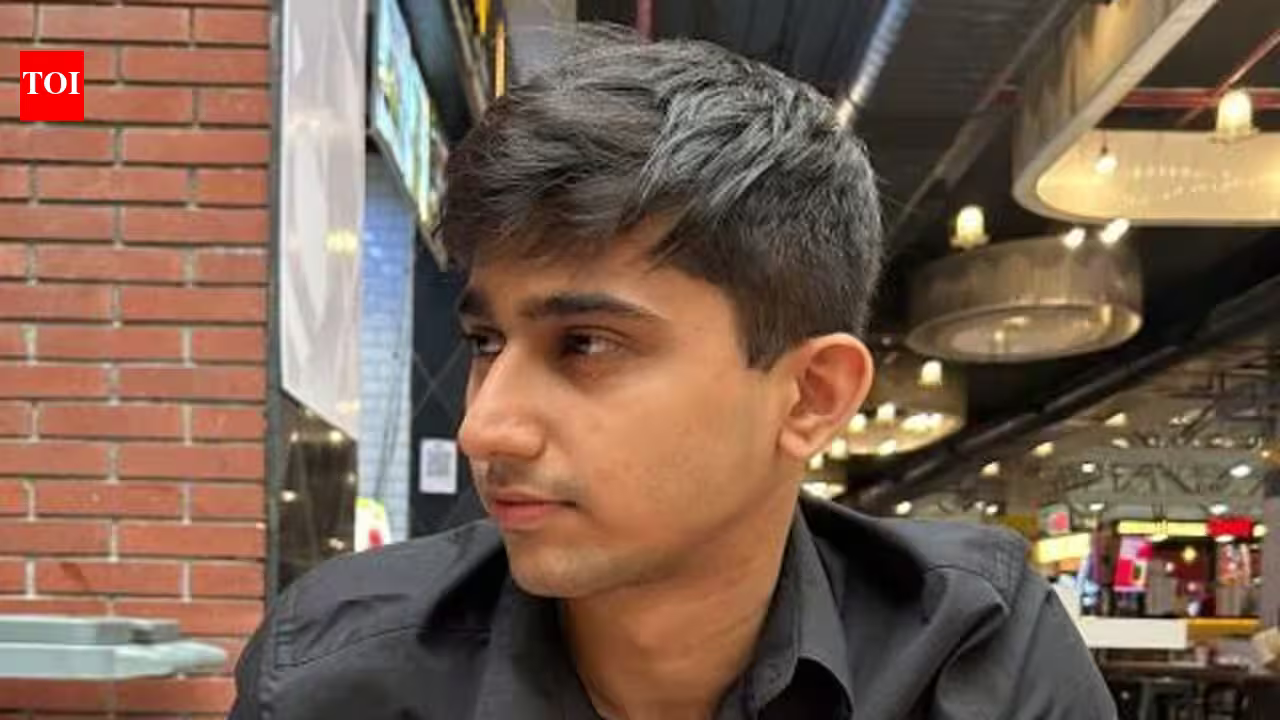
Beyond Grades: Microsoft Engineer Reveals the True Path to Tech Success
New Delhi, India – In the competitive world of engineering, academic scores, particularly the Cumulative Grade Point Average (CGPA), are often seen as the ultimate barometer of a student’s potential. However, a recent LinkedIn post by Microsoft Software Engineer Aditya Jamwal is challenging this conventional wisdom, highlighting that real-world problem-solving skills and persistent effort often trump stellar academic records. Jamwal’s insightful post presented a stark contrast: a hypothetical student with a 9.2 CGPA securing a 6 LPA (Lakhs Per Annum) package, while another with a 6.8 CGPA landed a lucrative 32 LPA role – a staggering difference of ₹26 lakh annually.
Jamwal’s core argument resonates deeply within the tech industry: once a candidate reaches the interview room, the marksheet often takes a backseat. What truly distinguishes successful candidates is their ability to dissect and solve complex problems, articulate technical concepts with clarity, and demonstrate the precise skills required for the job.
A Personal Testament to Persistence: Cracking Microsoft Twice
Jamwal’s own journey to Microsoft serves as a powerful testament to the very principles he advocates. In a LinkedIn post from approximately six months ago, he candidly shared his arduous path. From September 2025 onwards, he applied to over 80 distinct roles within Microsoft. Despite this extensive outreach, only four applications elicited a response. Remarkably, two of these responses blossomed into parallel interview opportunities.
One interview was for a position with Microsoft’s Azure team in Hyderabad, while the other was for the Xbox team based in Noida. Jamwal successfully navigated the interview rounds for both opportunities, ultimately receiving job offers from both teams. He eventually accepted one offer, leading to the discontinuation of his other applications. His personal experience boils down to a single, potent mantra: "not giving up."
Deciphering the 6.8 CGPA Success Story
Jamwal’s illustrative example of the 6.8 CGPA candidate is not intended to devalue academic performance. A strong CGPA undeniably holds merit, especially as many companies utilize academic cut-offs during campus recruitment drives. Instead, Jamwal emphasizes that academic performance and interview performance are distinct skill sets requiring different forms of preparation.
The hypothetical 6.8 CGPA candidate, in Jamwal’s scenario, strategically invested time in cultivating capabilities directly relevant to technical interviews. This included rigorous practice of approximately 50 Data Structures and Algorithms (DSA) patterns, the development of a robust project capable of withstanding detailed scrutiny, and a deep dive into Low-Level Design (LLD) and System Design principles. Furthermore, this candidate solidified their understanding of core Computer Science subjects such such as Operating Systems, Database Management Systems, and Computer Networks, while also acquiring foundational knowledge in Generative AI.
Jamwal aptly describes DSA as merely the "gate," not the entirety of a successful preparation strategy. In today’s dynamic technology hiring landscape, candidates are increasingly expected to possess a comprehensive skill set encompassing system design acumen, solid Computer Science fundamentals, an awareness of artificial intelligence advancements, and, crucially, the ability to apply their theoretical knowledge to practical scenarios.
The Enduring Lesson: Beyond Grades and Paychecks
The striking disparity between the 9.2 CGPA candidate earning 6 LPA and the 6.8 CGPA candidate securing 32 LPA ultimately underscores the paramount importance of strategic preparation over mere academic scores. While a high CGPA can undoubtedly open initial doors, students must still excel when those doors lead to the interview room. Conversely, a lower CGPA does not automatically disqualify an individual from pursuing ambitious roles, provided they proactively develop relevant skills and can effectively showcase them.
Aditya Jamwal’s personal narrative adds another crucial layer to this understanding: even achieving a coveted position at a company like Microsoft may necessitate numerous attempts. Over 80 applications yielded only four responses, yet those two interview opportunities were sufficient to secure two job offers.
For aspiring technology professionals, the message is clear and actionable: do not solely optimize for college examinations. Instead, cultivate the practical skills and problem-solving abilities that will enable you to confidently ace the interviews that follow. The journey to a fulfilling tech career is often paved with persistence, targeted skill development, and the unwavering belief in one’s ability to overcome challenges.