
India’s Battle Against Spam Intensifies Amidst Soaring Complaints
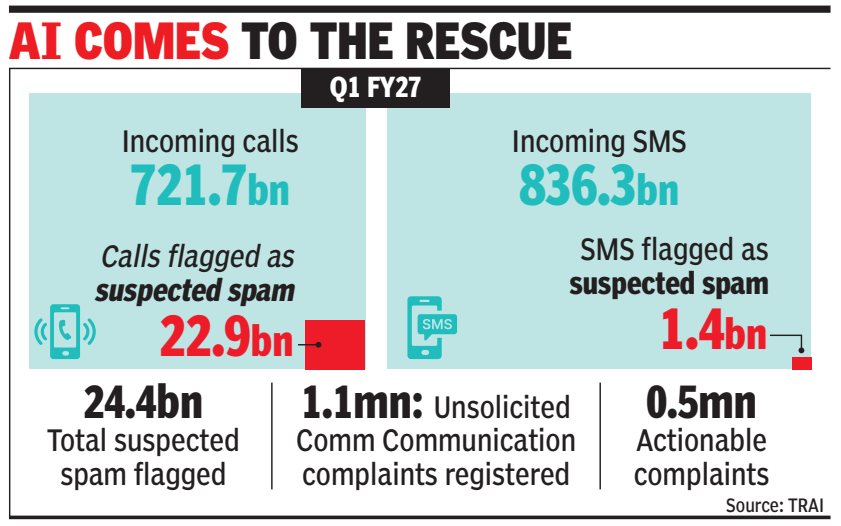
NEW DELHI – India’s concerted efforts to combat the relentless tide of unsolicited commercial communications (UCC) are escalating, with telecom operators flagging an astonishing 24.4 billion calls and messages as suspected spam during the April-June quarter. This aggressive stance is backed by robust regulatory action, as the Telecom Regulatory Authority of India (TRAI) reveals enforcement against over 1.8 lakh telecom resources in the same period.
The sheer volume of suspected spam communications underscores the pervasive nature of the problem. AI-based systems, strategically deployed by telecom operators, identified 22.9 billion incoming calls and 1.4 billion SMS as suspicious during the quarter. This translates to an astounding average of approximately 266 million spam-related communications daily, with roughly 3.2% of all incoming calls being flagged as potential spam.

TRAI’s proactive approach involves telecom operators leveraging sophisticated AI-based systems. These systems meticulously analyze calling patterns to detect and flag suspicious activity. Furthermore, operators have initiated a system of issuing warnings to entities identified as likely spammers, marking a significant step towards pre-emptive action.
Despite these advanced detection methods and increased enforcement, a notable paradox emerges: consumer complaints continue their upward trajectory. TRAI recorded 10.8 lakh UCC complaints during the April-June quarter, with 5.5 lakh deemed actionable. This quarterly complaint count represents a substantial nearly 40% increase compared to the average registered throughout 2025, when the entire year saw approximately 31 lakh complaints. These figures starkly illustrate the inherent complexity of India’s spam challenge. While the technological capabilities of telecom operators in identifying suspicious traffic are undeniably improving, and regulatory bodies are intensifying action against a growing number of offenders, these advancements have yet to translate into a noticeable reduction in the volume of complaints from the end-consumers.
Nearly 89% of complaints in the latest quarter — 9.6 lakh — were filed through Trai’s DND app
A significant portion of these consumer grievances, approximately 89% or 9.6 lakh complaints, were filed through TRAI’s dedicated DND (Do Not Disturb) app. The growing adoption of this digital tool is evident, with its cumulative downloads surging to 33.1 lakh by June, a substantial increase from nearly 28 lakh at the close of 2025. This indicates a heightened consumer awareness and willingness to actively report unwanted communications.
In parallel with detection and complaint mechanisms, enforcement against offenders has become more stringent. During the reporting quarter, a total of 1.3 lakh telecom resources faced a 15-day barring for initial violations. For repeat offenders, the penalties were considerably harsher, with 46,786 resources being disconnected for an entire year. Furthermore, TRAI’s comprehensive crackdown extended to blacklisting 263 senders and blocking 2,873 SMS headers, effectively disrupting the channels utilized by persistent spammers.
The latest data from TRAI paints a clear picture of an ongoing, multi-faceted battle against spam in India. While technological advancements and regulatory interventions are making significant inroads in identifying and penalizing offenders, the continuous rise in consumer complaints highlights the enduring nature of the problem. This suggests a need for an even more robust and integrated approach, potentially focusing on consumer education, faster resolution of complaints, and continued innovation in spam detection and prevention technologies to ultimately curb the deluge of unwanted communications. The fight, it appears, is far from over.