








Insurers Wage War on Escalating Motor Third-Party Fraud
MUMBAI, India – Non-life insurance companies across India are intensifying their efforts to combat a growing wave of motor third-party fraud, a critical issue that is significantly impacting their financial stability. The industry faces mounting losses, exacerbated by higher court awards to victims and a rising number of uninsured vehicles that deplete premium collections.
The severity of the problem was recently highlighted by Go Digit General Insurance, which successfully secured a landmark order from the Madras High Court on July 29. This crucial directive mandates the appointment of special investigation teams (SITs) at the district level across Tamil Nadu to meticulously probe fraudulent insurance claims. The court’s order empowers these SITs to investigate cases involving a wide array of deceptive practices, including fake accidents, misrepresentation of facts, forged insurance policies, fabricated injuries, and false medical reports and bills. Furthermore, the court has ordered the initiation of criminal proceedings against all individuals found responsible for these fraudulent activities.
Company officials at Go Digit General Insurance revealed that the case was brought before the court following a notable surge in irregularities within motor third-party claims, strongly indicating widespread fraudulent intent. The court’s directive extends its reach to law enforcement, instructing police to gather all relevant materials, including call detail records (CDRs), to assist in these investigations. In a move to ensure accountability within the system, the court also ordered departmental action against any officials discovered to be facilitating or failing to prevent such fraudulent claims.
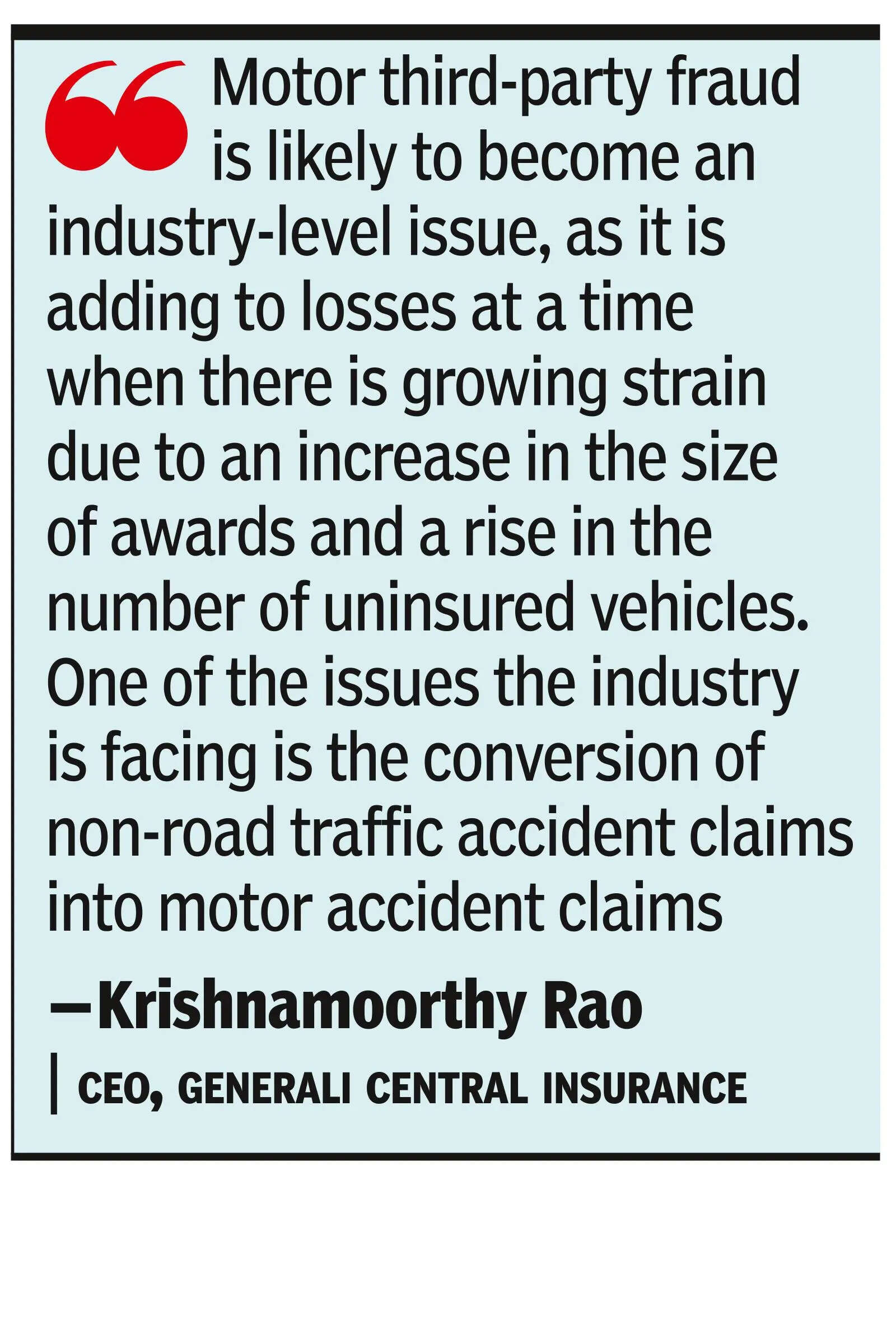
Industry executives are voicing growing concerns over the pervasive nature of this issue. Krishnamoorthy Rao, Managing Director and CEO of Generali Central Insurance, underscored the dire situation. “Motor third-party fraud is likely to become an industry-level issue, as it is adding to losses at a time when there is growing strain due to an increase in the size of awards and a rise in the number of uninsured vehicles,” Rao stated. He further highlighted a particularly insidious trend: “One of the issues the industry is facing is the conversion of non-road traffic accident claims into motor accident claims.” This manipulation artificially inflates motor insurance payouts, directly contributing to insurer losses.
The financial pressure on insurers is also intensifying due to a recent Supreme Court judgment. This landmark ruling introduced a new head of compensation – "loss of domestic care" – to be awarded based on a monthly income of Rs 30,000, with periodic revisions to account for inflation and socio-economic changes. Previously, compensation was primarily linked to a multiple of the victim’s income. This new provision, while aiming to provide more comprehensive support to victims, necessitates increased provisions from insurers, further straining their financial reserves.
The proactive measures being taken by insurers, particularly the collaborative efforts with the judiciary to establish SITs, signal a firm commitment to stemming the tide of motor third-party fraud. The success of these initiatives will be crucial not only for the financial health of the insurance sector but also for ensuring fairness and integrity within the claims process, ultimately benefiting legitimate claimants and policyholders alike. The industry remains vigilant, understanding that a concerted and multi-faceted approach is essential to tackle this complex and evolving challenge.