








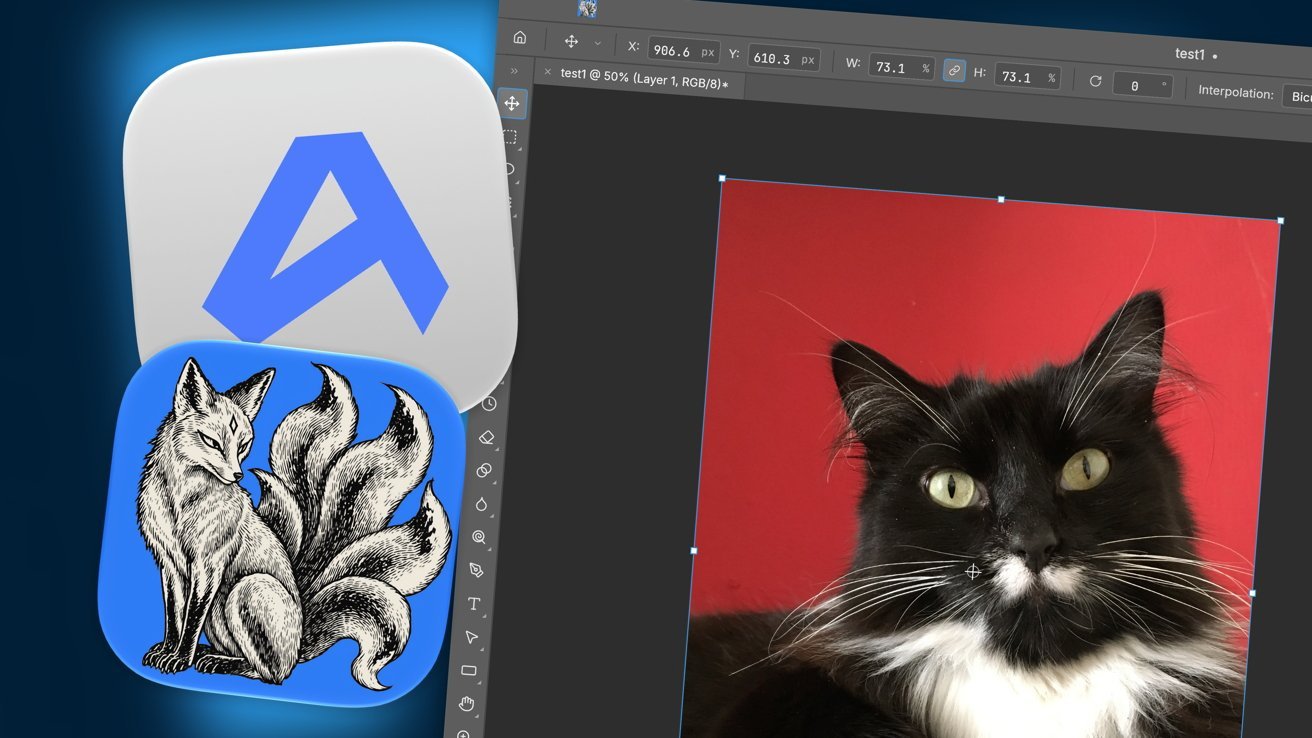
The software industry is witnessing a shift in development methodologies as the accessibility of large language models (LLMs) redefines what is possible for small teams or even individual developers. A new project dubbed ArtCraft has emerged, offering a suite of open-source, “clean-room” reimplementations of industry-standard professional software. By leveraging prompts delivered to AI models like Claude Opus and building in the memory-safe programming language Rust, these creators have produced functional alternatives to staples like Adobe Photoshop, Lightroom, and Premiere Pro, now rebranded as PhotoCraft, LightCraft, and FilmCraft.
The Emergence of AI-Assisted Development
The ArtCraft project represents a significant milestone in generative AI-aided engineering. The developers claim to have utilized a clean-room design process. In software engineering, this is a methodology where a second team—or in this case, a developer guided by LLM insights—reconstructs a system without access to the original source code or proprietary internal logic. The goal is to create a functionally equivalent product while ensuring that the resulting code is entirely original, thereby sidestepping copyright infringement claims related to source code theft.
By utilizing Rust, the developers have prioritized performance and safety. Rust’s focus on memory management and concurrency is well-suited for high-demand creative applications that typically require intense hardware utilization. The suite extends well beyond graphics, including clones of office productivity software like Microsoft Excel and Word, as well as specialized tools like AutoCAD and Avid Pro Tools. The rapid rollout of such a vast catalog suggests that LLM-driven coding is drastically accelerating the time-to-market for complex desktop applications.
Evaluating the Interface and User Experience
For users long accustomed to the Creative Cloud ecosystem, the user interface (UI) of these ArtCraft tools presents an “uncanny valley” experience. Upon launching an application like PhotoCraft, the layout feels intimately familiar. The toolbar positioning, the specific arrangement of the layers panel, and the iconography mirror the industry standards set by Adobe. However, close inspection reveals clear, functional differences.
While the primary tools are present, these applications currently lack the deep integration of proprietary AI features, cloud synchronization, and advanced neural filters found in modern Adobe releases. The interface is optimized for manual control rather than the automated workflow enhancements that define current professional-grade software. While the aesthetic is a clear nod to established market leaders, the underlying engine operates with a different set of defaults. This indicates that while the “look and feel” has been successfully replicated to minimize the learning curve, the internal feature set remains in its infancy.
The Legal Implications of Interface Mimicry
The legal landscape surrounding ArtCraft is complex. Copyright law generally protects original source code, but the protection of graphical user interfaces (GUIs) is a much murkier subject. While certain creative elements of a UI can be protected, functional design—the way a tool is organized to perform a specific task—is often more difficult to defend in court.
The clean-room defense is a robust strategy if executed correctly, as it relies on the independence of the creation process. However, Adobe’s legal team may focus on trade dress or the intentional replication of visual workflows. Even if a suit is not ultimately successful, the financial burden of defending against a multi-billion-dollar corporation can be prohibitive for independent projects. The developers of ArtCraft are essentially testing the boundaries of how much “inspiration” can be drawn from an existing product before it crosses into actionable territory. For the end user, this raises questions regarding long-term stability and whether these tools will survive potential legal challenges.
Security and Stability Considerations
From a security perspective, open-source software provides a level of transparency that proprietary software cannot match. Because the code is accessible on platforms like GitHub, the community has already begun scrutinizing the codebase for vulnerabilities. Early testing has not identified any malicious background processes or unauthorized data transmission, which is a common concern when adopting software from unknown, decentralized sources.
However, “battle-hardened” is the key missing ingredient. Adobe’s software suites have undergone decades of rigorous testing, edge-case debugging, and optimization for diverse hardware configurations. ArtCraft, by comparison, is a nascent project. Users can expect higher rates of instability, unoptimized performance, and missing feature parity. These tools are currently better suited for users seeking specific, lightweight functionality rather than those who rely on the comprehensive feature suites required for enterprise-level creative work.
The Broader Impact on the Software Market
The ArtCraft project serves as a clear warning to legacy software giants. It demonstrates that the barrier to entry for building feature-rich applications has collapsed. If an individual or a small team can use AI to replicate the core functionality of professional software in a short amount of time, the long-term viability of high-cost subscription models may be tested.
The true threat to companies like Adobe is not necessarily the current iteration of ArtCraft, which remains rough around the edges, but the proof of concept it provides. If future developers choose to build original, highly optimized, and distinct interfaces that offer similar functionality without the bloat of legacy code, they could attract a significant segment of the user base. Adobe’s primary concern should be the commoditization of the tools they have spent decades perfecting. As AI continues to bridge the gap between idea and implementation, the software market will likely see a surge in specialized, low-cost competitors that prioritize speed and modularity over subscription-locked ecosystems.
Disclaimer: This content is auto-generated for informational purposes only.
Source: Read Original News