







Oil Prices Hold Firm Amid Hormuz Strait Impasse, US-Iran Tensions Escalate
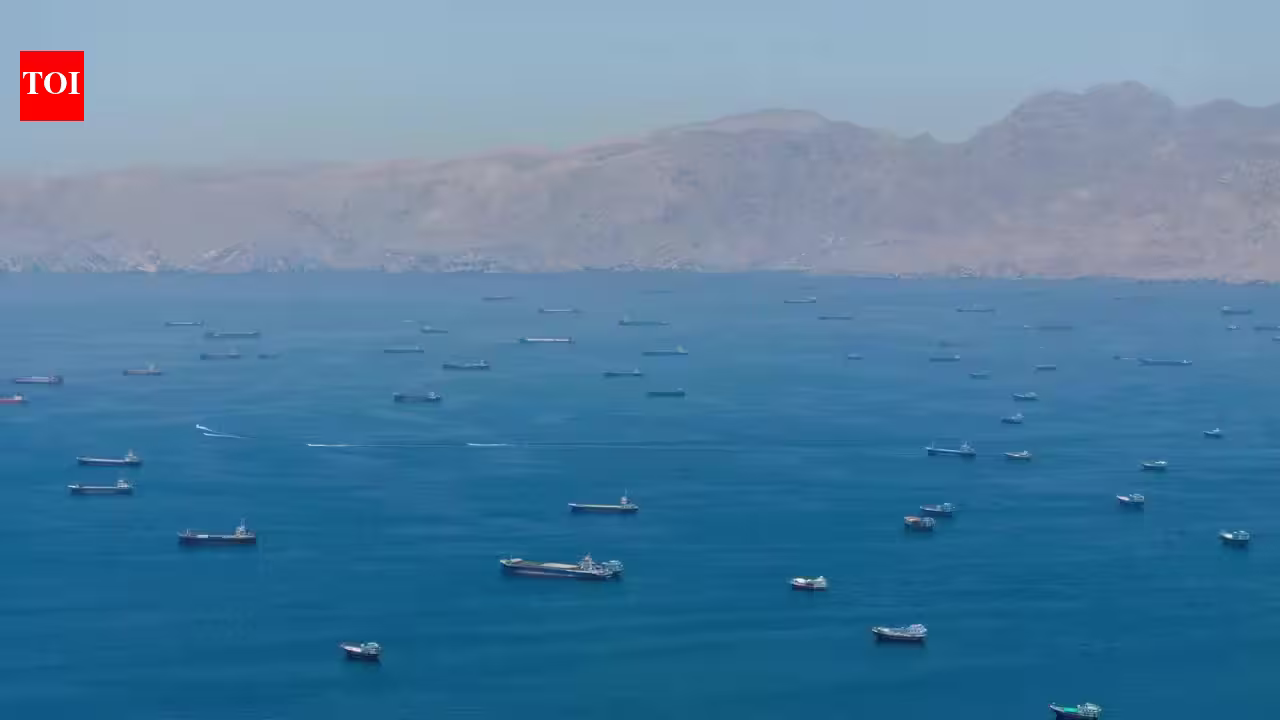
Mumbai, India – November 26, 2024 – Global oil prices remained near their highest levels in over a week on Tuesday, as fading hopes for a swift US-Iran peace deal and the continued closure of the vital Strait of Hormuz fueled market uncertainty. The fresh demands from Washington, including reparations for war casualties, have significantly complicated efforts to reopen the strategic waterway, which prior to the recent conflict, facilitated the transit of a fifth of the world’s oil and liquefied natural gas (LNG).
As of 7:20 am IST, WTI crude registered a marginal gain of 0.09%, settling at $82.22 a barrel, while Brent crude edged to $87.80 a barrel. This follows a substantial surge in the previous session, where both benchmarks jumped over 5% to reach their highest points since July 31st. This earlier rally was triggered by US President Donald Trump’s response to Iran’s conditions for a peace deal, where he introduced new demands for compensation from Tehran for those killed in various conflicts, attacks, and protests. Subsequently, President Trump asserted US control over the Strait of Hormuz, claiming it had been swept for Iranian mines.
The introduction of these additional demands has created a significant hurdle in reaching an agreement to reopen the crucial oil route. This stands in stark contrast to the previous week, when oil prices had fallen by more than 7% amidst growing optimism that Iran and Oman were on the cusp of a deal that could lead to the strait’s reopening. The Strait of Hormuz, a narrow passage connecting the Persian Gulf with the Gulf of Oman and the Arabian Sea, serves as an indispensable conduit for crude oil and LNG shipments from Gulf exporters to global markets.
Iran Demands Sanctions Lift and Conditions Met
Iran has consistently maintained that the reopening of the Strait of Hormuz is contingent upon the US lifting sanctions on Tehran and fulfilling several other key conditions. Iranian foreign ministry spokesperson Esmaeil Baghaei stated on Monday that the strait would remain closed until the US ended its naval blockade against Iran, according to local media reports.
Speaking at a weekly press briefing in Tehran, Baghaei attributed the closure of the strategic waterway to military aggression by the US and Israel. He emphasized that the reopening would depend on the conditions imposed on Iran and the waterway by both nations, as reported by Iran’s semi-official Tasnim News Agency. "As long as the US naval blockade continues, the necessary conditions for the reopening of the Strait of Hormuz do not exist," Baghaei asserted. He further urged Washington to cease and reverse its "destructive actions" to enable the two sides to negotiate their next steps.
While acknowledging ongoing discussions with Oman regarding new shipping lanes through the strait, Baghaei clarified that these talks were solely between the two neighboring countries. Iran has maintained that compensation, an end to sanctions, and a cessation of military threats from the US are non-negotiable prerequisites for the strait’s reopening.
No Direct US-Iran Talks, Tehran Confirms
In a separate development, Iranian foreign minister Seyed Abbas Araghchi confirmed on Sunday that there were currently no direct negotiations between Iran and the US. Speaking to media personnel at the Foreign Ministry’s Centre for Political and International Studies, Araghchi stated, "We currently have no negotiations with the United States. Intermediaries are still making efforts to find ways to resume negotiations."
He further elaborated, "From our perspective, there can be no resumption of talks until the United States ends its violations of the Memorandum of Understanding (MoU) and makes amends for the breaches it has committed," as reported by Tasnim News Agency. Araghchi reiterated that discussions could not restart until Washington ceased violating the MoU and addressed its previous breaches.
While technical discussions with Oman on a revised maritime route through the Strait of Hormuz were nearing completion, Araghchi stressed that an agreement with Oman would not automatically lead to the strait’s reopening. "Of course, this does not mean the opening of the Strait of Hormuz. This agreement may be reached, but the opening of the Strait of Hormuz is subject to a series of conditions."
The prevailing geopolitical tensions continue to inject volatility into oil markets, fueling concerns about a potential energy supply crunch. However, despite the recent upward trend, the current price spike remains significantly lower than the $126 per barrel witnessed during the earlier phases of the conflict. The ongoing diplomatic deadlock between the US and Iran over the Strait of Hormuz remains a critical factor influencing global energy security and market stability.