









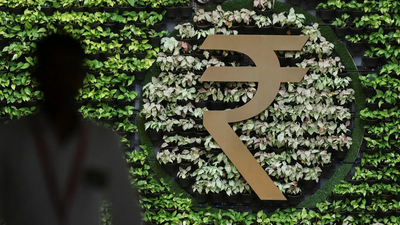
Rupee Weakens Amidst Geopolitical Tensions and Rising Oil Prices, RBI Intervention Limits Decline
MUMBAI, India – [Date of Publication, e.g., October 24, 2023]
The Indian Rupee commenced Tuesday’s trading session under pressure, depreciating by 8 paise to 95.38 against the US Dollar. This early morning decline was primarily attributed to escalating uncertainties surrounding the ongoing Middle East crisis and a notable overnight surge in crude oil prices. Further contributing to the domestic currency’s weakness was a subdued performance in the Indian equity markets.
Despite these headwinds, the rupee’s decline was somewhat moderated by strategic interventions from the Reserve Bank of India (RBI) and sustained inflows from foreign institutional investors (FIIs), according to insights from forex traders. The local currency opened at 95.38 against the US dollar in the interbank foreign exchange market and maintained this level at the time of this report’s publication. This follows Monday’s close, where the rupee had already shed 13 paise, settling at 95.30 against the greenback.
A significant driver of the rupee’s depreciation is the continued rise in global crude oil benchmarks. Brent crude, which had seen a sharp increase from approximately $84 a barrel on Monday, was trading marginally lower by 0.06 per cent at $87.67 per barrel in futures trade. However, the overall trend remains firmly upward.
“Rupee traded in a relatively narrow range (on Monday) despite Brent rising towards USD 84. The downside was contained by RBI intervention, with state-run banks reportedly selling dollars on the central bank’s behalf,” stated Anil Kumar Bhansali, head of treasury and executive director at Finrex Treasury Advisors LLP.
Bhansali further elaborated on the geopolitical impact, adding, “Today Brent has gone past $87 per barrel as Iran and the US continue to harbour the Strait of Hormuz uncertainty on fading hopes of a deal happening soon.” This commentary underscores the direct link between geopolitical instability in the Middle East and its immediate effect on global energy markets, subsequently influencing currency valuations.
Globally, the dollar index, which measures the US dollar’s strength against a basket of six major currencies, stood at 99.77, registering a slight dip of 0.04 per cent. While a weaker dollar typically supports emerging market currencies, the specific pressures on the rupee from oil prices and regional instability outweighed this factor.
Domestically, Indian equity markets extended their weakness into early trade on Tuesday. The Sensex recorded a fall of 320.14 points, reaching 78,204.40, while the Nifty declined by 94.35 points to 24,490.85. A downturn in equity markets often correlates with investor sentiment, leading to potential capital outflows or reduced foreign investment, thereby adding pressure on the local currency.
Despite the prevailing concerns, foreign institutional investors (FIIs) continued to show confidence in Indian assets. On Monday, FIIs were net buyers of equities, purchasing investments worth Rs 1,974.76 crore. This sustained inflow of foreign capital played a crucial role in preventing a more significant slide of the rupee, highlighting the ongoing balancing act in the Indian forex market.
As the Middle East crisis evolves and global crude oil prices remain volatile, the Reserve Bank of India’s role in managing currency stability will be closely watched. The interplay of geopolitical events, commodity prices, and capital flows will continue to dictate the rupee’s trajectory in the coming days.