







New Orleans Addresses “Missing Middle” Housing Crisis with $31 Million Millennium Place Development
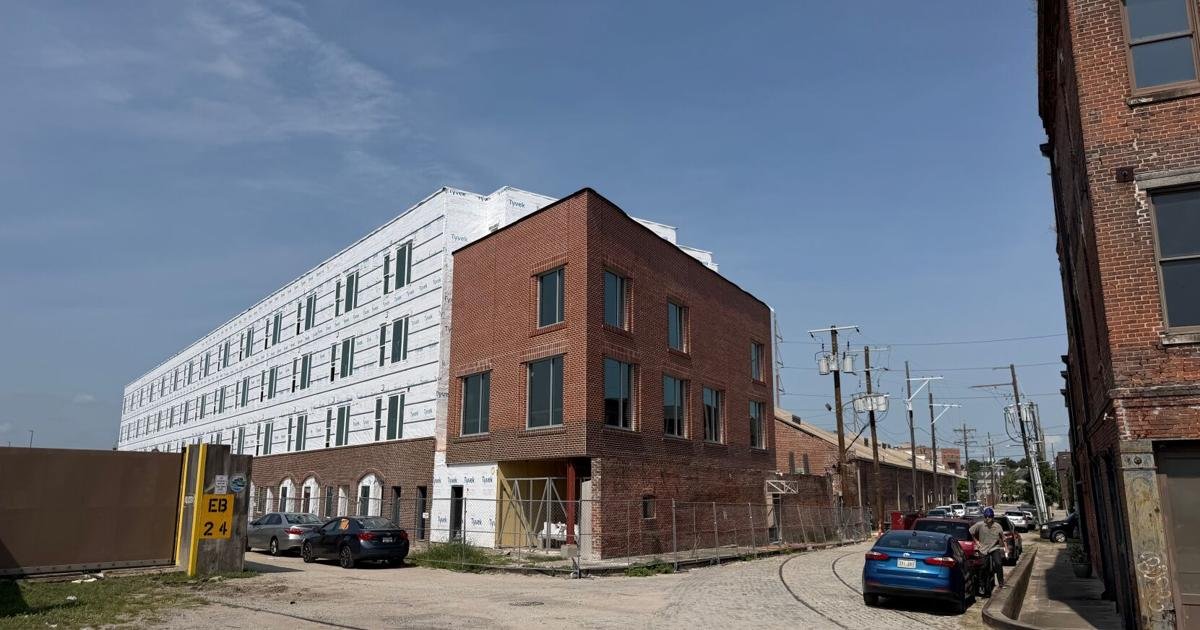
New Orleans, LA – Construction is rapidly nearing completion on Millennium Place, an ambitious $31 million apartment complex in the Lower Garden District designed to address the critical shortage of “missing middle” housing in the city. Overlooking the Mississippi River, this 80-unit development aims to provide high-quality, attainably priced residences for the essential workforce—nurses, teachers, police officers, and other middle-class earners—who often find themselves priced out of New Orleans’ competitive housing market.
Located at the intersection of Celeste and Tchoupitoulas streets, near the forthcoming River District neighborhood, Millennium Place is a project of the Renaissance Neighborhood Development Corporation, a non-profit organization dedicated to fostering sustainable community growth. Vanessa Levine, Executive Director of RNDC, highlighted the urgent need for this type of development. “There’s such a gap. It’s really high rent or low-income housing,” Levine stated. “This complex is really showing that middle market housing can provide both value and a high-quality living experience.”
The project, bolstered by state and federal grants, comes at a time when affordable housing advocates, including HousingNOLA, underscore a growing crisis. A 2025 study from HousingNOLA estimates the city requires 55,000 new affordable housing units, a significant increase from the 47,000 estimated the previous year. This escalating demand has led to a strategic shift in public funding, which now extends beyond traditional low-income housing to support projects catering to individuals and families who earn too much for federal housing assistance but still struggle to afford market-rate rents.
Millennium Place joins a growing list of innovative housing initiatives across New Orleans. Recent examples include the $300 million redevelopment of the abandoned Bywater Naval Station into 294 apartments, which commenced in January, and the 2022 conversion of a former Holiday Inn in New Orleans East into Highrise NOLA, an affordable and middle-class apartment complex. Furthermore, the $100 million Rivana Apartments development, slated for the River District, plans to add 220 affordable units, signaling a concerted effort to diversify the city’s housing stock.
The “middle market” tenants targeted by Millennium Place typically fall within 80% to 120% of the area’s median income, translating to approximately $49,650 to $74,450 annually for an individual in New Orleans, according to federal data. Levine noted that these renters often pay upwards of $2,000 for a one-bedroom apartment. Millennium Place aims to alleviate this burden, with the majority of its units priced $300 to $400 below market rates. To ensure financial viability while offering reduced rents, approximately two dozen units will be leased at market rates.
Filling the “missing middle” gap
The roughly 59,000-square-foot, four-story building will feature 65 one-bedroom and 15 two-bedroom apartments. Residents will enjoy amenities such as a rooftop terrace and a two-level fitness center, both offering picturesque views of the Mississippi River.
In a structured approach to affordability, nearly half of the units are designated for renters earning less than $49,680 annually. An additional 20% will cater to households making between $55,850 and $62,050 per year. Four units are reserved for low-income earners making $18,650 or less, with the remaining 23 units available at New Orleans’ market rates, as per property records. Levine anticipates that Millennium Place will attract a diverse cohort, including teachers, healthcare professionals, recent college graduates, and early-career individuals who, despite their qualifications, face significant challenges in affording city rents.
Andreanecia Morris, president of HousingLOUISIANA, a non-profit advocating for housing policy and affordable housing projects statewide, praised the initiative. “It’s not going to help the most vulnerable, but it will help the working poor,” Morris commented, emphasizing the development’s crucial role in supporting those just above the income threshold for traditional affordable housing programs.
Industrial corridor to housing development
Millennium Properties Inc., the for-profit subsidiary of Renaissance Neighborhood Development Corporation and owner of Millennium Place, was established in 2014 to spearhead such transformative housing projects within the Greater New Orleans market. The organization’s track record includes the successful Denham Townhomes in Livingston Parish, whose 102 apartments are now fully leased.
The funding for Millennium Place largely stems from over $13 million secured through a Middle Market Loan Program, a state initiative launched to finance housing projects in areas impacted by Hurricanes Laura, Delta, and Ida. These funds were administered by the state’s Office of Community Development and supported by federal block grants.
Groundbreaking for Millennium Place occurred in February 2025, with construction slated for completion in November. Prospective tenants are expected to begin moving in by December, according to Levine.
Views from four-story Millennium Place apartments overlook the Mississippi River.
The site’s transformation began in 2007 when Renaissance acquired the property, which then included the long-vacant Lykes Steamship Building. By 2013, Renaissance had revitalized the Lykes building into the Centennial Place apartments, a 52-unit mixed-income complex, alongside a storage warehouse. Concurrently, the Centennial Cotton Press Building next door was renovated to house an indoor rock climbing facility and a fresh food program. Today, the Cotton Press property boasts a Congregation Coffee and leasable commercial kitchen space.
As the Tchoupitoulas neighborhood evolved from an industrial corridor to an area attracting some of the city’s highest earners (with an average annual income of approximately $93,000), Renaissance recognized an opportunity. The storage warehouse, no longer serving its original purpose in the redeveloping neighborhood, was demolished to make way for Millennium Place. This new development, along with the Cotton Press project, represents Renaissance’s commitment to counter displacement and foster inclusivity amidst rising rents.
“We do have the ability to preserve housing in this neighborhood by building new and providing it at a middle market rate that would allow for those folks to stay,” Levine concluded, emphasizing Millennium Place’s role in creating a more equitable and diverse urban landscape for New Orleans’ vital workforce.