



Revolutionizing "Prosperidad Compartida": A Mission-Oriented Blueprint for Mexico’s Future
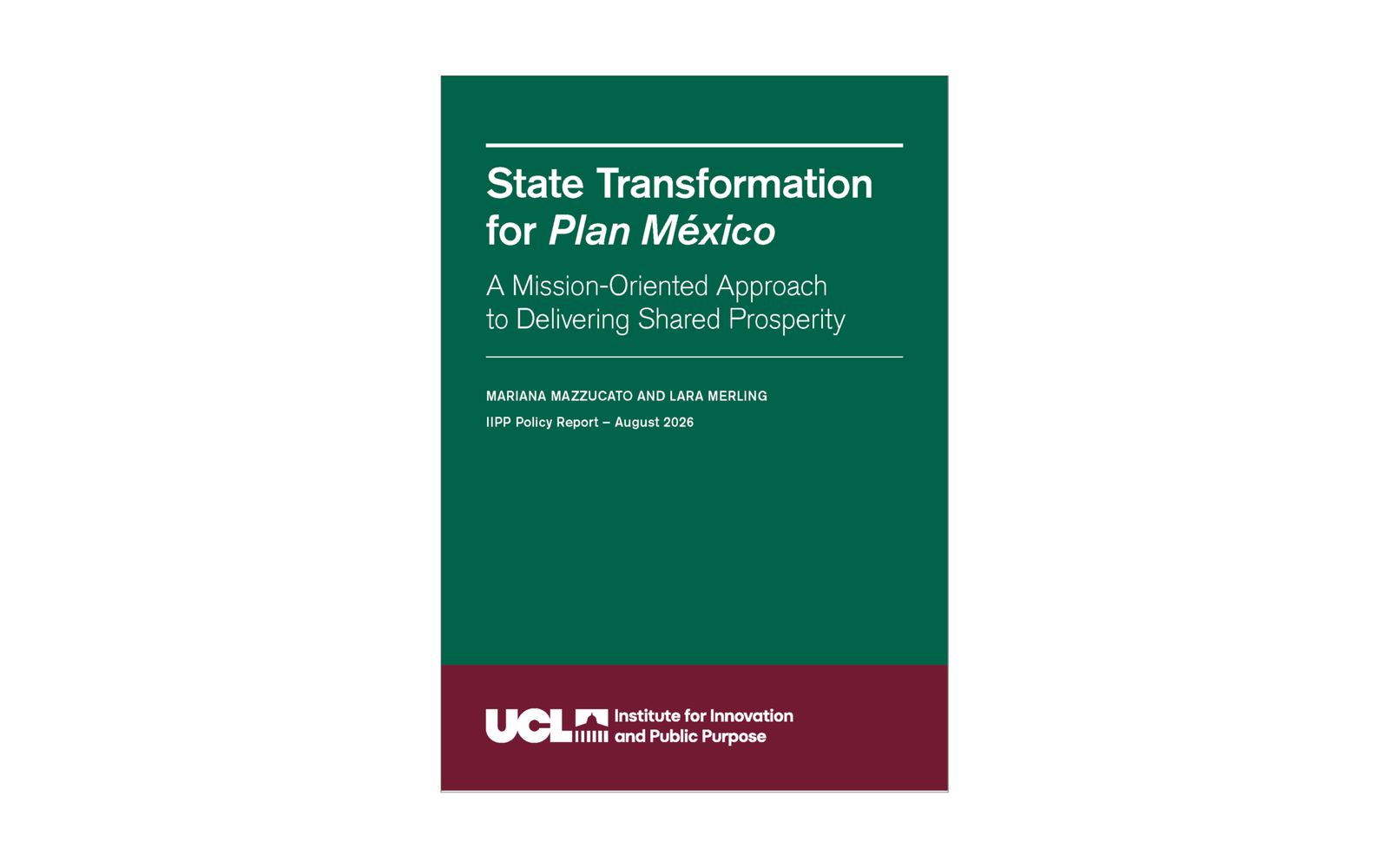
London, UK – A groundbreaking report from the UCL Institute for Innovation and Public Purpose (UCL IIPP) outlines a transformative approach for Mexico to sustain its impressive social gains and achieve lasting "prosperidad compartida" (shared prosperity). Authored by renowned economist Professor Mariana Mazzucato and Research Fellow Lara Merling, the policy report, titled "State Transformation for Plan México. A Mission-Oriented Approach to Delivering Shared Prosperity | Policy Report No. 2026/04," provides a comprehensive roadmap for leveraging public investment and innovative governance to drive a sustainable productive transformation.
Mexico has demonstrated remarkable progress since 2018, more than doubling its minimum wage in real terms and significantly reducing multidimensional poverty from 41.9% to 29.6% of the population. However, the report highlights a critical challenge: these social advancements currently outpace the necessary productive transformation required to solidify and sustain them. A key concern raised is the unprecedented low level of public investment, which the authors identify as the most crucial lever for Plan México’s success.
The report, a culmination of a year of intensive dialogue and workshops with Mexican public officials, government representatives, and academics, proposes a series of interconnected findings and recommendations to address these challenges. These recommendations are designed to fundamentally reshape state capacity and governance tools, moving beyond mere target-setting to foster a dynamic, mission-oriented approach.
Central to their findings is the imperative to protect productive public investment and redesign fiscal rules. The authors advocate for a reframing of how public investment is perceived, emphasizing its long-term benefits in building national capabilities rather than solely focusing on the immediate costs of borrowing.
To ensure coherence and impact, the report recommends translating Plan México’s vertical targets into concrete, cross-cutting challenges. Instead of isolated objectives, areas like water security, clean energy, health for all, and food sovereignty should be treated as missions that necessitate coordinated investment and innovation across multiple ministries and sectors.
The authors also call for a strategic restructuring of Mexico’s financial architecture, proposing the coordination of development banks under a unified system. This integrated approach would enable these institutions to lend earlier and for longer durations, specifically targeting portfolios aligned with national missions.
Further enhancing the impact of public resources, the report suggests using procurement strategically to aggregate public demand and create markets. This approach would facilitate the growth of small firms by providing them with opportunities to scale, thereby fostering a more inclusive and dynamic economy.
Crucially, the report emphasizes the need for attaching conditions of reciprocity to every form of public support. Firms receiving public finance, contracts, or concessions should be required to commit to productive investment, utilize domestic suppliers, ensure decent work conditions, and reinvest profits, fostering a symbiotic relationship between public support and private sector responsibility.
Recognizing the dynamic nature of societal challenges, Mazzucato and Merling advocate for building the capabilities to evaluate, experiment, and adapt inside government. This institutional agility would allow policies to evolve based on real-world outcomes and emerging needs.
The report also champions participatory governance, urging the government to build participation in from design through to evaluation. Communities, local producers, and subnational authorities should be given a standing role in shaping mission outcomes, implementation strategies, and assessment frameworks, ensuring that solutions are rooted in local realities and priorities.
Finally, to demonstrate the efficacy and scalability of their proposed model, the authors recommend testing and scaling the delivery model through a mission sandbox in the Tula basin. The restoration of this critical region by 2030 is already a presidential commitment, making it an ideal proving ground for this innovative mission-oriented approach.
This comprehensive and forward-thinking report, made possible by research funding from the Open Society Foundations, provides a robust framework for Mexico to not only sustain its recent social achievements but also to embed a deep-seated, equitable, and sustainable prosperity for all its citizens.
Reference:
Mazzucato, M. and Merling, L. (2026). State Transformation for plan Mexico. A Mission-Oriented Approach to Delivering Shared Prosperity. UCL Institute for Innovation and Public Purpose, IIPP Policy Report 2026/04. ISBN: 978-1-917384-42-1
The full report is available at: https://www.ucl.ac.uk/bartlett/publications/2026/aug/state-transformation-plan-mexico
This policy report is part of the UCL Institute for Innovation and Public Purpose’s (UCL IIPP) extensive publication series. To explore more working papers and policy reports, visit here.