







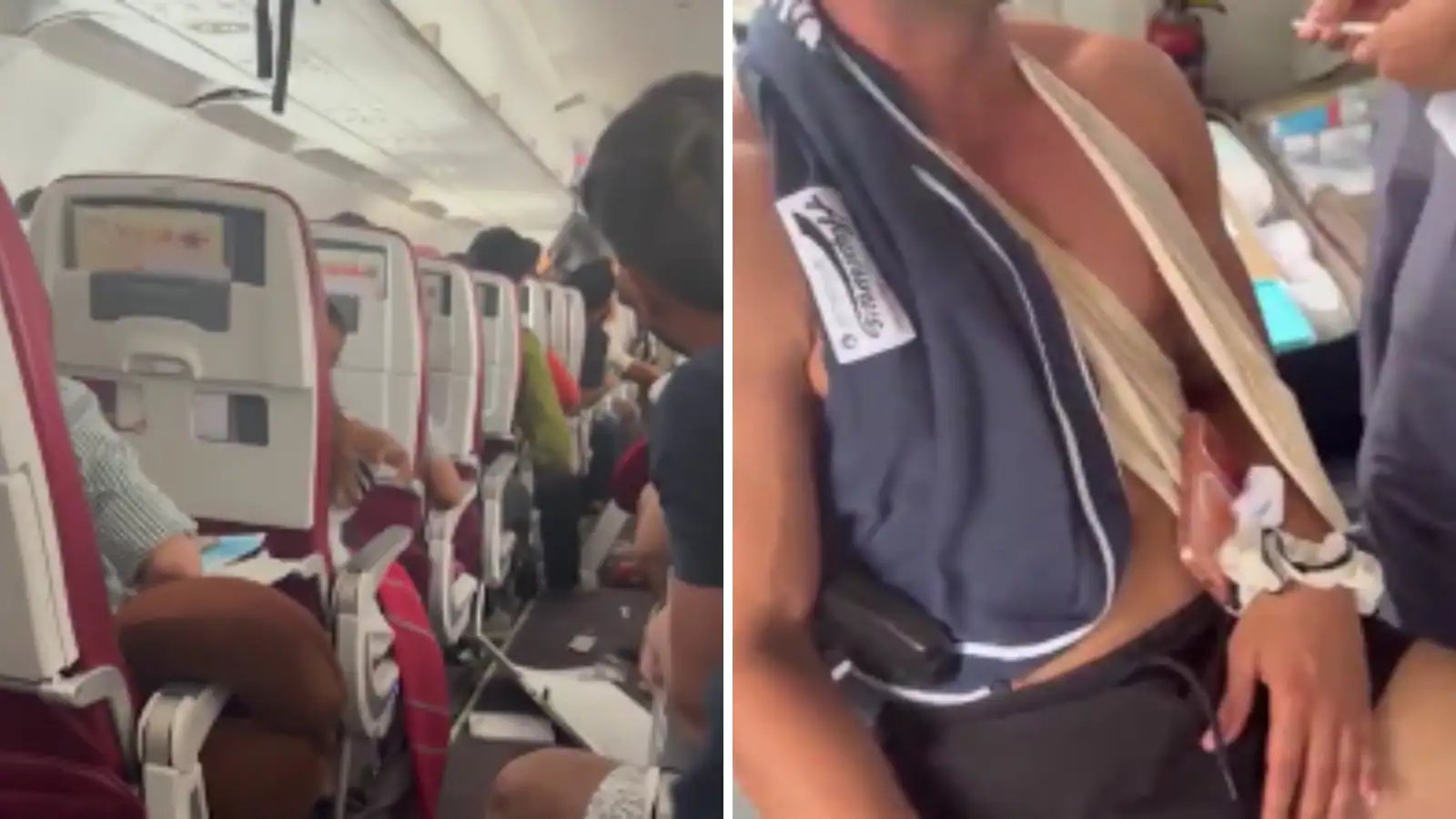
New Delhi — The pilot-in-command of Air India flight AI2379, which experienced a sudden loss of altitude on August 4 during its journey from Phuket to Delhi, was not subjected to a psychoactive-substance test before the flight. This is due to existing Directorate General of Civil Aviation (DGCA) rules that do not mandate such testing prior to every flight.
This distinction has gained significant attention after the pilot’s post-flight screening reportedly yielded a non-negative result for cannabis/marijuana, followed by a confirmatory test that officials familiar with the matter say detected the substance. The incident, which left 20 people injured, including passengers and cabin crew, has been classified as a “Serious Incident” by the government and is currently under investigation by the Aircraft Accident Investigation Bureau (AAIB).
The development has raised questions regarding the absence of a pre-flight test for the pilot and whether the post-flight test was a routine random screening or prompted by the incident itself. The explanation lies in the DGCA’s regulations, which differentiate between pre-flight breathalyser testing for alcohol and testing for psychoactive substances.
Air India’s Airbus A320, registered VT-EXO, operating flight AI2379, suffered a sudden loss of approximately 300 feet in altitude during its cruise phase. The aircraft subsequently stabilized and landed safely in Delhi. Following the incident, both pilots underwent psychoactive-substance screening as part of the Standard Operating Procedures for such occurrences, according to the Ministry of Civil Aviation. The pilot-in-command’s initial screening required confirmatory testing, leading to his immediate removal from flying duties. The subsequent confirmatory test reportedly confirmed the presence of marijuana/cannabis.
The crucial question remains: why was there no similar psychoactive-substance test conducted before the Phuket-Delhi flight?
The DGCA’s Civil Aviation Requirements, Section 5, Series F, Part V, titled “Procedure for examination of the aviation personnel for detection of consumption of Psychoactive Substances,” does not mandate a urine-based psychoactive-substance test before every flight. Para 6.3 of the CAR explicitly states, “The test shall be carried out post flight/post shift or anytime during the duty period as the case may be.” This regulation therefore permits testing after a flight, a shift, or during the duty period. Furthermore, Para 6.4 states, “The pre-flight testing requirement will be introduced in due course…” This indicates that the current framework does not include a mandatory pre-flight drug test for every pilot, unlike the pre-flight breathalyser system for alcohol.
The CAR outlines provisions for random testing and testing under specific circumstances. Para 4.1 requires scheduled commercial aircraft operators and air navigation service providers to conduct random testing for psychoactive substances among flight crew members and air traffic controllers. This program must cover at least 10% of employees annually, with selection designed to ensure equal chances for all employees and to avoid targeting specific individuals or groups. The rules also specify testing before employment, before trainee pilots join flying training organizations, follow-up testing for confirmed cases, and other defined situations.
The testing of the pilot after completing the flight is consistent with these regulations, which combine random testing, testing in specified circumstances, and testing during or after duty, rather than a system of pre-departure screening for every pilot. In the AI2379 incident, the Ministry of Civil Aviation stated that pilots were tested due to the serious nature of the occurrence. The exact operational basis for the testing—whether routine random or incident-triggered—will be a key factor in the ongoing investigation.
Part of the public confusion stems from the mandatory pre-flight breathalyser testing for alcohol, which is governed by a separate DGCA CAR. The breathalyser regime, designed to detect alcohol, differs from the psychoactive-substance testing regime, which involves urine testing for a panel of substances including cannabis, cocaine, amphetamine-type stimulants, opiates, barbiturates, and benzodiazepines. Therefore, the existence of a mandatory pre-flight alcohol test does not imply a routine pre-flight urine test for psychoactive substances. Courts, including the Delhi High Court, have recognized this distinction, citing the pre-flight breath-analyser examination’s purpose as ensuring pilots do not operate aircraft under the influence of alcohol or other safety-compromising substances.
A “non-negative” screening result in psychoactive-substance testing signifies that the initial test detected a substance requiring further laboratory confirmation; it is not a final positive determination. The rules stipulate that an employee with a non-negative result be removed from safety-sensitive duties during the confirmatory process. This explains why the initial government statement referred to the AI2379 pilot’s result as requiring confirmatory testing rather than an immediate confirmed positive. The subsequent confirmatory test has now reportedly detected marijuana/cannabis.
The CAR outlines a graduated response to confirmed positive results. A first confirmed positive leads to medical evaluation and rehabilitation/de-addiction measures, with specific requirements for returning to safety-sensitive duties. A second confirmed positive can result in a three-year license suspension, while a third can lead to license cancellation. A Medical Review Officer is also tasked with determining if a confirmed positive result could be attributed to legitimate therapeutic treatment or another innocuous source.
In response to the incident, the Civil Aviation Ministry has instructed the DGCA to review its framework for psychoactive-substance testing of pilots, examining protocols in other countries. Sources indicate that while existing norms largely align with international standards, the DGCA is assessing potential areas for strengthening the framework. NDTV sources reported that CCTV footage showed the pilot seemingly unable to stand, requiring assistance to a seat, and the airline’s internal flight safety report indicated he was on medication for sleep problems. The pilot has denied any wrongdoing.
The incident report accessed by NDTV also suggested the pilot was not in his seat when the aircraft lost altitude over Odisha; the co-pilot was in command, with a crew member in the pilot’s seat. Additionally, sources said a cabin crew member has filed a complaint alleging the pilot smoked cannabis.
The AI2379 case has exposed a significant distinction within India’s aviation safety framework. The current DGCA CAR does not mandate a psychoactive-substance test before every flight, relying instead on random testing, testing in specific circumstances, and testing during or after duty. For now, the regulatory position is clear: there is no blanket requirement under the psychoactive-substance CAR for a pilot to undergo a drug test before every flight.