








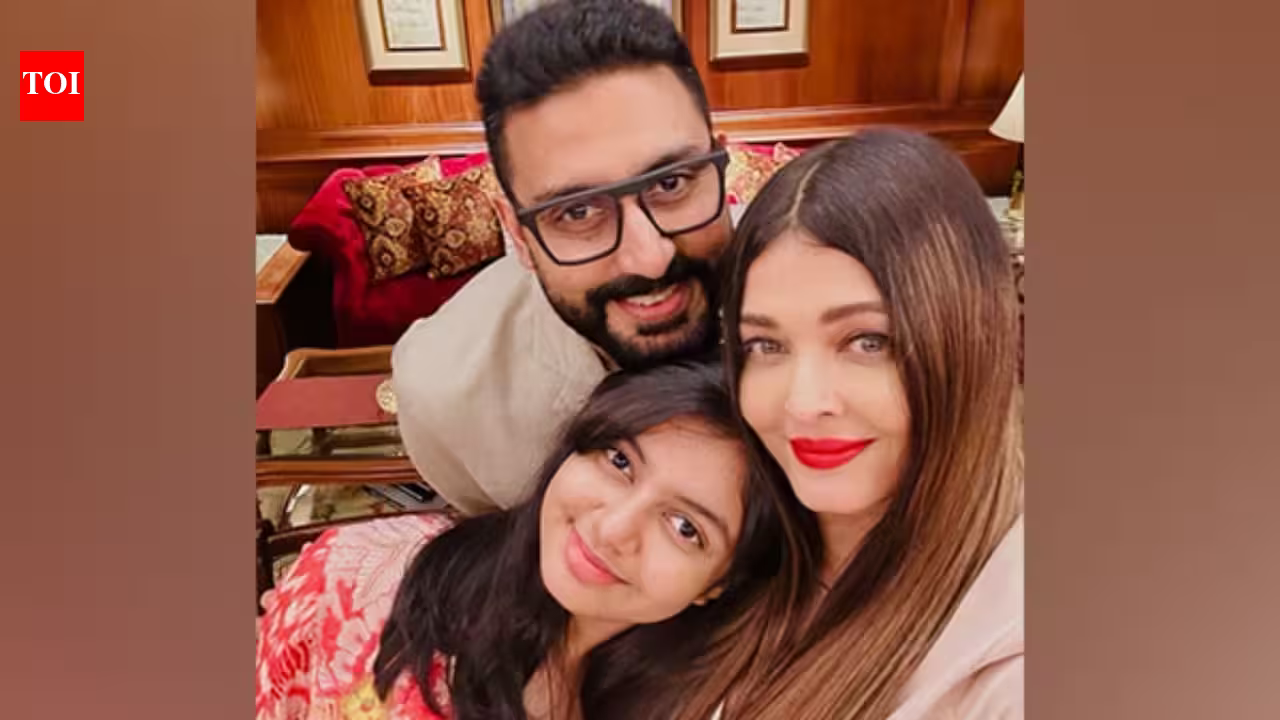
The Delhi High Court is currently grappling with profound legal questions concerning the scope of personality rights, the generational transferability of family reputation, and the intersection of intellectual property law with the dissemination of fake news. This examination stems from a significant lawsuit initiated by Aaradhya Bachchan, the young daughter of prominent Indian actors Abhishek Bachchan and Aishwarya Rai Bachchan, and granddaughter of the legendary Amitabh Bachchan. She has sought judicial intervention to curtail the rampant spread of false and malicious information about her online, particularly concerning her health.
The lawsuit was triggered by a series of sensationalist YouTube videos that falsely asserted Aaradhya was gravely ill, hospitalized, and in one egregious instance, even deceased. These baseless claims prompted her family to file a plea in court, aiming to safeguard her personality rights and prevent further defamation. During a recent hearing, Justice Anup Jairam Bhambhani of the Delhi High Court articulated several pivotal inquiries that will guide the court’s deliberations.
Among these crucial questions is whether the established reputation of a renowned family name can be equated to a trademark, and if so, how extensively this reputation can extend through successive generations. The judge pondered, “The value of trademark and reputation in the trademark arises from the fact that a product or service has been rendered. Now, this is somewhat contextually different when you are talking about a person. A certain last name has a reputation because of the achievements, the eminence in a certain field of work, etc. So, does that reputation – you are couching it as virtually as a trademark – does that flow down generationally? If so, up to what point?” This query delves into the inherent differences between commercial intellectual property and the personal reputation of an individual within a famous lineage.
The court has identified three overarching themes for its consideration. Firstly, it will scrutinize the extent to which the reputation linked to a family name, if treated akin to a trademark, can be inherited and maintained across generations. Secondly, the court will deliberate whether the proliferation of fake news, even when it is “of egregiously despicable nature,” can constitute a violation of intellectual property rights, and if so, which specific type of intellectual property right might have been infringed. Thirdly, the legal proceedings will assess whether acts of defamation, encompassing both slander and libel, or any other form of reputational harm, can be categorized within the existing framework of intellectual property rights. The judge emphasized that these questions are foundational and not exhaustive, indicating a comprehensive legal exploration.
The discussion also touched upon the evolving and increasingly expansive definition of personality rights. Justice Bhambhani remarked on this broader interpretation, questioning, “The concept of personality rights is acquiring amoebic proportions. Everything is personality rights. But whose personality rights?” This highlights the judiciary’s attempt to delineate the boundaries and application of these rights in a rapidly evolving digital landscape.
Advocate Pravin Anand, representing Aaradhya, argued that the implications of this case extend beyond her individual reputation, encompassing the broader standing and name of the Bachchan family. In response to the court’s questions about drawing parallels between trademark protection and the safeguarding of personal reputation, Anand referenced the wider scope of passing-off law. He clarified that reputation is not solely confined to a trademark and that passing-off law offers broader protections. Anand underscored the severe harm caused by the circulation of fake news, stating, “The whole family’s pictures are used, words are used to give an impression that this young girl has died and has cancer. Both fake, causing so much of harm. Using the name Bachchan and pictures of the family. Abhishek Bachchan is also a party to the matter.” This emphasizes the emotional distress and reputational damage inflicted upon the entire family by such false narratives.
In April 2023, the court had already granted an interim injunction in Aaradhya’s favor, prohibiting the defendants from publishing any material concerning her health. At that time, Justice C Hari Shankar underscored the critical importance of shielding children from such malicious misinformation. He powerfully stated, “Every child is entitled to be treated with honour and respect, be she the child of a celebrity or the child of a commoner. Dissemination of misleading information relating to a child, especially as regards her physical or mental wellbeing, is something which is completely intolerable in law.”
The legal action was initiated by Aaradhya, with her father Abhishek Bachchan acting on her behalf, against various YouTube channels and unidentified individuals in 2023. The aim was to prevent the circulation of allegedly defamatory or misleading content about her and the Bachchan family, and to safeguard their private lives from unwarranted public exposure. The specific allegations centered on numerous YouTube videos that falsely claimed Aaradhya was severely ill and hospitalized, with one even alleging her death. Other videos irresponsibly suggested that her family had neglected to arrange timely medical treatment. The case is scheduled for further hearing before the Delhi High Court on September 15, promising to set a significant precedent in the realm of celebrity privacy, intellectual property, and the legal battle against online misinformation.