








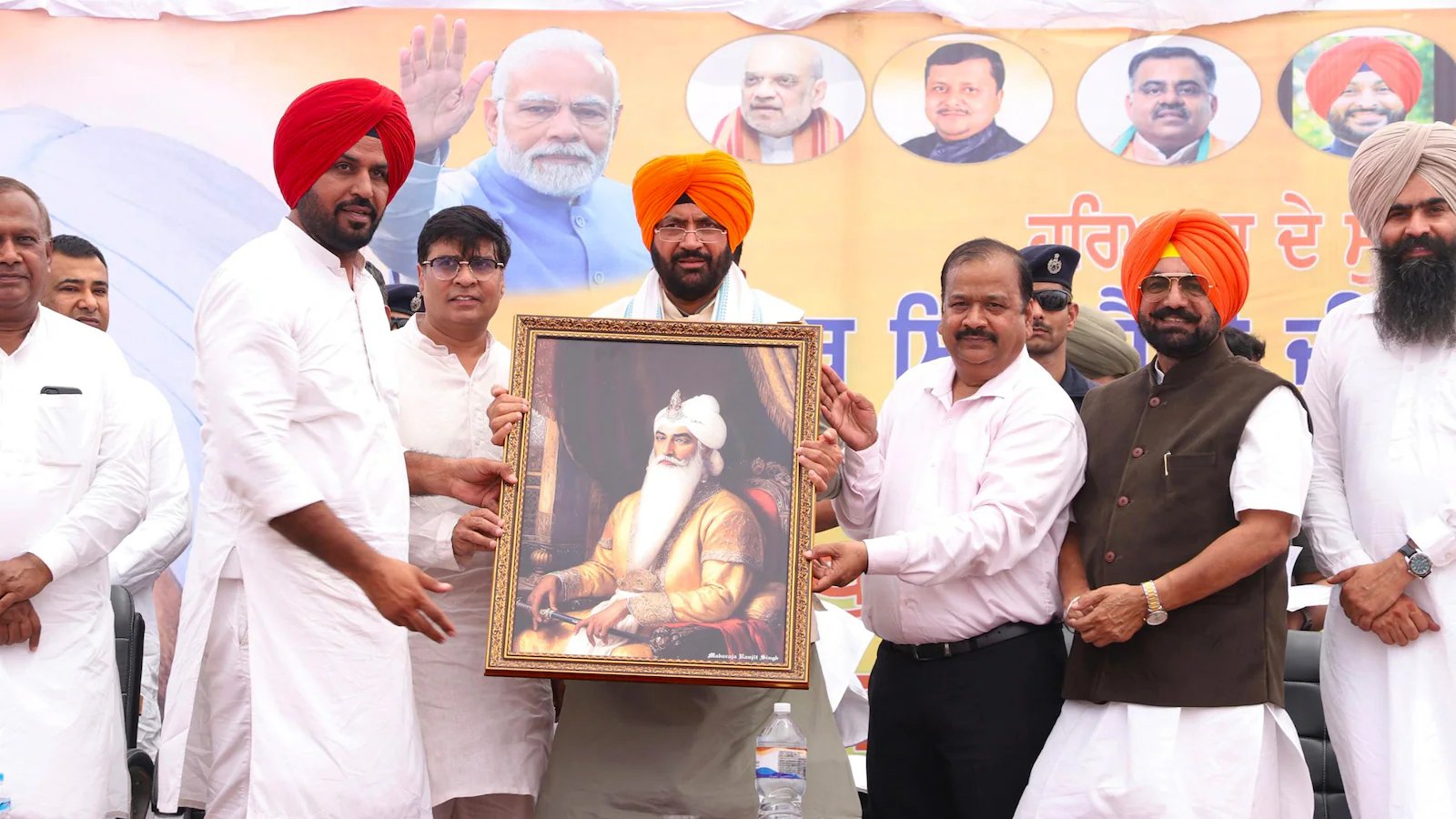
In a recent development poised to complicate the Bharatiya Janata Party’s (BJP) outreach efforts in Punjab, a significant police action against Sikh protesters in Ambala, Haryana, has drawn widespread attention. This incident unfolds as Haryana Chief Minister Nayab Singh Saini has been actively campaigning in Punjab, often adopting a turbaned Sikh persona in an attempt to connect with the Sikh community and bolster the BJP’s presence ahead of the 2027 Punjab Assembly elections. However, the events in Ambala risk undermining these strategic overtures.
The confrontation stemmed from an incident on August 7th at Gurdwara Panjokhra Sahib. During this event, anti-Khalistan leader Gursimran Singh Mand, accompanied by Y+ security, was reportedly chased and assaulted by a group of Nihangs and other individuals following a dispute. His vehicle sustained damage, and police intervened to extract him from the situation. Mand subsequently lodged a complaint with the authorities, leading to the arrest of two youths.
These arrests sparked a protest on Thursday, organized by various Sikh organizations and farmers. The demonstrators demanded that a case be registered against Mand and called for the immediate release of the two arrested individuals. While the police, after prolonged negotiations, did register a case against Mand, the protesters remained resolute, refusing to lift their blockade of the Amritsar-Delhi National Highway until the youths were freed.
The standoff escalated late Thursday evening. Despite repeated appeals from senior police officials for the protesters to disperse, they maintained their position on the highway. This ultimately led to the police resorting to a lathicharge to clear the area, resulting in a stampede, and the deployment of tear gas. Several police personnel also sustained injuries during the clashes. The aftermath of this police action, including images and videos, is now widely circulating across social media platforms in Punjab, amplifying the incident’s reach and potential impact.
What began as a localized dispute in Ambala has now transcended its immediate context, taking on broader political and communal implications, particularly given the involvement of Sikh organizations and farmers in the protests. This timing presents a significant challenge for the BJP. Haryana has increasingly been positioned as a crucial gateway for the party’s outreach efforts in Punjab, with Chief Minister Saini actively engaging in campaigns and projecting an image intended to foster trust and connection with Sikh voters. This strategy is part of a larger initiative to expand the BJP’s base and establish itself as a credible political force in Punjab, particularly in preparation for the 2027 state elections.
However, the contrasting visuals emerging from Haryana tell a different story. For many Sikh groups in Punjab, the distinction between the actions of the Haryana government and the broader BJP outreach in Punjab may be blurred, especially when images depicting Sikh protesters being subjected to police force are widely disseminated on social media. The BJP has been striving to expand its political footprint in Punjab, moving beyond its traditional urban and Hindu support base. This endeavor requires cultivating trust among Sikh voters and presenting the party as a viable political alternative. Any perception of disproportionate police action against Sikh protesters could severely hinder these meticulously planned efforts.
The central question now is whether the Ambala episode will remain confined to a local law and order matter or if it will acquire a more expansive political and communal dimension in Punjab. The participation of Sikh organizations, farmers, and groups affiliated with the broader Panthic political movement has already lent the confrontation a significance that extends well beyond Ambala’s immediate vicinity. For the BJP, the challenge is therefore twofold: not only to effectively manage the situation within Haryana but also to prevent these visuals from becoming a damaging political narrative that undermines their carefully constructed outreach in Punjab. The crucial query remains whether the Ambala lathicharge will be an isolated incident or if its reverberations will cross the border, potentially damaging the BJP’s strategic engagement with the Sikh community.