





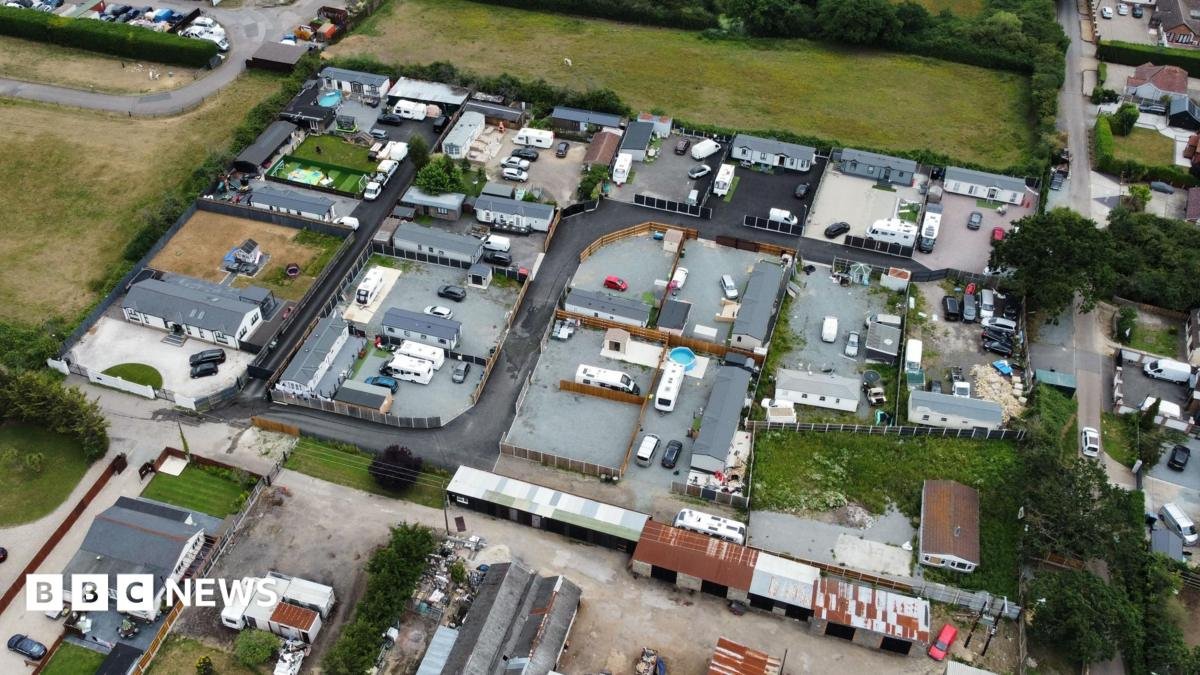
Across various regions of England, including Hertfordshire, Essex, Cambridgeshire, and Bedfordshire, there has been a notable surge in the number of unauthorised Gypsy and traveller sites. These developments frequently occur during Bank Holiday weekends, leading to considerable local discontent and often initiating complex legal disputes.
Statistical data underscores the growing scale of this issue. As of January, the number of traveller caravans without proper planning permission stood at 4,950 across England. This represents a substantial 73% increase compared to the 2,860 recorded in January 2020. Similarly, summer figures indicate a significant rise, with a 44% increase between July 2019 and July 2025, climbing from 3,113 to 4,471 unauthorised caravans.
These developments have not gone unnoticed by local authorities and residents. A prominent councillor in an affected area has expressed serious concerns, suggesting a “loss of control” within the planning system. Residents living in proximity to one of these sites vividly described its swift construction as akin to a “military operation,” highlighting the speed and unexpected nature of these developments.
In response to this escalating situation, the government has unequivocally stated that unauthorised development is “totally unacceptable.” They assert that local councils possess “strong powers” to effectively address and mitigate such issues. However, the perspective from the traveller community offers a different interpretation. Cliff Codona, the founder and chairman of the National Travellers’ Action Group, contends that the existing planning system acts as a significant impediment for travellers, effectively leaving them with no alternative but to “break the law.” This sentiment raises critical questions about the underlying factors compelling some individuals to engage in unlawful actions, prompting a broader discussion about the efficacy and fairness of current planning regulations.