







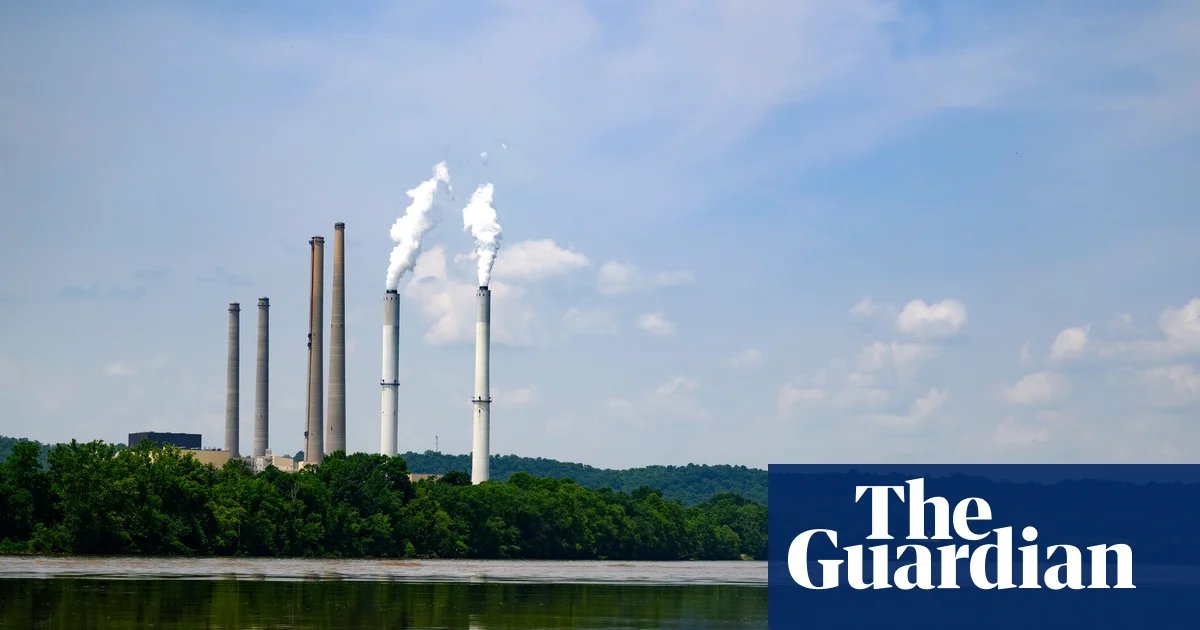
In a major escalation of the battle over national climate policy, a coalition of 21 states and several major cities filed a lawsuit on Thursday challenging the Trump administration’s decision to repeal federal regulations that capped greenhouse gas emissions from coal and natural gas-fired power plants.
The legal challenge, led by New York Attorney General Letitia James, targets the Environmental Protection Agency (EPA) for what the plaintiffs describe as the “gutting” of one of the country’s most essential climate safeguards. Joining New York in the lawsuit are a diverse group of Democratic-led jurisdictions, including Pennsylvania, California, Illinois, Massachusetts, and the city and county of Denver.
At the heart of the dispute is the EPA’s recent decision to revoke the Biden-era rule, which mandated strict emissions reductions for the utility sector. Beyond the repeal, the agency has initiated a separate, preemptive measure designed to bar future administrations from regulating carbon pollution from power plants, effectively attempting to lock in a deregulatory framework for years to come.
In a statement released alongside the filing, Attorney General James condemned the administration’s actions, asserting that the repeal shows a “callous disregard” for public health and environmental stability. “Dismantling these protections is a betrayal of American families,” James said. “The stakes are too high to allow this administration to once again put profits over people.”
The EPA, which declined to comment on the pending litigation, has maintained that the repeal is a necessary step to restore economic flexibility to the energy sector. When the agency announced the rollbacks last month, officials estimated the move would save the industry more than $300 billion in compliance costs. EPA assistant administrator Aaron Szabo argued in September that the shift would “unleash” American energy, allowing utility providers to make operational decisions based on cost-efficiency rather than federally mandated facility closures.
The coalition has petitioned the US Court of Appeals for the District of Columbia, seeking a judicial review to strike down the repeal. The plaintiffs argue that the EPA acted unlawfully by abandoning pollution limits without performing a rigorous analysis of the climate and public health costs. Furthermore, the coalition has signaled its intent to sue the agency over its broader failure to regulate emissions from the growing fleet of gas-fired power plants, which remain a primary source of carbon dioxide.
This lawsuit lands during a period of heightened legal activity regarding climate change. On Monday, the Supreme Court is set to hear a landmark case involving the city and county of Boulder, Colorado, which is suing fossil fuel companies to recover damages for climate-related disasters. That case, which carries billions of dollars in potential liability, highlights a growing trend of climate litigation as local and state governments seek to hold both industry actors and federal regulators accountable for the escalating impacts of global warming.
For environmental advocates, the current regulatory shift marks a definitive departure from the policies established during the Obama and Biden administrations, which prioritized carbon regulation as a central pillar of the nation’s climate strategy. The EPA’s recent actions have been bolstered by the revocation of a foundational scientific finding that had long served as the legal justification for regulating greenhouse gases.
As the legal battle moves into the court system, the outcome will likely hinge on whether the EPA’s cost-saving justifications can withstand the legal challenges posed by the states, which argue that the administration’s policies are not only fiscally motivated but are a fundamental abdication of the agency’s duty to protect the environment for future generations. The full coalition of states involved includes Arizona, California, Colorado, Connecticut, Delaware, Hawaii, Illinois, Maine, Maryland, Massachusetts, Michigan, Minnesota, New Jersey, New Mexico, New York, North Carolina, Oregon, Rhode Island, Vermont, Washington, and Wisconsin.
Disclaimer: This content is auto-generated for informational purposes only.
Source: Read Original News