







Though the last ice age concluded roughly 11,500 years ago, the scars it left on our planet remain visible. From the flattened topography of the American Midwest to the ongoing ecological recovery following the extinction of megafauna like woolly mammoths and saber-toothed tigers, the influence of that glacial period is profound. Now, researchers have uncovered a “time capsule” that offers an even deeper look into this frozen past: an ancient ice cap in Northwestern Tibet containing records reaching back over 128,000 years.
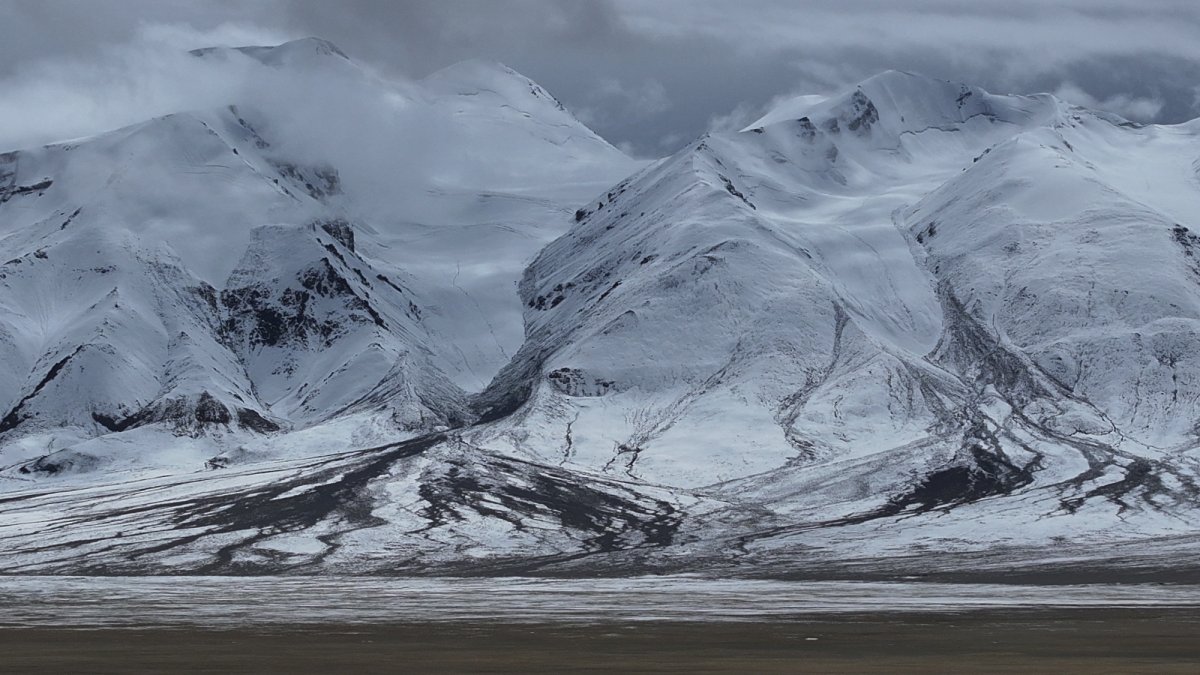
A study published this week in the journal Science Advances details the analysis of ice cores extracted from the Guliya Plateau. Situated between 19,370 and 20,340 feet above sea level, this remote site has provided scientists with the oldest ice cores ever recovered from a mountaintop outside of the polar regions.
Ice cores act as essential climate archives, preserving atmospheric data in layers much like the rings of a tree. By analyzing these layers, scientists can reconstruct past climate patterns, providing a baseline to better predict how the Earth might respond to modern environmental shifts.
The research team, which included experts from The Ohio State University, compared new samples with those originally drilled at the site in 1992. The discovery that the 2015 samples yielded oxygen isotope patterns consistent with the 1992 data is a breakthrough for paleoclimatology. “Reproducibility of the records within a given ice cap is extremely important,” said Lonnie Thompson, a study co-author and paleoclimatologist at The Ohio State University. “If you get an identical record a quarter of a century later, it can tell you a lot about the behavior of the ice over time.”
To verify the age of these deep-layer samples, researchers utilized advanced dating techniques focused on radioactive isotopes of beryllium and chlorine. These elements possess half-lives that make them reliable markers for large-scale environmental changes. A key anchor in their timeline was the Laschamp Geomagnetic Excursion—a period approximately 41,000 years ago when Earth’s magnetic field reversed, leaving distinct chemical traces trapped within the ice. When these findings were cross-referenced with nearby Tibetan cave deposits, the data confirmed that the Guliya ice cap contains a continuous record spanning well over 128,000 years.
This discovery corrects long-held assumptions regarding the Guliya plateau’s history. Earlier research suggested that the record might have stopped around 12,000 years ago, during the Mid-Holocene era. The new evidence disproves this, confirming that much of the ice predates the Holocene entirely. “If we only had Holocene-era ice in Tibet, that would mean that the big ice sheets from the last ice age didn’t persist through the early Holocene,” Thompson explained. “But evidence shows that it did.”
The preservation of such ancient ice is largely attributed to Guliya’s extreme elevation and rugged, freezing topography, which creates a uniquely stable environment for climate data. By providing a window into the transition between intense periods of glaciation and warmer interglacial periods, the Guliya cores offer a rare, high-altitude perspective that complements polar research.
As scientists continue to analyze these samples, the data will likely refine our understanding of how key environmental indicators react to warming trends. For Thompson and his colleagues, the results represent a milestone in climate science, proving that the geological record is often more resilient—and more revealing—than previously imagined. “The big picture is that our results tell a very consistent story,” Thompson said. “If you get the science right, it’s consistent. It’s our understanding of what it’s trying to tell us that has to catch up.”
Disclaimer: This content is auto-generated for informational purposes only.
Source: Read Original News