







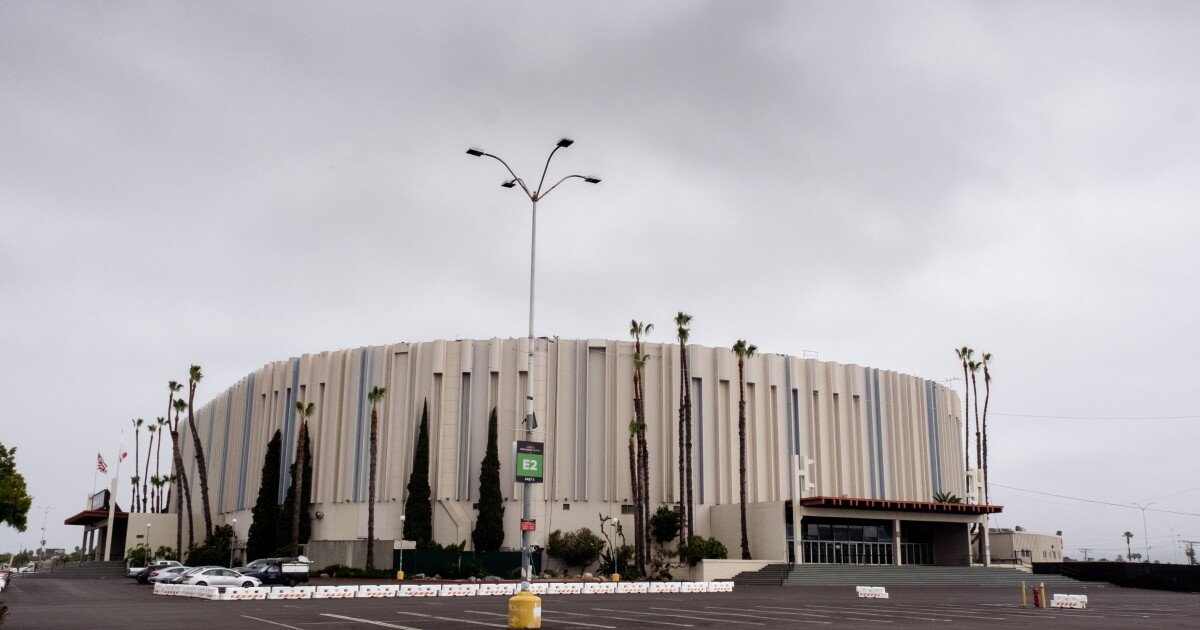
The long-stalled Midway Rising development, a transformative $3.9 billion overhaul of the San Diego Sports Arena property, cleared a major hurdle this week after Governor Gavin Newsom signed two critical pieces of legislation into law. Senate Bill 344 and Senate Bill 958 are set to reshape the project’s regulatory future by streamlining compliance with the California Environmental Quality Act (CEQA), effectively neutralizing years of legal roadblocks.
The legislation, introduced by State Senator Akilah Weber Pierson alongside colleagues Senator Steve Padilla and Assemblymember Chris Ward, establishes that previously approved environmental impact reports for the Midway Rising site are sufficient for CEQA compliance. This legal certainty provides the project’s developers with a clear path forward after a protracted period of stagnation.
“It provides certainty,” said Jeff Meyer, a spokesperson for the Midway Rising project. “It’s the ability for our project to move forward with shovels in the ground at the end of next calendar year in 2027, should the project be approved at city council this fall.”
Midway Rising aims to revitalize 49 acres of city-owned land, transforming the aging Sports Arena site into a dense, multi-use hub. The current proposal includes 4,254 new homes—nearly 2,000 of which are designated as affordable—making it, according to SB 344, the largest affordable housing development in California history. The plan also features a 16,000-seat entertainment venue and 14.5 acres of dedicated open space.
“At the end of the day, it’s about delivering desperately needed affordable housing and a brand-new entertainment venue that will benefit not just the city but the entire region,” Meyer added.
However, the path ahead remains contentious. The nonprofit group Save Our Access, which has long campaigned to preserve a 30-foot building height limit within the coastal zone, expressed immediate disappointment with the governor’s action. John McNab, who leads the organization, argued that the development threatens to overwhelm the neighborhood with traffic congestion and permanently degrade coastal access for local residents.
“It’s the definition of a government that doesn’t care about human need,” McNab said. “It’s a major social justice issue. But again, where do you go? We fight.”
While the new state laws aim to insulate the project from further environmental litigation, McNab indicated that Save Our Access is not backing down. The group plans to continue evaluating new legal avenues to challenge the project as it heads toward a final vote at the San Diego City Council scheduled for this fall.
Despite the ongoing opposition, supporters view the signing of the bills as a landmark victory for urban density and regional growth. If the city council approves the project, the massive redevelopment could begin as early as 2027, signaling the end of a multi-year battle over the future of the Midway district.
Disclaimer: This content is auto-generated for informational purposes only.
Source: Read Original News