







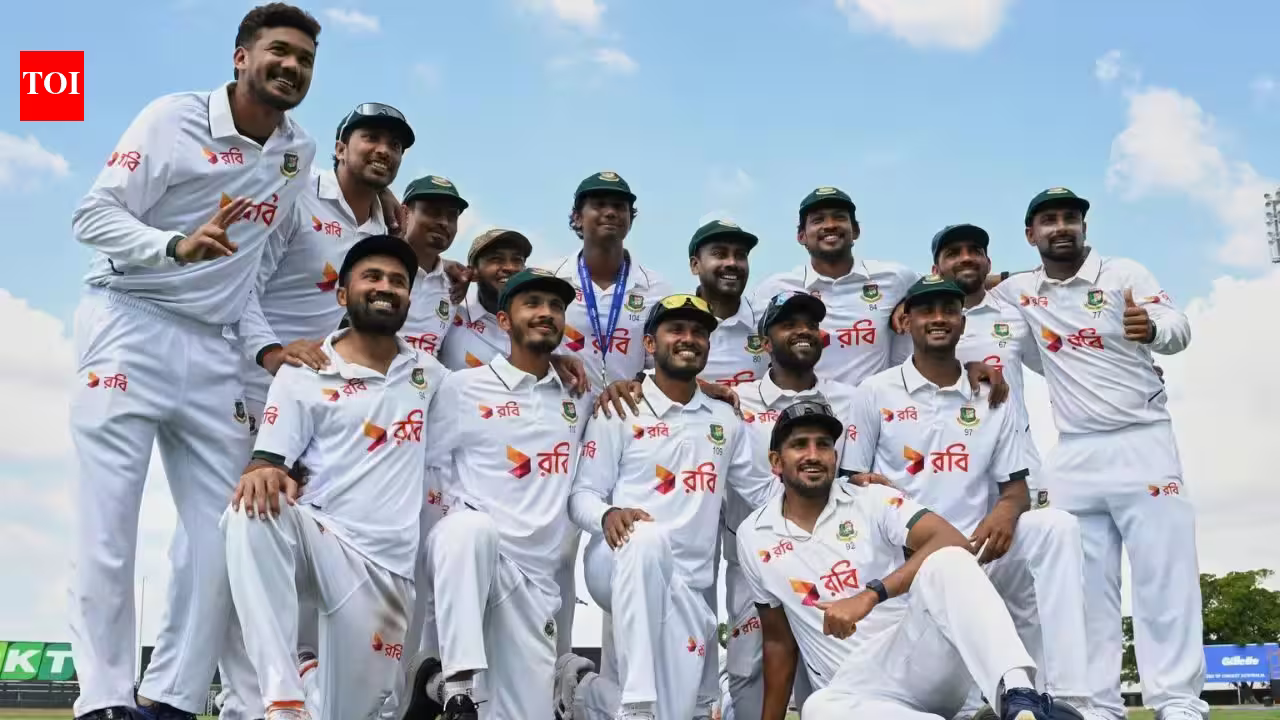
The cricketing world recently witnessed a significant moment as Bangladesh secured a historic nine-wicket victory over Australia in Darwin. The triumph was particularly sweet, with Mominul Haque, the diminutive southpaw, striking the winning runs, echoing his similar feat against New Zealand in Mount Maunganui in 2022. This victory is not merely a standalone achievement but a culmination of a strategic shift within Bangladeshi cricket, a revolution spearheaded by Mominul’s leadership and surprisingly, inspired by none other than former Indian captain Virat Kohli.
The seeds of this transformation were sown in 2019, following the pink-ball Test in Kolkata. In a post-match press conference, Kohli, then at the helm of the world’s top-ranked Test team, articulated his vision for safeguarding the future of Test cricket. He emphasized the necessity of “total commitment” from players but crucially linked this demand to improved contractual conditions for Test specialists. Kohli argued that nations excelling in Test cricket invariably prioritize it through their contractual systems, ensuring players’ “hearts and minds are totally in sync with keeping Test cricket on top.” He highlighted the distinction between white-ball and Test cricketers, noting that true Test specialists are rare, emerging only after years of grind in first-class cricket. He stressed that while players must give their all, cricket boards must reciprocate by valuing and rewarding their dedication to the purest form of the game.
Mominul, though bruised by the defeat in that pink-ball Test, absorbed Kohli’s powerful message. This led to significant reforms within the Bangladesh Cricket Board (BCB). Test cricketers were offered dedicated contracts, and alongside former captain and current chief selector Habibul Bashar, Mominul initiated plans to revamp the National Cricket League (NCL), the country’s premier four-day competition. A pivotal change involved instructing curators across Bangladesh to maintain a slightly longer grass cover of eight to ten millimeters on pitches, departing from the previous norm where grass withered after the first day, favoring spinners. Furthermore, the Duke ball was introduced to encourage pace bowling.
However, the most profound change was directly inspired by Kohli’s emphasis on a strong fast-bowling unit, a hallmark of his Indian team with stalwarts like Ishant Sharma, Mohammed Shami, Jasprit Bumrah, Umesh Yadav, and Bhuvneshwar Kumar. Mominul, taking a page from Kohli’s captaincy playbook, mandated that all eight first-class teams in Bangladesh field three pacers in every match. This unwavering commitment to developing fast bowlers initially raised eyebrows, even among seasoned cricketers like current BCB president Tamim Iqbal.
Tamim Iqbal, in a previous interview, lauded Mominul’s foresight, recalling instances where Mominul insisted on pacers bowling maximum overs in first-class games, even when spinners seemed a more straightforward option. Mominul’s rationale was clear: for fast bowlers to learn and develop, they needed opportunities, regardless of immediate performance. This steadfast belief, Tamim asserted, was the driving force behind the “fast bowling unit” revolution in Bangladesh. The success of these pacers, in turn, fostered belief among young cricketers that a career as a fast bowler was not only viable but could lead to stardom in Bangladesh. This journey was further supported by the invaluable contributions of coaches like Allan Donald and Ottis Gibson.
The fruits of Mominul’s persistent strategy were vividly displayed in Darwin, particularly through the stellar performance of Hasan Mahmud. Mahmud, a beneficiary of Mominul’s emphasis on giving young pacers extended spells, delivered a masterclass in red-ball bowling. His remarkable discipline and relentless accuracy throughout the match earned him career-best figures of 6-55, followed by 3-56, rightfully securing him the player of the match award. The success of this three-pacers gambit is now evident in the burgeoning talent pool of Bangladeshi fast bowlers, including Hasan Mahmud, Taskin Ahmed, Ebadot Hossain, Shoriful Islam, Mustafizur Rahman, and the promising 150kph speedster Nahid Rana. This formidable fast-bowling cartel, once an aspiration, is now a reality, fundamentally altering the landscape of Bangladeshi cricket and tracing its unexpected origins back to a seminal press conference by Virat Kohli at Eden Gardens.