








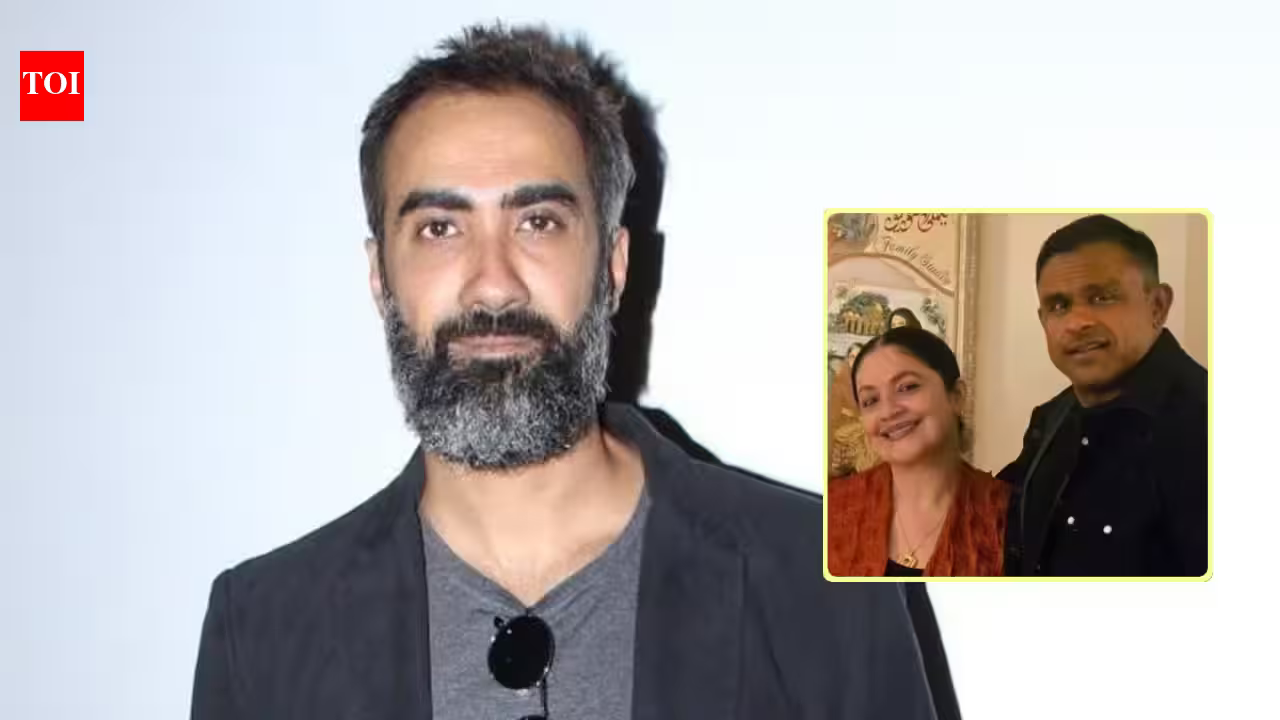
The long-simmering embers of a two-decade-old Bollywood feud have suddenly burst back into flames. For years, the story of Ranvir Shorey and the Bhatt family was relegated to the “he-said-she-said” annals of tabloid gossip, a murky chapter defined by whispers, allegations of substance abuse, and a physical altercation that remained shrouded in ambiguity. But this week, a candid admission from Rahul Bhatt has effectively cracked the door open, prompting Ranvir Shorey to finally reclaim his narrative.
The catalyst for this renewed firestorm? A recent podcast appearance by Rahul Bhatt, son of filmmaker Mahesh Bhatt. In a moment of unexpected transparency, Rahul revisited the early 2000s, admitting to a violent encounter in which he assaulted Shorey following a dispute involving his sister, Pooja Bhatt. Rahul didn’t just admit to the clash; he detailed the scene, confessing that he had not only physically attacked the actor but had also smashed the glass of his car.
For many, it was a startling confirmation of a long-standing rumor. For Shorey, however, it wasn’t just a stroll down memory lane—it was a vindication.
The Long Road to Vindication
Shorey, who has carved out a stellar career as one of India’s most reliable and nuanced character actors, didn’t let the confession slide. Taking to X (formerly Twitter), he issued a statement that felt like the closing of a painful chapter. “I’m glad over 20 years of malicious propaganda and slander has finally given way to some truth,” he wrote.
Shorey’s response was pointed, specifically addressing the long-held narrative that he had been an abusive partner during his volatile relationship with Pooja Bhatt. By reframing the incident as an act of self-defense—or, as he put it, “defending yourself against violence to escape someone toxic”—Shorey aimed to dismantle the reputation management that he claims was weaponized against him for two decades. The actor’s tone was one of weary relief: he wasn’t looking to start a war, but he was finished being the punchline of a story that wasn’t entirely his own.
A Toxic Tangle: The Context
To understand the weight of these statements, one must travel back to the early 2000s, an era when the lines between Bollywood’s personal lives and professional narratives were dangerously blurred. Shorey and Pooja Bhatt were the quintessential “it” couple, having grown close during the production of the 2003 cult hit Jism. They were living together, they were inseparable, and they were, by all accounts, heading toward a collision course.
When they eventually split in 2002, the fallout was scorched-earth ugly. Over the years, Shorey frequently alleged that the influential Bhatt family machine worked to paint him as an alcoholic and an abusive partner to deflect from the realities of the relationship. It was a classic industry power play: control the narrative, control the reputation. For a younger, less established Shorey, the impact of being labeled “toxic” by a dynastic family was a heavy burden to carry through a rising career.
Rahul Bhatt’s Change of Heart
Interestingly, Rahul Bhatt’s recent confession was accompanied by a strange, softened cadence. While admitting to the assault, he simultaneously offered praise for how Shorey handled the aftermath. He expressed regret for his youthful aggression, acknowledging that Shorey had navigated the situation with a level of restraint that was, perhaps, unexpected.
“He didn’t hold grudges,” the sentiment seemed to imply. It is a curious turn in a tale defined by bitterness. Is this the result of a more mature perspective on Rahul’s part, or simply the luxury of time allowing for a sanitized retelling of a violent youth? Regardless, the concession—however belated—has fundamentally shifted the public perception of the conflict. The “bad boy” image that Shorey had to spend years shedding is now looking less like a character flaw and more like the collateral damage of a high-profile breakup.
Where Are They Now?
Both parties have lived through several lifetimes since the glass was shattered on that car window in 2002. Pooja Bhatt went on to marry VJ-turned-restaurateur Manish Makhija just a year after the split, though that union also eventually ended in separation. Shorey famously married the critically acclaimed Konkona Sen Sharma in 2010; the two, who share a child, eventually parted ways, maintaining a public relationship defined by professional mutual respect.
The industry has moved on, and so have they. But the digital age ensures that nothing stays buried forever. The internet has a long memory, and when a celebrity like Rahul Bhatt opens that vault, it forces a reckoning. For Shorey, this isn’t just about the physical altercation; it’s about the “propaganda” he claims was used to silence his side of the story.
The Aftermath of the Truth
What makes this episode so compelling isn’t the violence itself, but the way we consume celebrity history. We are witnessing a rare moment where a “truth” is retroactively applied to a decade-old narrative. By acknowledging the assault, Rahul Bhatt has inadvertently stripped away the credibility of the decades-old rumors that painted Shorey as the primary aggressor.
As the discourse continues to circulate online, the fans and critics alike are forced to reconcile the man they saw on screen—the sharp, intelligent, and often cynical Ranvir Shorey—with the person who was cast as a villain by an industry powerhouse.
“Let it finally rest now,” Shorey wrote. It’s a plea for closure, but in the fast-moving, gossip-hungry ecosystem of Indian entertainment, such pleas often serve as the perfect invitation for further dissection. Whether or not this truly marks the end of the conversation, one thing is certain: the truth, no matter how delayed, has a way of finding its way into the light.
Disclaimer: This content is auto-generated for informational purposes only.
Source: Read Original News