







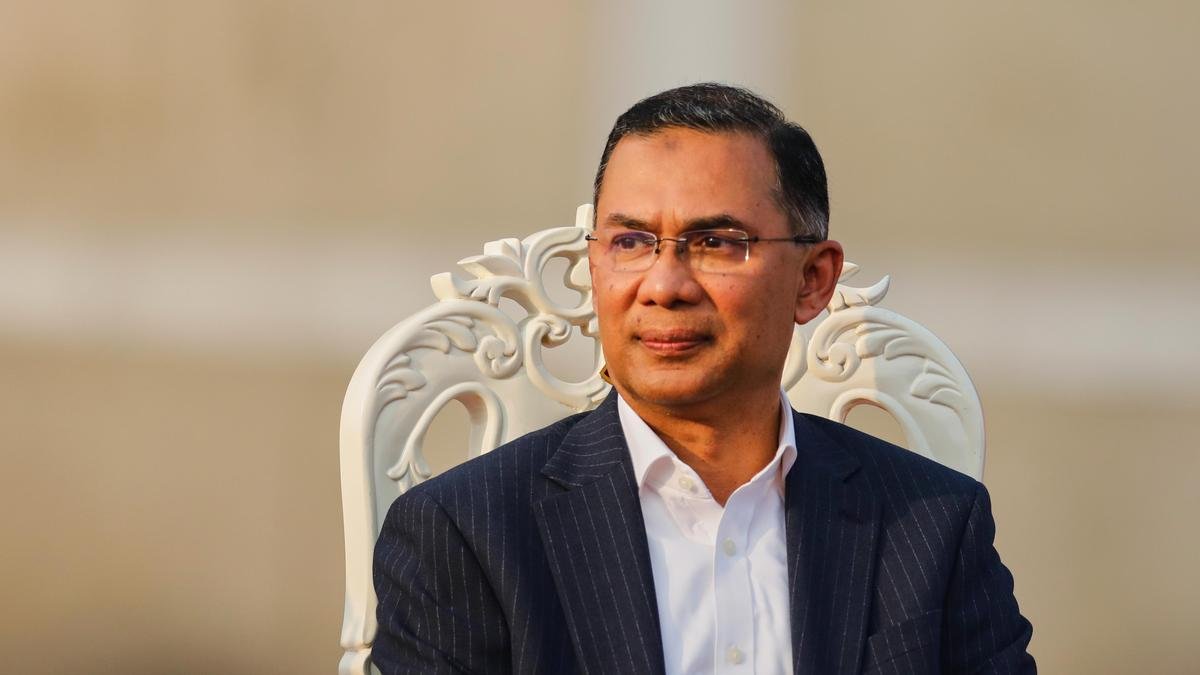
The Bangladeshi Ministry of Foreign Affairs (MoFA) has formally stated that a prospective visit by Prime Minister Tarique Rahman to India is currently on hold, attributing the delay to what they describe as a “vitiated” atmosphere in bilateral relations. This diplomatic tension stems from a press conference held by former Prime Minister Sheikh Hasina in Delhi on August 5, 2026, during which she critically addressed the current Bangladeshi government.
MoFA’s official spokesperson, A.K.M. Shahidul Karim, emphasized on Sunday, August 16, 2026, that a “propitious environment” is a prerequisite for any official visit by Prime Minister Rahman. To facilitate this, Dhaka has explicitly requested that India extradite Sheikh Hasina, along with other individuals identified as fugitive criminals, and hand over those accused in the killing of radical student leader Osman Hadi. Karim confirmed that these requests are in compliance with the existing bilateral extradition treaty between the two nations, and Bangladesh is currently awaiting India’s response to these demands.
Sheikh Hasina sought refuge in India on August 5, 2024, following a significant popular uprising that led to the collapse of her administration. The situation was further exacerbated by the death of Osman Hadi, a prominent radical student leader who was actively involved in the protests and had plans to contest upcoming elections. Hadi was tragically shot in Dhaka in December 2025 and subsequently succumbed to his injuries on December 18, 2025, while receiving treatment in Singapore. His death ignited widespread unrest across Bangladesh, with some incidents specifically targeting Indian diplomatic missions and members of the minority Hindu community. While Dhaka has consistently maintained that the suspected perpetrators of Hadi’s killing fled to India, New Delhi has yet to issue a definitive statement regarding their whereabouts or potential involvement.
Despite these recent developments, there were earlier indications of positive movement in bilateral discussions. Diplomatic sources had previously suggested that relations were improving after India publicly distanced itself from Ms. Hasina’s press conference, in which she had openly criticized Prime Minister Rahman’s government. This shift was underscored by Indian High Commissioner to Dhaka, Dinesh Trivedi, who met with Prime Minister Rahman on August 10. These exchanges had led to speculation within Dhaka that a window for a high-level visit was beginning to open.
Karim further elaborated on the situation, confirming that “officials of Bangladesh and India have been in touch with each other for several weeks on the possibility of a bilateral visit by Honourable Prime Minister Mr. Tarique Rahman to India.” However, he reiterated that “this process was vitiated by the open press interaction in New Delhi on August 5 by Sheikh Hasina.”
In a related statement last Friday, Randhir Jaiswal, the official spokesperson for India’s External Affairs Ministry, had affirmed that India had extended two invitations to Prime Minister Rahman: one to attend the upcoming BRICS summit and another for a bilateral visit. The latter invitation was issued on February 17, when Mr. Rahman assumed office after his electoral victory. On August 7, Jaiswal had already made it clear that India does not “endorse” the comments made by Ms. Hasina against the “duly constituted government” of Bangladesh.
Reaffirming Dhaka’s foreign policy stance, Karim concluded his remarks by emphasizing Bangladesh’s “Bangladesh first” approach. He stated that the government remains committed to fostering “friendly bilateral relations with other countries,” particularly with its neighbors, grounded in principles of sovereign equality, national dignity, non-interference in internal affairs, and mutual benefit. The ongoing diplomatic impasse underscores the complex and often sensitive nature of India-Bangladesh relations. For more details on the diplomatic standoff, refer to the Ministry of Foreign Affairs’ statement.