





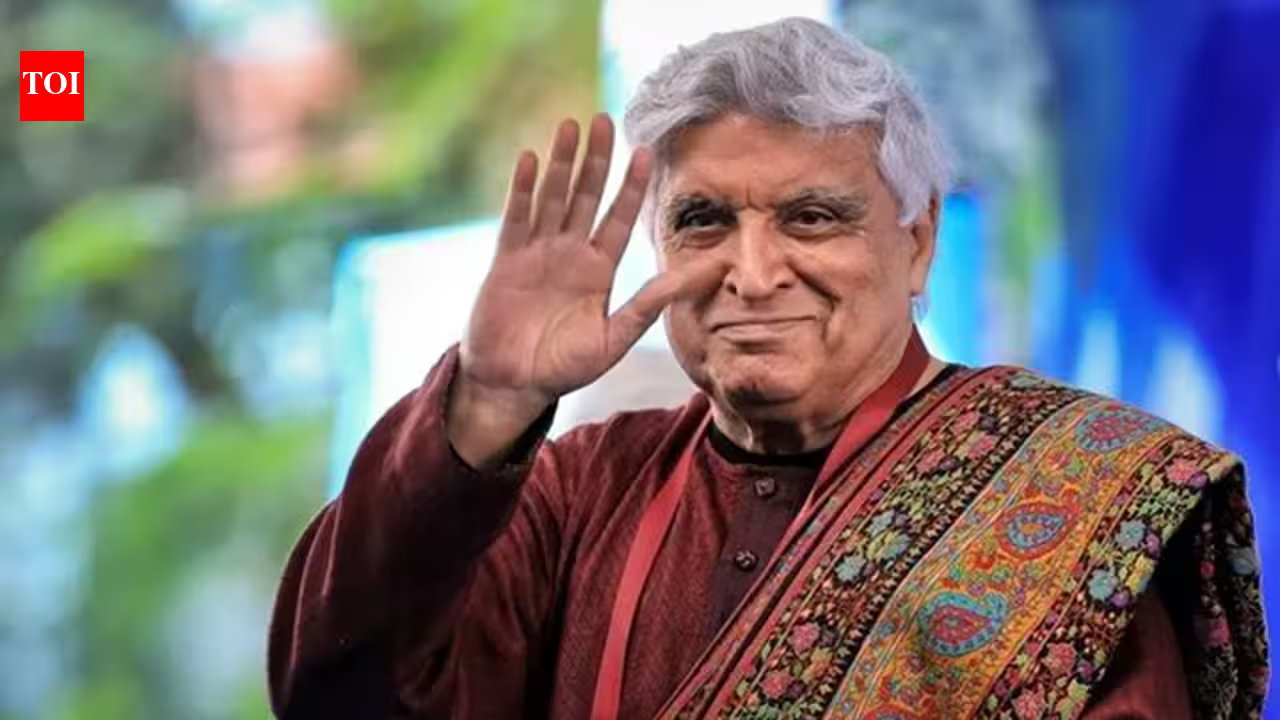
Veteran lyricist Javed Akhtar has recently shared an intriguing anecdote regarding the genesis of one of Hindi cinema’s most cherished romantic melodies, ‘Ek Ladki Ko Dekha Toh Aisa Laga’. Contrary to popular belief that such a lyrical masterpiece would stem from inspiration or a romantic muse, Akhtar revealed that its creation was primarily driven by an unexpected emotion: fear. Recalling the production of the 1994 film ‘1942: A Love Story’, Akhtar detailed the immense pressure he faced to deliver an exceptional song, despite the initial script lacking any dedicated situation or even a tune to guide his creative process.
During a candid conversation with India Today, Akhtar elucidated how the looming threat of being removed from the project compelled him to push his boundaries, ultimately leading to the iconic song. The film’s director, Vidhu Vinod Chopra, and legendary composer R. D. Burman initially believed there was no natural slot for a song within the screenplay. However, Akhtar’s insistence on including at least one musical piece came with a stringent condition: he had to produce something truly extraordinary. This challenge was compounded by the fact that he had neither a melody nor a specific scene to base his lyrics upon, and in fact, he even forgot about the assignment entirely after the initial meeting.
The situation escalated dramatically when, just two hours before a scheduled appointment, he received a call from R. D. Burman’s assistant, reminding him to bring the song by 4 PM. This sudden reminder plunged Akhtar into a state of panic, intensifying the pressure. He described the songwriting environment as a “mela” (fair), with actors like Anil Kapoor and Jackie Shroff often present, adding to the bustling atmosphere. The thought of failing to meet expectations filled him with dread, as he famously stated, “Meri toh naak cut jayegi” (I’ll be so embarrassed). It was this profound anxiety, rather than poetic inspiration, that became the unexpected catalyst for one of his most celebrated compositions.
Akhtar recounted how he began to formulate the song while driving, conceiving the idea of structuring the lyrics around a series of evocative similes, starting with the now-immortal phrase ‘Ek Ladki Ko Dekha Toh Aisa Laga’. This innovative approach resonated, and once accepted, he meticulously developed the subsequent verses. He then presented the lyrics to R. D. Burman, who, upon reading them, immediately began to sing, transforming the freshly penned words into a captivating musical piece. For Akhtar, the actual origin story of the song was starkly less romantic than the tender sentiments expressed within its lines, explicitly attributing its birth to “terror” and the fear of being dropped from the movie.
Beyond the immediate challenge, this song also marked a significant departure for Akhtar, arising during a period when he felt that mainstream Hindi film music had largely strayed from its poetic roots, often gravitating towards superficiality and a lack of lyrical depth. ‘1942: A Love Story’ provided a unique opportunity to challenge this trend. Chopra, according to Akhtar, desired poetry that could stand independently, transcending the typical conventions of a film song. Akhtar embraced this “crazy” demand, recognizing it as a rare chance to craft meaningful lyrics. He firmly believes that the music of ‘1942: A Love Story’ played a crucial role in steering the industry away from what he perceived as increasing vulgarity and absurdity, setting a new benchmark for quality and inspiring a shift in songwriting trends.
Akhtar also touched upon the industry’s often harsh and fickle judgment, where an artist’s talent is frequently equated with a film’s box-office success. He lamented that if a film performs well, everyone involved receives undue credit, irrespective of their actual contribution. Conversely, if it fails, everyone bears the blame, regardless of their effort. This “strange attitude,” he noted, creates a culture where talent is solely defined by commercial viability. He highlighted the professional struggles faced by R. D. Burman during that period, despite his undeniable genius, due to the commercial underperformance of some of his earlier projects. For Akhtar, ‘1942: A Love Story’ offered Burman another vital platform to reaffirm his exceptional musical prowess. He emphasized that working with a director who demands excellence, rather than simplicity, pushes artists to deliver their best work, fostering an environment where genuine artistry can flourish.
Akhtar’s admiration for R. D. Burman is well-documented, having previously collaborated on films such as ‘Gardish’, ‘Gang’, and ‘Sagar’. He consistently speaks of Burman’s unparalleled musical genius. Reflecting on their professional relationship, Akhtar acknowledged that while everyone experiences good and bad phases, the industry often unfairly conflates talent with immediate commercial success.
‘1942: A Love Story’, directed by Vidhu Vinod Chopra, featured an ensemble cast including Anil Kapoor, Manisha Koirala, Jackie Shroff, Danny Denzongpa, Anupam Kher, Pran, and Brian Glover. Set against the turbulent backdrop of India’s freedom struggle, the romantic drama intricately weaves the story of Naren and Rajjo, whose love faces formidable challenges from political unrest and societal divisions. The film’s musical score, particularly ‘Ek Ladki Ko Dekha Toh Aisa Laga’, remains one of its most enduring and beloved contributions to Indian cinema.