








UK Government Under Fire for Secret Drought Plans Amid Worsening Water Crisis
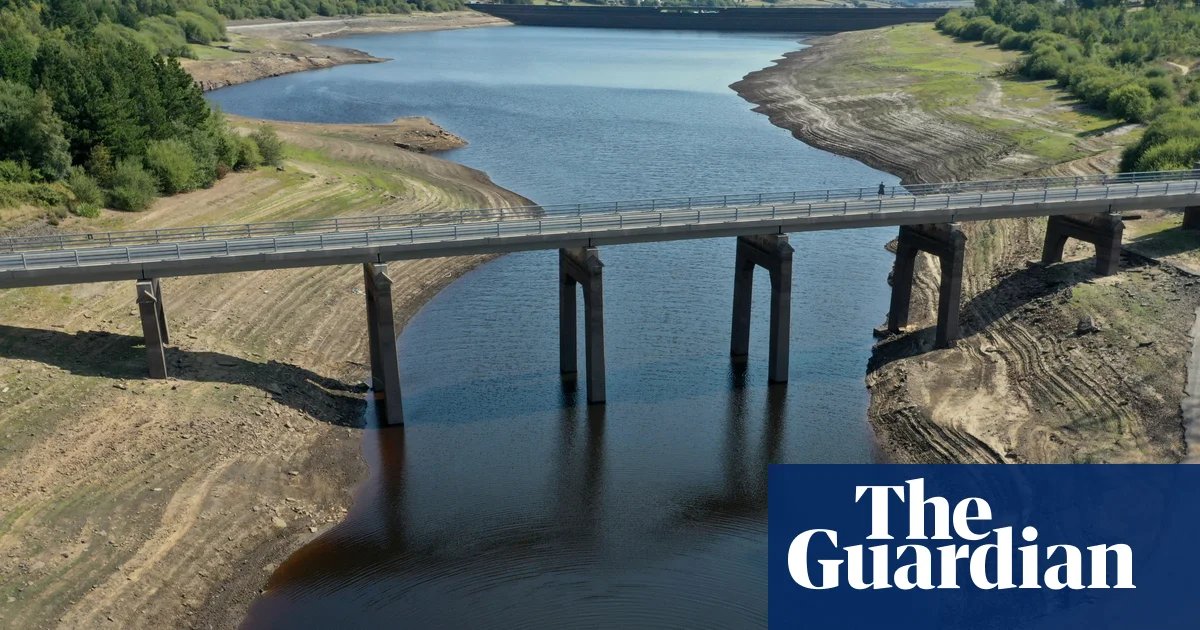
London, UK – The UK government is facing a storm of criticism for its refusal to publish crucial emergency drought plans, drawing accusations of a lack of transparency and irresponsible governance. This controversy unfolds as significant portions of England and the entirety of Wales grapple with severe drought conditions, and reservoir levels plummet to "exceptionally low" across five key sites.
Water companies are legally mandated to produce statutory drought plans every five years, detailing strategies to maintain public water supply and protect the environment during periods of scarcity. These publicly accessible documents, currently under consultation for the 2027-32 period, outline measures ranging from widespread hosepipe bans to extreme interventions like street standpipes and rotational water cuts, where supply is limited to a few hours daily.
However, a separate category of emergency drought plans, also produced by water companies, remains shrouded in secrecy. While a water industry source cited concerns about "alarming the public" as the reason for non-publication, the government has consistently maintained that these plans are withheld due to "security reasons."
The opacity surrounding these critical documents is raising alarm bells among experts and campaign groups. Alastair Chisholm, water, policy, regulation and governance lead at consultancy firm Arup, highlighted the "new normal" of climate-induced drought. He warned that this new reality would necessitate "some quite difficult decisions" with "significant impositions on people’s lifestyles." Chisholm drew parallels to Cape Town’s "Day Zero" crisis in 2018, where millions faced drastic water shortages, underscoring the potential for widespread social unrest if communities perceive a lack of clear planning. "People do genuinely start to be scared that they’re not going to be able to get water to drink, and that has got all manner of sort of social connotations which is going to need to be very carefully managed," he stated.
Conversely, some voices support the government’s stance. Professor Liz Bentley, chief executive of the Royal Meteorological Society, argued that keeping these plans confidential makes sense. She explained that significant water shortages could impact critical industries, citing recent instances in Europe where drought and extreme heat forced nuclear power plants to shut down. "If you start to see significant shortages of water that impact major industries then these are the kind of things you want to keep confidential because that could have widespread effects on the security of the country," Bentley contended.
The impact of water scarcity is already being felt across the country. Areas such as Sussex, Cambridgeshire, Suffolk, and Norfolk have seen housing and business developments stalled due to insufficient water supply and dilapidated infrastructure. Globally, the intertwining crises of heatwaves, drought, and conflict are driving food prices to a three-year high, impacting food security.
As demand for water intensifies, driven in part by the rapid expansion of water-hungry industries like data centres, the trade body Water UK recently urged the government to establish a clear "drought hierarchy." This framework would explicitly prioritize sectors during water shortages. "Without this there will be a trade-off across society," warned Jon Chappell, Water UK’s deputy director.
Campaigners are particularly concerned that data centres, known for their substantial water consumption, could be prioritised over other essential services or residential needs. Ollie Hayes, head of big tech and campaigns at Global Action Plan, lambasted the government’s secrecy as "irresponsible." He stated, "People are deeply anxious about dwindling water supplies and want to know what the plan is. Will water-hungry AI datacentres be prioritised in a drought emergency? The secrecy only adds to a sense that controversial decisions like this may have already been made."
Green Party leader, Zack Polanski, echoed these concerns, calling it "deeply worrying that emergency drought plans are being hidden from the public." He emphasized, "People deserve to know what plans – if any – are in place to protect our water supply." Polanski further advocated for the full nationalization of water companies to "prevent catastrophic water shortages in the years ahead."
Adding to the complexity, reports emerged on Sunday suggesting that Ofwat, the industry regulator, is considering allowing water companies to implement "surge pricing" and raise bills during drought periods.
Amy Fairman, head of campaigns at River Action, criticized the government’s broader lack of transparency regarding drought management in the face of escalating climate change. "My key concern is around the lack of a holistic plan to deal with water shortages going forward. There is no more precious resource than water, and yet there isn’t a national water security plan in place," she stated.
In response, the Department for Environment, Food and Rural Affairs reiterated that emergency drought plans are supplementary to publicly available statutory plans and will not be published for security reasons. A Water UK spokesperson clarified, "Each water company publishes a drought plan, which is consulted on publicly and sets out the actions the company will take at each stage of a drought. Planning for a severe drought sits under a separate framework, and publication is a matter for government. We support calls from the House of Lords environment and climate change committee for the government to decide how water should be prioritised in a severe drought."
The ongoing debate highlights a growing chasm between public demand for information and governmental reluctance, as the UK braces for an increasingly uncertain water future. The question of accountability and the public’s right to know remains central as the nation navigates the escalating challenges of climate change and water scarcity. The government’s decision to withhold these emergency plans continues to fuel public anxiety and calls for greater openness, particularly concerning how critical resources like water supply will be managed in future crises.