








A Technical Milestone in Mobile Gaming
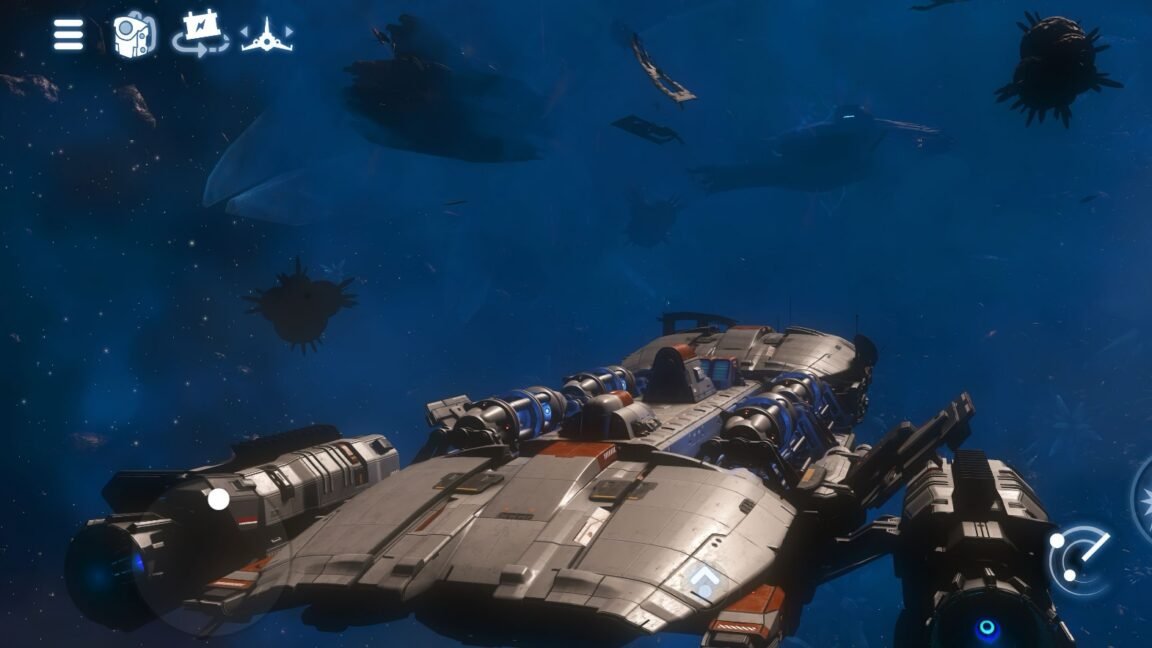
The arrival of No Man’s Sky on the iOS platform represents a significant engineering achievement. After three years of development, Hello Games has successfully ported its expansive, procedurally generated universe to mobile hardware. This transition is not merely a reduction in graphical fidelity; it is a full-scale migration of the engine architecture that powers the desktop and console versions. For users of modern iPhones and iPads, this means access to a title that historically demanded high-end PC hardware to render its vast, seamless environments.
Central to this achievement is the game’s procedural generation engine. Unlike traditional titles that rely on pre-rendered assets, maps, and textures stored on the device’s local storage, No Man’s Sky utilizes mathematical algorithms to construct planets, flora, fauna, and planetary terrain in real-time. This is why the final application size remains under 5GB, despite the nearly infinite scope of the game world. The hardware’s processor and graphics chip work in tandem to calculate these complex data sets on the fly as the player moves through the game’s universe, ensuring that the exploration loop remains uninterrupted by loading screens.
Optimized Control Schemes for Mobile Interfaces
One of the most challenging aspects of bringing a menu-heavy title to mobile is the adaptation of user inputs. The developers have addressed this by implementing a comprehensive touch control system designed specifically for the intricacies of inventory management, crafting, and starship navigation. Because No Man’s Sky requires significant management of resources and technology modules, the touch interface has been built to handle complex layering without cluttering the screen or impeding gameplay flow.
The implementation extends beyond basic screen tapping. For players who prefer traditional input methods, the iOS version maintains broad compatibility with third-party game controllers, allowing for a tactile experience similar to console play. The iPad version offers an even more robust set of input capabilities, supporting mouse and keyboard peripherals. This level of input flexibility allows users to engage with the game’s complex management systems in a manner that best suits their hardware setup, transforming the iPad into a highly capable portable workstation for galactic exploration.
Hardware Synergy and Ecosystem Integration
The technical foundation for this release follows the recent, successful debut of the No Man’s Sky macOS port. By leveraging Apple’s modern silicon, the development team has utilized optimized graphics APIs that allow for high-performance rendering of the game’s expansive draw distances and environmental effects. The compatibility with Apple’s ecosystem allows users to cast the gameplay to television sets, effectively turning a handheld device into a living room console.
This hardware-software synergy is a core component of the broader push Apple is making during its current initiative focused on independent development. By demonstrating that complex, computationally demanding software can run efficiently on mobile devices, Hello Games is setting a new benchmark for what is expected from mobile ports. This integration is designed to minimize thermal throttling and battery drain, which are common hurdles for high-fidelity mobile games. The result is a consistent framerate that maintains stability even when the player transitions from surface exploration to orbital flight and hyperspace jumping.
Procedural Generation and On-Device Processing
The core functionality of No Man’s Sky rests on its unique approach to data. Every planet, star system, and creature encountered by the player is the result of a seed-based algorithm. When a player lands on a planet, the device’s processor generates the atmosphere, gravity, weather patterns, and terrain based on that specific seed. This means that the device is essentially performing a constant stream of calculations rather than loading static files from the drive.
This technical design choice is the primary reason the game is able to fit within a sub-5GB footprint while providing an experience that feels larger than many titles ten times its size. By offloading the workload to the device’s processor, Hello Games has ensured that the game remains accessible to users with varying levels of onboard storage. The upcoming release on October 28 will allow users to experience this technology firsthand, with a free trial available to demonstrate how the engine performs on specific hardware configurations.
Impact on the Indie Gaming Landscape
The inclusion of No Man’s Sky alongside titles like Little Kitty, Big City and 9 Kings highlights a shifting strategy within the app marketplace. Apple is actively promoting high-complexity independent titles to showcase the capabilities of its mobile chips. This initiative serves two purposes: it provides a platform for ambitious indie developers to reach a massive audience and it demonstrates that mobile hardware has moved past simple, casual gaming.
For the end user, this represents a shift toward platform agnosticism. The ability to play a game of this magnitude on an iPhone, with the flexibility to move the experience to an iPad or a TV screen, represents the maturation of mobile gaming technology. As the price point is set at $19.99 for the full experience, the barrier to entry for this level of interactive entertainment is lower than traditional console gaming, yet the technical depth remains identical. As the October launch approaches, the release stands as a testament to the fact that optimization and creative engine architecture can overcome the limitations of mobile form factors, bringing desktop-class experiences to a pocket-sized audience.
Disclaimer: This content is auto-generated for informational purposes only.
Source: Read Original News