






IndiGo’s New CEO Inherits Global Engine Crisis as India Emerges as MRO Hub
By Jay Menon
August 18, 2026, © Leeham News: The global aviation industry is grappling with an unprecedented engine supply chain crisis, a challenge that has landed squarely on the shoulders of Willie Walsh, the new chief executive of IndiGo. Just weeks after taking the helm of the world’s largest single-aisle operator, Walsh confronts a problem he himself warned about as director general of the International Air Transport Association (IATA).
In a stark address months prior, Walsh had cautioned manufacturers, stating, “Engine MRO bottlenecks are disrupting airline operations. Without significant changes, this will only get worse as the fleet of latest-generation single-aisle aircraft grows. Manufacturers are investing in additional capacity, but capacity alone will not be enough.” His words now resonate with alarming prescience as IndiGo, with its vast fleet of narrowbody aircraft, finds itself at the epicenter of this operational maelstrom.
The core of the issue lies in a severe maintenance capacity deficit across the commercial aviation aftermarket. The rapid production increases of Airbus A320neo and Boeing 737 MAX aircraft are projected to drive an astounding sevenfold increase in annual single-aisle shop visits by 2040. This translates to over 5,000 shop visits for the CFM LEAP engine family and more than 2,000 for Pratt & Whitney’s geared turbofan (GTF) engines annually.
This surge in demand has already led to significant fleet dislocations. At the peak of Pratt & Whitney’s powdered-metal disk inspection campaign in March 2025, a staggering 648 narrowbody aircraft were grounded. This represented 28% of the global GTF fleet, awaiting engine slots or crucial parts. The delays have stretched turnaround times to a critical point, with LEAP overhauls now taking 230 days and GTF overhauls exceeding 300 days.
Engine MRO bottlenecks have exposed a stark reality: the traditional Western MRO networks are no longer capable of absorbing the global narrowbody maintenance demand. The operational complexities of next-generation turbofans, especially when subjected to high-cycle operations and severe weather environments, have highlighted systemic flaws in existing logistics.
In response, original equipment manufacturers (OEMs) are strategically shifting towards localized, mega-scale overhaul hubs to alleviate transit friction and improve efficiency. India, with its burgeoning aviation market and strategic geographical location, is rapidly emerging as the primary anchor for these new MRO facilities. This move signals a significant restructuring of the global aviation maintenance landscape, with profound implications for airlines like IndiGo and the broader industry. The arrival of IndiGo’s first Airbus A321XLR, a significant addition to its fleet, underscores the continued expansion that necessitates robust and localized MRO support.
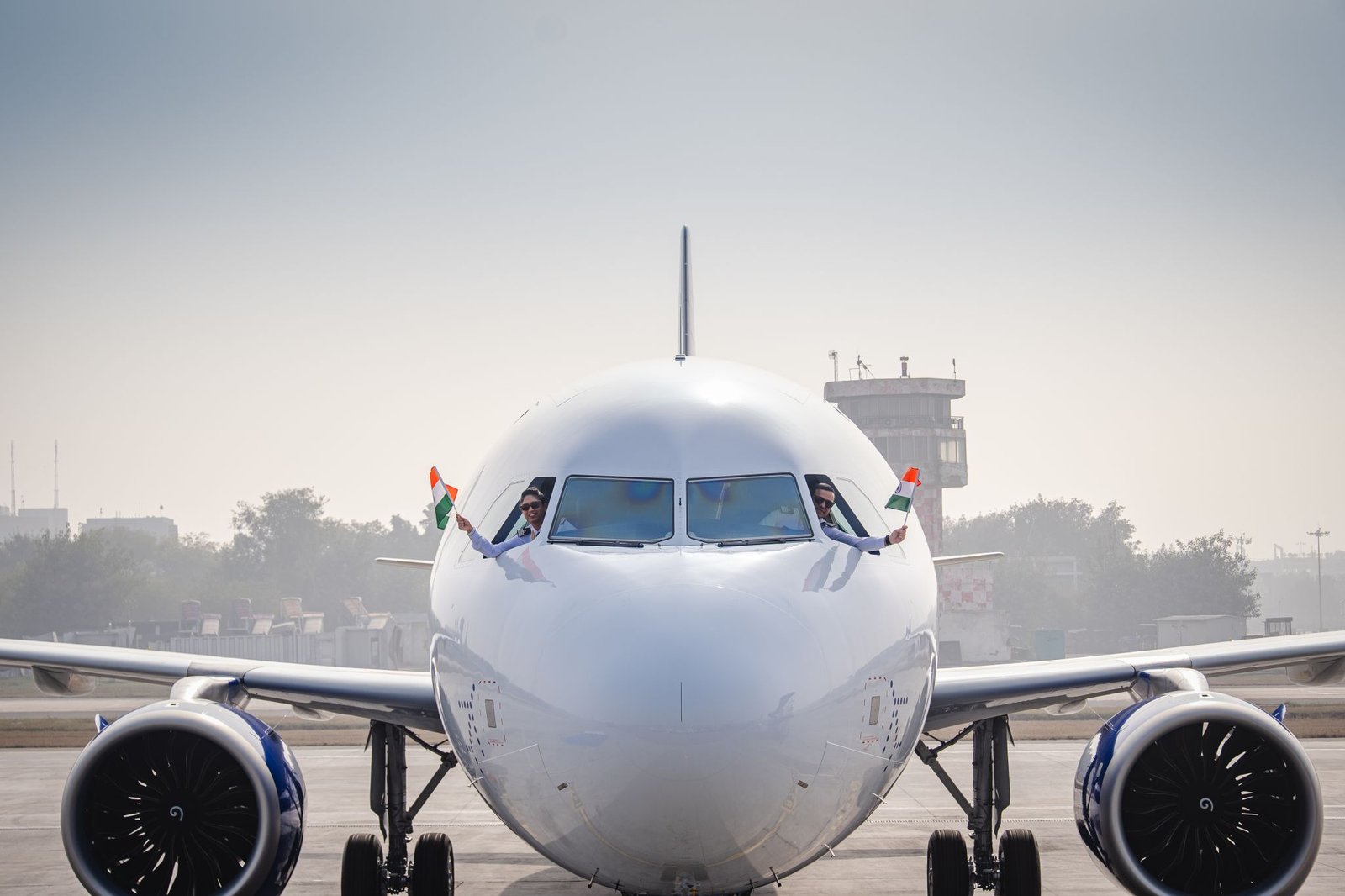
IndiGo’s first Airbus A321XLR delivery arrives to fanfare in early 2026. Photo credit: IndiGo/LinkedIn