






US Gains Upper Hand in Crucial Strait of Hormuz, Iran’s Control Eroding
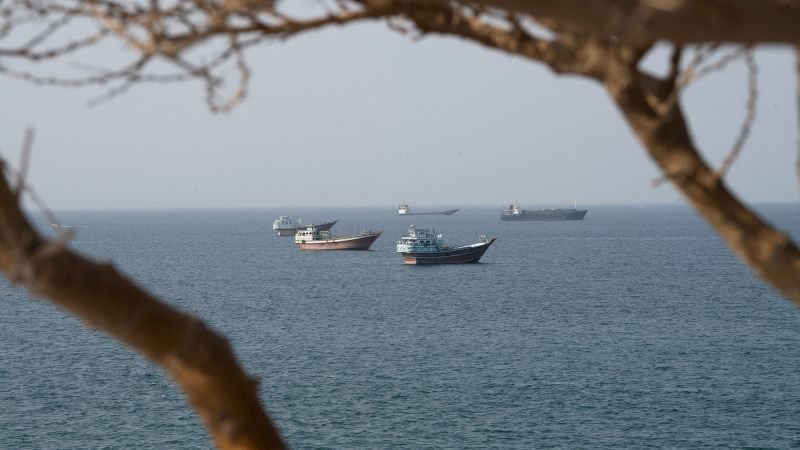
The Strait of Hormuz, a vital choke point for global oil shipments, has emerged as the central theater in the ongoing conflict between Iran and the United States. After months of conflicting claims and considerable confusion regarding its control, recent data strongly suggests a significant shift in favor of the United States, with Iran’s dominion over the critical waterway diminishing.
For several months, both Washington and Tehran have engaged in a war of words, each asserting their command over the Strait. This rhetoric has led to market uncertainty and doubt, particularly concerning the free flow of oil. However, new evidence, particularly from maritime analytics firm Kpler, paints a clearer picture: the U.S. Navy, actively patrolling the strait, is increasingly asserting its presence, pushing Iran’s influence into decline.
A startling statistic from Kpler reveals that over the past two weeks, more than 80% of vessel transits through the Strait of Hormuz have opted for the Omani route. This UN-authorized shipping channel is vehemently opposed by Iran, which previously maintained a tight grip on traffic via its preferred northern route. This dramatic shift underscores the growing confidence of commercial shipping in U.S. protection.
Iran, despite its declarations of control and aggressive actions – including attacking dozens of ships attempting to navigate via the North coast of Oman – is seeing its authority challenged. In defiance of Iranian demands, a significant majority of vessels are now choosing to transit the strait under the protective umbrella of American naval forces.
"It increasingly looks like Iran has at least partially lost control of the strait," commented Homayoun Falakshahi, head of crude oil analysis at Kpler. This statement is particularly impactful when considering that just a month ago, Kpler observed virtually no shipping traffic utilizing the Omani alternative. The sharp reduction in traffic along Iran’s traditional route has also stifled Tehran’s ability to levy tolls on passing ships, a practice it actively pursued as recently as this spring.
Adding to Iran’s woes, the recent expiration of a Memorandum of Understanding between the United States and Iran, which theoretically allowed Iran to resume charging tolls, appears to have had little practical effect. Kpler’s observations indicate that Iran has been unable to reinstate these charges, largely due to regional resistance. "Iran’s request to collect tolls is something that most Middle East folks don’t want to do and haven’t been doing," explained Dan Pickering, founder and chief investment officer at Pickering Energy Partners, highlighting the strategic preference for the Omani route.
In a further testament to the shifting dynamics, major oil producers like Kuwait, Saudi Arabia, and the United Arab Emirates have adopted innovative strategies to circumvent Iranian threats. According to Andy Lipow, president of Lipow Oil Associates, these nations are chartering Very Large Crude oil Carriers (VLCCs) – the largest oil tankers – to transit the Persian Gulf via the Strait of Hormuz. Once through, the crude is transferred to customer tankers outside the perceived danger zone in the Gulf of Oman.
To further evade detection and potential attacks, these vessels often turn off their transponders for extended periods – a practice known as "dark traffic." While this method can occasionally evade traditional data-tracking services like Kpler, the sheer volume of U.S. military assets in the region ensures comprehensive surveillance. The United States, with its significant military presence, maintains eyes on all ships passing through the strait, leading to significantly higher reported oil shipping numbers than traditional estimates suggested.
Energy Secretary Chris Wright recently stated that combined oil transits through and rerouted around the strait totaled approximately 15 million barrels per day over a week. This figure, while still short of the 20-million-barrel pre-war average, is notably closer than previous assessments, indicating a robust flow of oil despite the ongoing tensions.
This improved flow of oil led President Donald Trump to declare on Monday that the United States has "total control over the strait." While this claim, often reiterated by Trump, remains debatable given Iran’s continued attacks and oil flows still below pre-war levels, it undeniably signifies a weakened Iranian grip.
As Pickering aptly puts it, "If their goal is to be ‘in charge,’ then I’d say they were never completely in control to start with." He suggests Iran’s objective is deterrence, aiming to validate its perceived control. However, if U.S. claims of oil transit volumes are accurate, Iran’s deterrent capabilities and control over the Strait of Hormuz have significantly diminished compared to recent months.
The intricate situation is further complicated by ongoing talks between Oman and Iran aimed at restoring freedom of navigation through the strait, notably without U.S. involvement – a development that has reportedly dismayed President Trump. The precise impact of these discussions on future oil traffic and control of the waterway remains uncertain.
Despite the complexities and conflicting narratives, the consensus among experts leans towards a clear conclusion. As Lipow summarized, "I would take all the information and headlines ‘under advisement,’ but it is fair to say that Iran has partially lost control of the strait." The strategic balance in this vital global artery appears to be shifting, with the United States increasingly dictating the terms of passage.