





Ministry Cites "Insufficient Demand" in Response to Hindi as National School Subject Petition
Wellington, New Zealand – The New Zealand Ministry of Education has pushed back against a parliamentary petition advocating for Hindi to be recognized as a nationally supported school subject, citing a lack of significant demand during recent curriculum reviews. The decision has sparked a broader debate about cultural integration, linguistic diversity, and the accessibility of non-mainstream languages within the national education system.
The ministry’s submission, released Wednesday, states that "significant demand for Hindi as a standalone NCEA subject did not emerge" during consultations conducted as part of the 2021 NCEA review. This response comes as Parliament’s petitions committee considers a plea from Keely Kalirai Cairns, who is calling for the government to include Hindi as a language option for NCEA (National Certificate of Educational Achievement) and to provide resources for its teaching across primary, intermediate, and secondary schools.
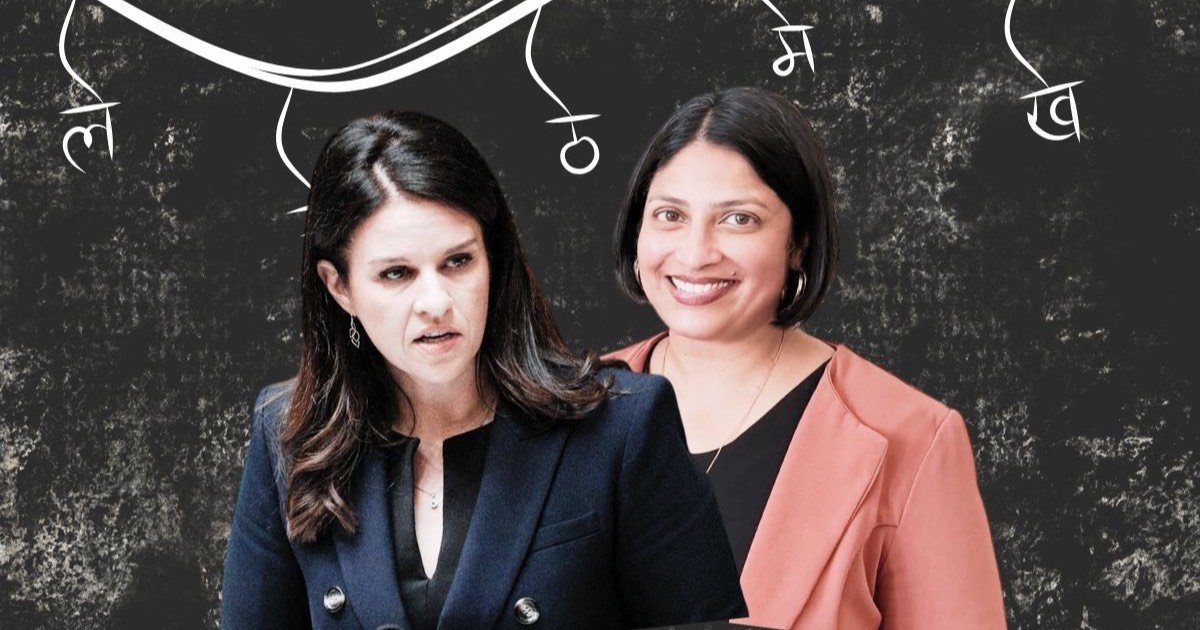
The petition, presented to Parliament on March 26 by Labour MP Priyanca Radhakrishnan, has been referred to a select committee for review and recommendations. Cairns’s proposal extends beyond senior secondary accreditation, seeking comprehensive support for Hindi education from early schooling stages.
While individual schools currently retain the autonomy to offer Hindi if there is sufficient community interest, the ministry has not established a national teaching pathway for the language, unlike those formally integrated into the curriculum. This distinction carries significant weight, especially with the impending overhaul of senior secondary qualifications. The NCEA is being phased out, to be replaced by the New Zealand Certificate of Education (NZCE) for Year 12 from 2029 and the New Zealand Advanced Certificate of Education (NZACE) for Year 13 from 2030. Under these new frameworks, students will be required to complete full subjects that are part of the national curriculum.
"If a subject is not included within the national curricula, it cannot contribute towards either NZCE or NZACE," the ministry informed the committee. As Hindi is not among the currently nationally developed senior secondary subjects, a student would be unable to count it towards their Year 12 or Year 13 qualification, even if a school chose to offer lessons.
The ministry highlighted its development of teaching sequences for 14 "target languages" for schools opting to offer an additional language. These sequences provide structured guidance on knowledge and practices. However, the ministry confirmed that schools are permitted to offer languages outside of these 14, specifically referencing Hindi as an example where community demand might justify its inclusion. Yet, when determining which languages would receive nationally supported pathways through to senior secondary school, the ministry primarily adhered to decisions made during the NCEA review.
Acknowledging the rich linguistic tapestry of New Zealand, where over 160 languages are spoken, the ministry emphasized the need to balance demand with the practicalities of resource allocation. "Decisions on subjects included in the national curriculum need to be carefully balanced in terms of the demand for individual subjects and what can be adequately resourced," their submission stated.
Despite the current stance, the ministry has not entirely closed the door on Hindi. They indicated that future changes to the curriculum and qualifications could be considered through a cycle of regular curriculum reviews once the current overhaul is complete, potentially re-evaluating demand for "other languages, such as Hindi."
Keely Kalirai Cairns, the petitioner, has also submitted her own powerful testimony to the committee, arguing that the absence of Hindi from the formal school system has far-reaching consequences beyond mere language instruction. She recounted her mother’s conscious decision not to teach her children an Indian language in 1940s New Zealand, driven by a desire for them "not to be seen as different." Cairns expressed her profound sense of "loss of language" and a feeling of disconnection from her Indian heritage due to this historical context.
Cairns’s petition argues that the landscape for Indian New Zealanders has dramatically shifted. "The Indian population is the third largest ethnic group and Hindi is the fourth most spoken language in New Zealand," she stated, citing the 292,092 individuals who identified as Indian in the 2023 Census. "I believe it is important for Indian-New Zealand children and other interested New Zealand students to have the option to study Hindi, an official language of India, for cultural connectedness."
Her submission also acknowledges the commendable efforts of community initiatives in preserving Indian languages but underscores that these efforts cannot replicate the comprehensive support of a nationally resourced subject. Cairns highlighted the growing demand for Indian-language classes but noted the limitations faced by community providers in terms of teaching resources and their ability to create consistent educational pathways for students.
Beyond cultural enrichment, Cairns also made a compelling economic argument. "India is 5th in the world’s GDP rankings and this may also benefit New Zealand economically," the petition asserts, suggesting that proficiency in Hindi could offer future advantages for the nation.
Originally framed around Hindi’s inclusion as an NCEA option, the petition’s scope has broadened with the impending qualification changes. The core issue before the committee now revolves around whether Hindi should be granted a formally resourced place in the national school curriculum, thereby allowing students to pursue it as a recognized senior secondary subject. The outcome of this debate will undoubtedly shape the future of linguistic diversity and cultural recognition within New Zealand’s education system.
For more details on this ongoing discussion, you can read the original report here.