







Bribes.fyi: From Viral Sensation to Strategic Retreat – A Crowdsourced Anti-Corruption Platform Confronts its Own Success
New Delhi, India – A simple yet potent idea – to crowdsource and publicly record alleged bribe demands within Indian government offices – propelled Aryan Nishad’s student project, Bribes.fyi, into an unexpected spotlight. What began as a straightforward platform for anonymously documenting corruption allegations quickly garnered immense public attention, forcing its temporary shutdown to address complex legal, financial, and ethical challenges. The sudden pause underscores the intricate reality of leveraging collective action to expose systemic issues, particularly in a sensitive landscape like government bribery.
Nishad’s brainchild, Bribes.fyi, offered users an anonymous avenue to report instances where bribes were allegedly requested while accessing public services. These reports were categorized by department, city, and other relevant details, aiming to create a visible and searchable record of such occurrences. Crucially, the platform was never presented as an official complaint mechanism or a definitive database of proven corruption cases. Its primary goal was to illuminate the prevalence of alleged bribe demands through shared experiences.
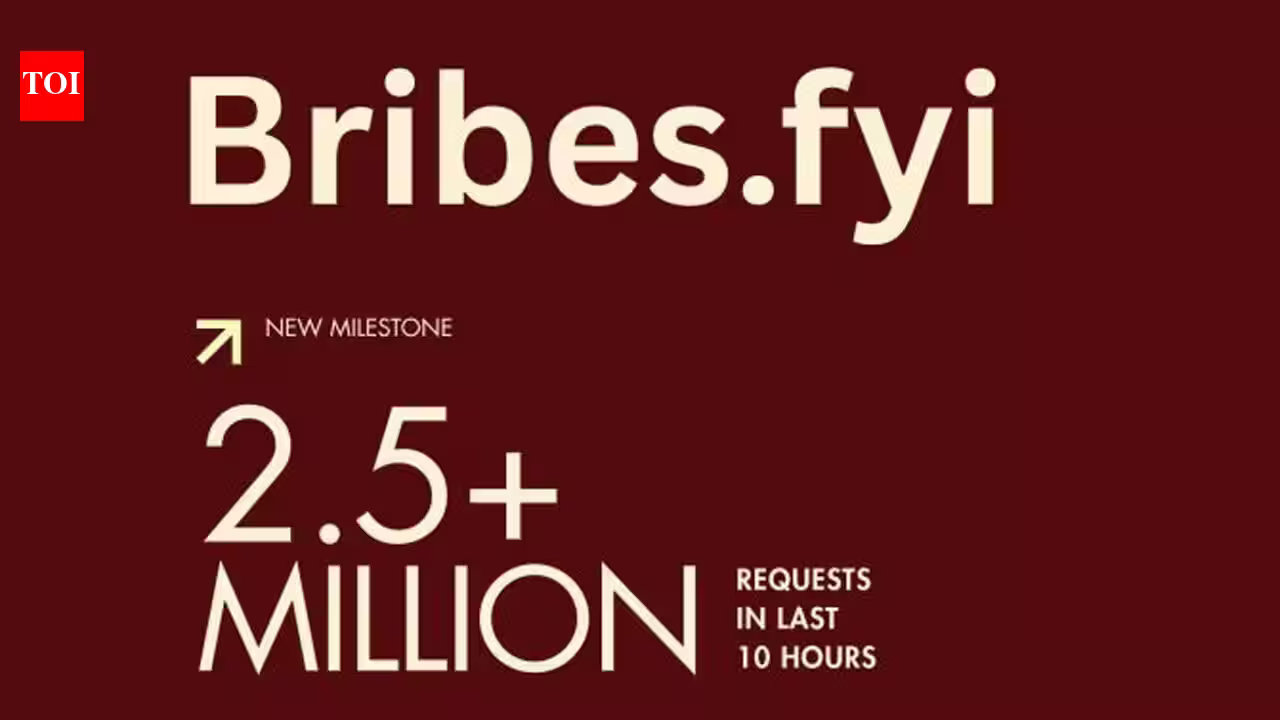
However, the internet, true to its nature, amplified this modest initiative far beyond its initial scope. Manish Sahani, a contributor to the product and strategy, revealed the staggering impact: within just 48 hours, Bribes.fyi recorded over 5 million requests and attracted approximately 200,000 new users, capturing the attention of news organizations across India. This explosion in traffic quickly transformed the project from a "my college project is live" announcement into a venture burdened with "real responsibility."
The viral success necessitated an immediate halt to new submissions and support. The team found itself grappling with a new, unforeseen problem: not merely how to build a functional website, but how to responsibly operate one that hundreds of thousands were using to make sensitive allegations. This pivot demanded a significant upgrade in thinking, moving beyond engineering concerns to encompass legal and financial infrastructure.
In response, Nishad took to LinkedIn, issuing a public call for assistance from lawyers and Chartered Accountants with expertise in Indian technology issues. The plea sought guidance in establishing robust legal and financial foundations necessary for the platform’s sustained operation. This appeal resonated widely, drawing offers of pro-bono support from professionals across legal, accounting, technology, and civil-liberties communities. Comments poured in, offering assistance ranging from general CA experience to specialized legal-tech support encompassing compliance, privacy, grievance management, and secure documentation.
The rapid shift in the platform’s trajectory highlights a fundamental dilemma: while its initial functionality was proven, its ability to exist safely and credibly at scale became the paramount question.
The public reaction to Bribes.fyi also exposed the inherent complexities of managing such a crowdsourced database. Concerns surfaced regarding the potential for fake submissions, political manipulation, and organized groups exploiting the platform to unfairly target specific departments, cities, or political entities. Suggestions ranged from requiring video evidence and naming alleged bribe-takers – proposals that immediately raised red flags regarding privacy and legal complications – to adopting alternative civic-tech models, such as documenting service delays rather than direct bribery allegations, to provide useful public data without attaching unverified accusations to individuals. This debate squarely addresses the core challenge of Bribes.fyi: crowdsourcing simplifies participation but significantly complicates verification.
Before its shutdown, Bribes.fyi had already accumulated a substantial number of reports. As of August 17th, the database showcased 617 reports originating from 253 cities. Police-related allegations topped the list with 336 entries, followed by RTO (Regional Transport Office) related reports (89), revenue and land records (69), passport offices (43), and municipal corporations (29). Interestingly, the platform also noted that 37% of respondents claimed to have refused the alleged bribe and still successfully completed their tasks.
While these figures offer a compelling snapshot of public experiences, they cannot definitively establish which department or city is "most corrupt." This distinction is crucial; a crowdsourced database reflects reported experiences, not necessarily verified facts. In the context of alleged corruption, this gap between perceived reality and verifiable evidence becomes particularly significant.
The temporary shutdown, though seemingly counterintuitive for a platform built on transparency, may prove to be the most critical phase in Bribes.fyi’s nascent history. Nishad and his team are now tasked with addressing complex issues typically absent from student coding assignments: data protection, content moderation, legal exposure, financial structuring, preventing false submissions, combating platform abuse, and navigating the ramifications of unexpected influence.
The team’s stated intention to return, fortified with necessary infrastructure, signifies a shift in the project’s narrative. Bribes.fyi is no longer merely an experiment in building a website to expose alleged bribery; it’s a testament to what happens when such a website succeeds a little too well. Nishad initially sought to consolidate scattered, anecdotal stories of everyday corruption. The internet’s response demonstrated that by centralizing these narratives, a new and more complex problem emerges.
The future iteration of Bribes.fyi, whenever it reappears, will face a challenge far more intricate than coding. It must devise a strategy to transform public participation into valuable civic data without allowing that same participation to become a conduit for misinformation, political targeting, or unsubstantiated accusations.
For now, the bribe-reporting website remains offline. However, the larger experiment – in leveraging technology and collective action to confront corruption – may just be beginning. The lessons learned from Bribes.fyi’s unexpected journey will undoubtedly shape the landscape of future civic-tech initiatives in India and beyond. The story of Aryan Nishad’s Bribes.fyi, which tracks alleged bribe demands, shuts down after going viral and seeks help to return, serves as a powerful case study in the promises and perils of digital activism.