







From Railway Platforms to Global Chess Master: Chandrajeet Singh Rajawat’s Unwavering Journey
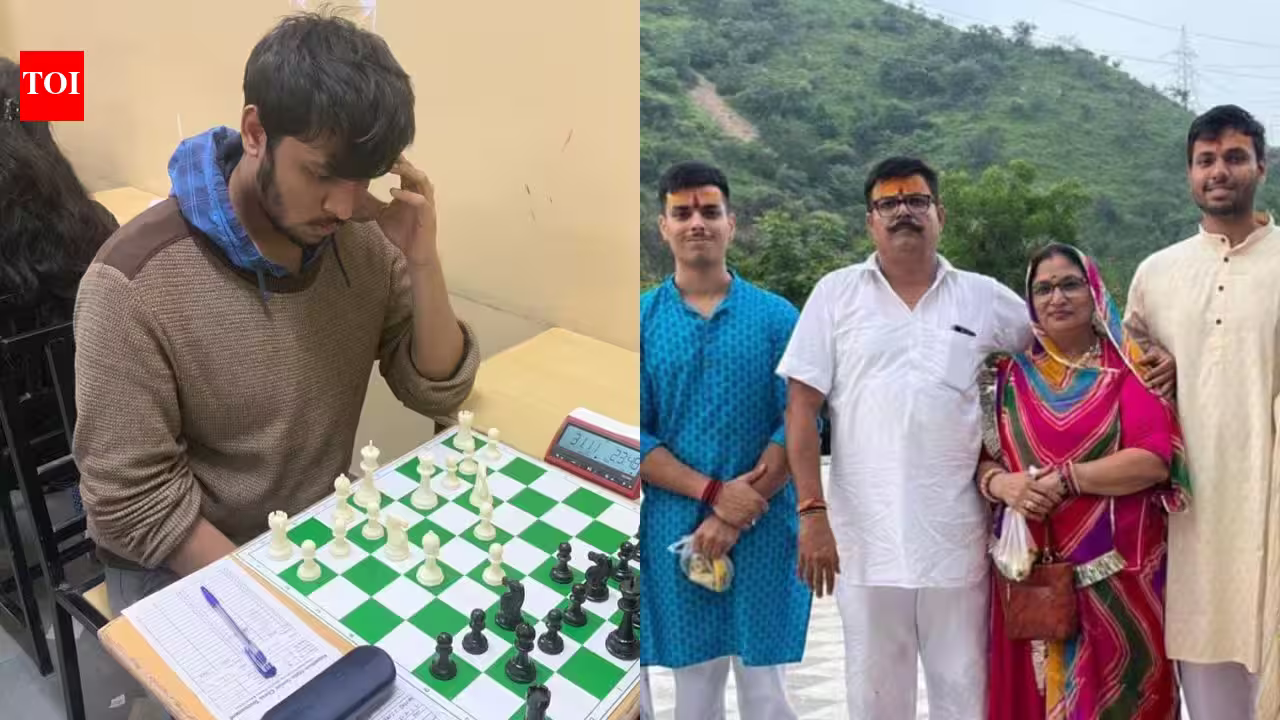
Udaipur, India – The poetic lines of Jaikrishn Chaudhri "Habeeb" paint a vibrant picture of Udaipur, a city renowned for its majestic lakes and palaces. Yet, from these very alleys emerges a story not of tranquil beauty, but of fierce determination and relentless pursuit of a dream. This is the tale of Chandrajeet Singh Rajawat, Rajasthan’s first Arena Grandmaster (AGM), whose journey from a reluctant academic to a global chess mentor is as captivating as the game itself. His path was paved with sacrifices, including leaving home and sleeping on railway platforms, all to put Udaipur firmly on the international chess map.
Before the strategic beauty of the 64 squares captivated him, Rajawat harbored a childhood love for cricket, even playing at the district level. However, the demanding nature of team selections eventually led him to seek a different challenge. As a teenager, he found himself on a conventional trajectory for ambitious Indian youth: the science stream, meticulously preparing for the highly competitive IIT entrance exams. But a seemingly innocuous Nintendo game cartridge would inadvertently steer his life in an entirely new direction.
"I had somehow got one of those Mario games," Rajawat recounted in an exclusive interview with TimesofIndia.com. Within this digital realm, he stumbled upon a game bearing a striking resemblance to chess. His true interest, however, ignited when his father took up the game. A dismissive comment from his father – "This isn’t a children’s game, you won’t understand it" – ignited a spark in the young Chandrajeet. "It was a game in which I couldn’t become good easily. You couldn’t easily beat people. That challenge attracted me," he admitted.
Armed with only in-game instructions, he deciphered the complexities of the game and, to his father’s surprise, defeated him the very next day. While his video game obsession faded, the craving for an intellectual battle remained. This dormant passion resurfaced in 2011-2012 when he attended his first chess tournament and, in his own words, "really fell in love with chess."
Despite starting late by competitive chess standards at around 16, Rajawat’s progress was meteoric. He meticulously studied stronger players between rounds, transforming early losses into a decisive win by his third or fourth event, making him Udaipur’s rising star. This newfound dedication, however, clashed with his parents’ concerns about his IIT preparations. Secretly attending tournaments and being "caught and scolded" when his victories were reported in local newspapers became a recurring theme.
The true turning point arrived with his IIT entrance exam results – a rank high enough to open doors to a promising future. As the eldest son, the expectation was clear: embrace the opportunity. But Rajawat had other plans. "I had already decided I would come back to chess," he declared. When it came time to fill out his IIT counseling forms, he simply refused to participate.
This decision was met with profound disappointment from his parents, Gunwanti and Vivek Singh Rajawat. Their financial stability, while improved by his mother’s successful government teaching exam, was modest, and they envisioned a secure future through IIT. "They were extremely upset," Rajawat recalled. "But I was a little obsessive about it. I always told them, ‘It’s okay whatever problems you think there are, I’ll handle it.’" After a series of heated arguments, and unable to reconcile his ambition with his family’s expectations, the teenage Rajawat left home with just a handful of belongings and no backup plan, driven solely by his passion for chess.
His arrival in New Delhi was solitary and fraught with challenges. Even his entry into his first FIDE-rated tournament was initially disputed by the AICF, India’s chess federation, an issue he still doesn’t fully comprehend. Having already sacrificed his safety net, he eventually secured a spot in a Rs 3,500-entry tournament in 2014, which, crucially, provided shared accommodation. "I didn’t even have a place to stay," he revealed, highlighting the precariousness of his early days.
The ensuing years were a testament to his resilience. He began representing Rajasthan consistently on the national circuit, enduring significant hardship. His phone was stolen, and he often slept at stadiums, on trains, or even on the streets, as prize money barely covered food. "I had money for food, but not much beyond that," he stated. When asked if he ever considered returning home, his answer was an emphatic "No, never. Today, when I look back, all of this seems like a struggle, and people think it sounds like a struggle. But for me, I was actually enjoying it, because I was playing chess."
A pivotal moment occurred during a tournament in Delhi. Returning from the Under-25 Nationals in Chennai in a general compartment due to lack of funds, his phone was stolen. Despite this setback, he pressed on, sustaining himself with prize money, until a psychological low threatened to derail him. After a strong start in a New Delhi tournament, overconfidence led to a loss against a much lower-rated opponent. "I thought, what am I doing? If I win, I have no one here to celebrate with," he lamented. For a brief moment, he considered abandoning it all, but decided to play out the remaining three rounds.
He won the next two. In the final round, he arrived 28 minutes late for a 30-minute default window, facing a more experienced Air Force player. With only a minute left on his clock against his opponent’s hour, the stakes were high. "Now I have nothing to lose. If I win, something could change," he thought. What followed was a masterclass in survival chess, with thirty-second increments leading to a nail-biting victory. "After that I felt, now I can do anything," he declared. "That was where my journey really began."
Word of his resourceful play spread, earning him the Arena Grandmaster (AGM) title – a first for Rajasthan. He began defeating FIDE-rated Grandmasters and crossed paths with future chess prodigies like Gukesh, Praggnanandhaa, and Nihal Sarin long before their global recognition.
Around this time, he briefly enrolled in a mathematics program at Delhi University, primarily for formality. However, the demands of college quickly took a backseat to his burgeoning chess career and self-taught independence. Towards the end of 2015, still technically a DU student, he discovered that coaching could provide a stable income. He began teaching chess informally across Delhi, commuting extensively. By 2017-2018, his informal teaching evolved into institutional roles, including a prestigious position at the British School. The early years remained a struggle, moving between friends’ homes and relying on credit for rent, but he persevered. "The first three or four years were a huge struggle," he said. "Then I realised what had seemed extremely difficult from the outside wasn’t necessarily impossible."
By 2019, feeling restless in Delhi and noticing a lack of chess development in Rajasthan, Rajawat made the decision to return home. He founded "Kingdom of Chess," an academy where he personally mentored up to 100 students. His efforts quickly bore fruit, with his students achieving state and national titles, Commonwealth and Asian gold medals, and even a World Championship medal.
Recognizing the limitations of individual instruction, he shifted his focus. "I realised I could teach 100 children alone, but never thousands," he explained. This insight propelled him to not only teach children directly but also to train other chess instructors. Today, "Kingdom of Chess" operates in approximately 30 countries globally, not only raising awareness about the game but also creating significant employment opportunities.
Before this global reach, however, there was just a determined teenager who left his family home, driven by an unshakeable dream. In 2014, before embarking on his solitary journey, Rajawat penned a poem, a personal testament to his future self. "I wrote it for my future self," he revealed. "I thought that if I ever achieved something, I’d be able to look back at what I had written." The lines resonate with his unwavering spirit:
"Gali agar na chunta ye toh, Mujhko itna naam na milta.
Is haseen mehfil mein tumko aaj na milta, kal na milta.
Main toh apne bachpan mein hi in mahalon se rooth gaya,
Maine path ko kabhi na chhoda, chahe kitna toot gaya.
Roti ke tukdon se zyada maine apne sapne ko maan diya,
Har pal — har ghadi, is din ke liye jiya."
(If I hadn’t chosen this path, I wouldn’t have gained such a name.
In this beautiful gathering, you wouldn’t have met me today, nor tomorrow.
I had turned away from these palaces in my childhood,
I never left my path, no matter how broken I became.
More than pieces of bread, I valued my dream,
Every moment – every hour, I lived for this day.)
Chandrajeet Singh Rajawat’s extraordinary journey is a powerful reminder that with unwavering dedication and an unyielding spirit, even the most challenging paths can lead to remarkable success, transforming personal dreams into global impact.